
Nigerian Troops Capture Suspected Arab ISIS Operative After Foiled ISWAP Assault in Borno
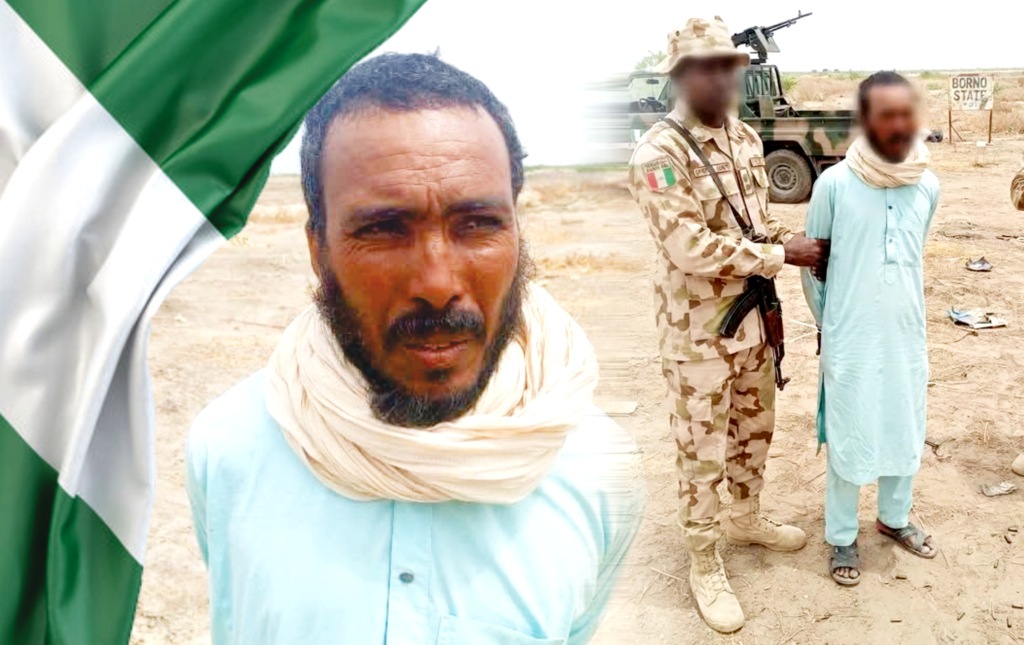
The arrest of a foreign fighter near Lake Chad signals a deepening internationalisation of Nigeria’s insurgency, as U.S.-Nigerian joint operations continue to dismantle ISWAP’s command structure.
Nigerian troops operating under Operation HADIN KAI have arrested a suspected foreign operative with alleged links to the Islamic State (ISIS) following a failed attack by Islamic State West Africa Province (ISWAP) fighters on Cross Kauwa in Kukawa Local Government Area of Borno State. The development, reported by counter-insurgency analyst Zagazola Makama, underscores the increasingly transnational nature of the insurgency in Nigeria’s northeast and comes amid an intensified U.S. Nigerian military campaign against ISWAP.
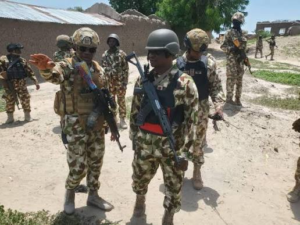
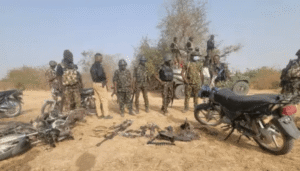
The incident began when ISWAP fighters launched a coordinated assault on Cross Kauwa, a strategic location in Kukawa LGA near the shores of Lake Chad. Nigerian troops successfully repelled the attack, then launched exploitation operations along the withdrawal routes used by fleeing insurgents.
During these follow-up operations, troops recovered high-frequency hand-held radios (HHR) and other communication equipment considered crucial to the terrorist group’s command and control structure. “Among the items recovered were high-frequency hand-held radios (HHR), communication equipment considered crucial to the command and control structure of the terrorist group,” the report stated.
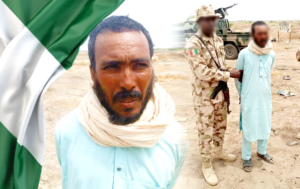
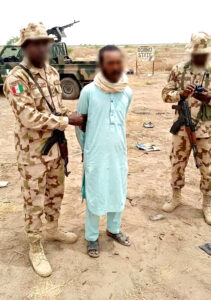
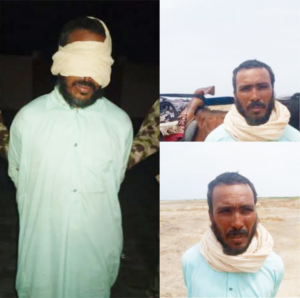
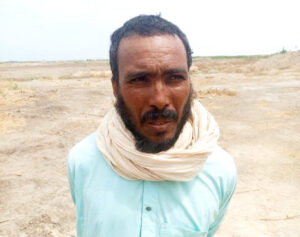
Intelligence obtained from the recovered equipment led troops to extend operations into the Lake Chad Islands axis and Abadam Local Government Area. There, they apprehended a fleeing suspect believed to be an Arab of Moroccan origin with suspected links to ISIS.
Military sources indicated that the suspect had earlier been identified during a forensic review of video footage recovered from a camcorder allegedly belonging to a terrorist cameraman who was neutralised during the failed Cross Kauwa assault. “The camcorder, according to the sources, belonged to a terrorist cameraman who was killed during the failed assault on Cross Kauwa,” the report noted.
The suspect was evacuated by a Nigerian Air Force helicopter to a secure military facility, where he is undergoing interrogation. Security agencies are investigating his alleged role within the terrorist organisation, his reported links to ISIS, and possible involvement in operational planning, training, communications, and media activities.
The arrest comes at a critical juncture in Nigeria’s 16-year counter-insurgency campaign. Despite years of military operations, ISWAP and Boko Haram remain active, with 2026 marking a particularly violent phase. Since January, at least 13 military bases across Nigeria particularly in Borno have come under attack, reflecting what analysts describe as a
strategic shift by insurgents toward the “burning of the camps” or “camp Holocaust” a campaign aimed at degrading the fighting strength of security forces by targeting their positions directly.
The security landscape has been further complicated by the entry of U.S. forces into direct combat operations. On December 25, 2025, the United States launched its first airstrikes against ISWAP targets in northwest Nigeria, the first direct foreign military intervention in the insurgency. This was followed by a major joint offensive on May 15, 2026, in which U.S. Navy SEALs and Nigerian forces killed ISWAP’s second-in-command, Abu-Bilal al-Minuki, during a three-hour firefight on islands in the Lake Chad Basin. By May 19, Nigerian authorities reported that joint operations had eliminated at least 175 ISWAP and Boko Haram militants.
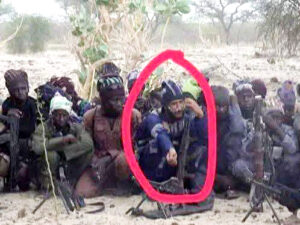
The presence of a suspected Moroccan operative in the Lake Chad region is significant but not unprecedented. ISWAP has maintained links to the broader Islamic State network since pledging allegiance in 2015, and the group has historically attracted foreign fighters from across the Sahel and North Africa. Abu-Bilal al-Minuki himself, the ISWAP leader killed in May had reportedly served as a foreign fighter in Libya before rising through the ranks in Nigeria.
The capture of communication equipment and media devices suggests that ISWAP continues to prioritise propaganda and external coordination, hallmarks of ISIS-affiliated groups globally. The camcorder and video footage indicate that the group remains invested in documenting its operations for dissemination, even as military pressure mounts.
The failed Cross Kauwa attack fits a broader pattern of intensified insurgent activity in 2026. Key incidents include:
January 20: A patrol team of approximately 30 soldiers was ambushed in Damasak, Borno, killing a major-general and other troops.
January 29: A pre-dawn attack on Sabon Gari military base destroyed several vehicles; insurgents reportedly used drones.
March 9: A commanding officer was killed during an ISWAP attack on a military base in Kukawa the same LGA where the latest failed assault occurred.
April 9: A brigadier-general and multiple soldiers were killed in an attack on the Benisheikh military base.
April 20: Three soldiers were killed in Kemanji, Kwara State, highlighting the geographic expansion of attacks beyond the northeast.
The intensified conflict has taken a devastating toll on civilians. In April 2026, a Nigerian Air Force strike on a crowded market in Jilli village reportedly killed 200 civilians. Weeks later, another airstrike hit the Tumfa market in Zamfara State, killing at least 100 people, including many women and girls. Human rights organisations have warned of an alarming pattern in which communities caught between insurgent violence and indiscriminate state responses face mounting casualties.
The arrest of a suspected Arab ISIS operative in Borno carries several implications:
- Transnational Networks Confirmed: The presence of a Moroccan-linked fighter validates long-held suspicions that ISWAP maintains active operational ties to ISIS central and foreign fighter networks, not merely nominal allegiance.
- Media and Communications Infrastructure: The recovery of high-frequency radios and video equipment suggests ISWAP retains sophisticated command, control, and propaganda capabilities despite sustained military pressure.
- Lake Chad as a Sanctuary: The suspect’s apprehension in the Lake Chad Islands axis and Abadam LGA reinforces the assessment that this border region remains a critical sanctuary for insurgent logistics and foreign fighter transit.
- S. Role Deepening: The timing of this arrest during a year of unprecedented U.S. military involvement raises questions about intelligence sharing and operational coordination. With approximately 200 U.S. military personnel now deployed in advisory and direct combat roles, the capture of a foreign operative could yield valuable intelligence on ISIS’s global network.
- Persistent Vulnerabilities: Despite high-profile kills like al-Minuki and the arrest of foreign operatives, the fact that ISWAP can still mount coordinated attacks on military bases, including in the same Kukawa LGA where a commanding officer was killed in March suggests that tactical victories have not yet translated into strategic defeat.
Regional and international intelligence agencies will closely watch the interrogation of the captured suspect. If confirmed as a Moroccan ISIS operative, his testimony could illuminate the pathways through which foreign fighters enter the Lake Chad Basin, the funding mechanisms sustaining ISWAP, and the group’s evolving relationship with ISIS central command in the Middle East.
As for the Nigeria’s military, the arrest is a tactical win in a war that has proven stubbornly resistant to strategic resolution. For the wider region, it is a reminder that the insurgency in northeast Nigeria is no longer a purely local conflict; it is a node in a global jihadist network that continues to adapt, recruit, and fight.