
Traoré’s Government Kicks against Religious Bodies in Burkina Faso
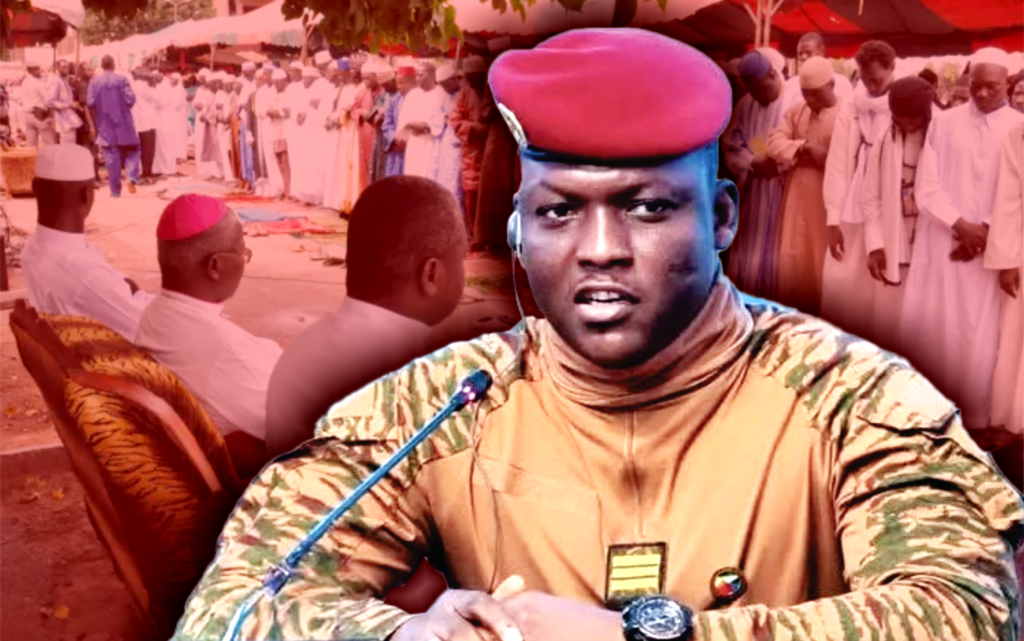
Burkina Faso’s leader, Captain Ibrahim Traoré, has escalated his confrontation with influential Muslim scholars, declaring that “radical Islam” has no place in the country and warning that “the battle has begun” against those he accuses of promoting religious extremism. This widening rift marks a significant turning point for a military government that once relied on the tacit support of the country’s Sunni majority to bolster its legitimacy after seizing power in a 2022 coup.
Tensions reached a breaking point following the violent arrest of Sheikh Dr. Mohammed Ishaq Kindo, one of the country’s Sunni-Salafi scholars. Security forces reportedly stormed Kindo’s residence, injured several followers, and took the cleric to an undisclosed location. The arrest followed a sermon in which Kindo criticised a new government bill aimed at regulating religious freedoms.
In response to protests demanding Kindo’s release, the junta ordered the closure of Ouagadougou’s main Sunni mosque, citing risks of “public disorder”. Security forces used tear gas to disperse crowds, and about 100 of the imam’s supporters were detained and transferred to a military camp for what authorities termed “civic and citizenship training”.
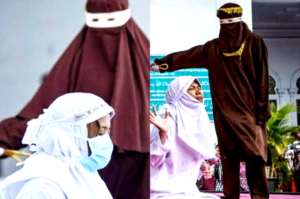
The confrontation is centred on the Religious Freedoms Law, adopted unanimously by the transitional parliament in June 2026. While the government maintains the law is designed to reinforce the state’s secular character and improve financial accountability, critics argue it introduces heavy-handed state oversight. Key provisions include:
- Regulating public prayer: Proposals to ban prayer spaces in administrative buildings to ensure administrative neutrality.
- Criminalising abuses: Introducing prison terms for practices such as the forced begging of children.
- Oversight of Foreign Education: A new directive requires Burkinabè students seeking religious studies abroad to obtain prior government authorisation.
Traoré has been particularly vocal against students studying Sharia (Islamic law) in Arab countries, claiming that more than 800,000 students are pursuing religious education without acquiring practical professional skills. He warned that those who refuse to return to Burkina Faso for vocational training risk losing their citizenship.
Political analysts warn that Traoré’s aggressive stance against religious figures risks fragmenting his own support base. The Wayiyan movement, a pro-junta civilian network that has served as a “human shield” against previous coup attempts, is disproportionately Muslim. The arrest of a revered cleric like Kindo could trigger cognitive dissonance among these supporters, leading to political apathy or the withdrawal of grassroots mobilisation.
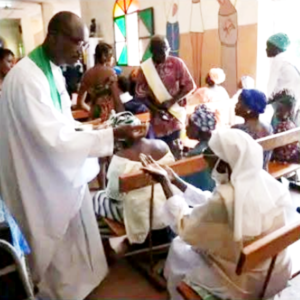
This internal friction comes as the junta faces nine attempted coups and mutinies since September 2022, underscoring a climate of paranoia and instability within the regime.
The ongoing security crisis often justifies the junta’s repressive measures, yet 30% of the territory remains under the control of jihadist groups. Burkina Faso was recently ranked first on the Global Terrorism Index, accounting for one-quarter of all terrorism-related deaths worldwide in 2024.
While Traoré remains popular among nationalist youth who view him as a “Thomas Sankara 2.0,” his decision to postpone elections until July 2029 and his campaign against religious authorities raise profound questions about the country’s future.