
Africa’s Long Rainy Season of Loss, a Summary of Its Widespread Human and Economic Toll
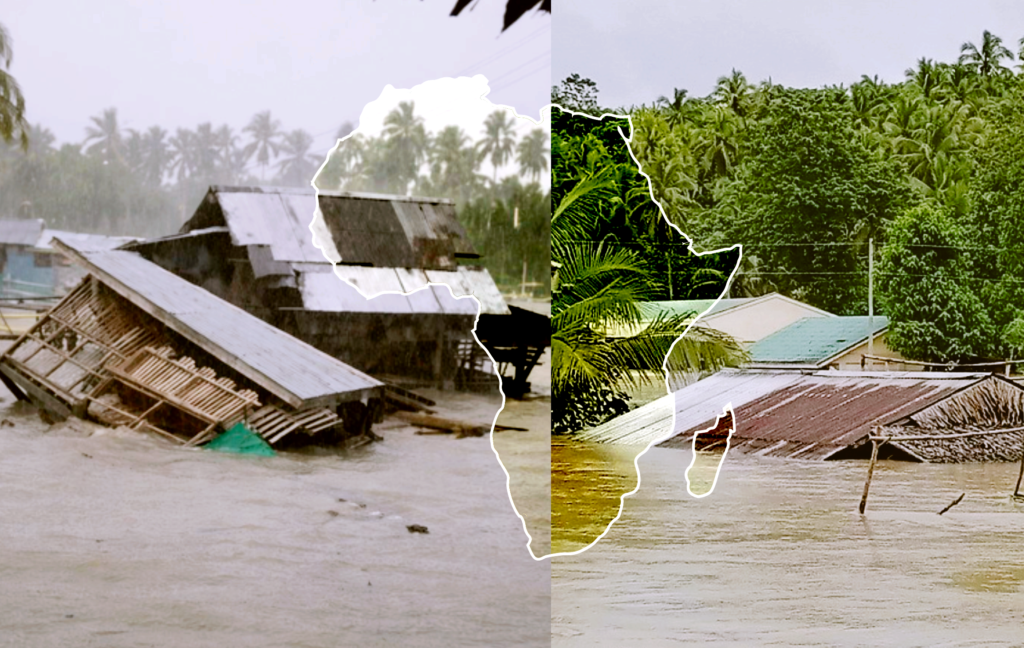
The 2026 rainy season is unfolding as one of Africa’s most devastating humanitarian and environmental crises in recent years, leaving a painful trail of destroyed homes, shattered livelihoods, interrupted businesses and growing pressure on governments struggling to protect vulnerable populations.
From the Atlantic coastline of West Africa to Central Africa’s river basins and mountainous communities, torrential rainfall has transformed roads into rivers, swept away homes, submerged farms, destroyed small businesses and displaced thousands of families. The disaster has once again exposed the growing connection of climate change, rapid urbanization, inadequate drainage infrastructure and expanding informal settlements across the continent. With respect to millions of ordinary Africans, the rainy season has become more than a seasonal weather event, it now a yearly struggle for survival. Families, bear the greatest burden.
Across several African countries, the first victims are often families living in low-income neighbourhoods situated beside rivers, wetlands or unstable hillsides. Parents are forced to abandon homes in the middle of the night, as floodwaters rise rapidly. Children lose access to schools converted into temporary shelters. Elderly residents struggle through waist-deep water carrying whatever possessions they can save.
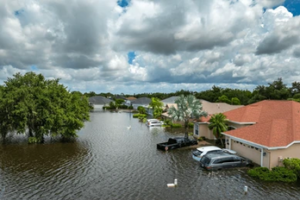
In many communities, entire family savings disappear within hours, as household belongings, food supplies and personal documents are washed away. The emotional trauma extends beyond the immediate disaster. Many displaced families face uncertain futures, irresolute over whether they will ever return to their homes or rebuild their businesses. Health experts also warn that contaminated floodwaters can increase the likelihood of outbreaks of cholera, typhoid fever, malaria and other waterborne diseases, particularly among children and elderly people.
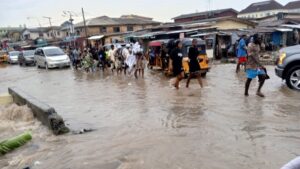
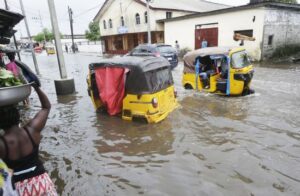
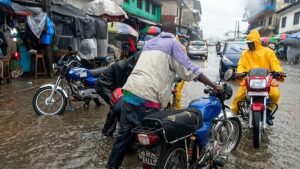
Nonetheless, while these scenarios are building in manifesting realities at different communities, some residents are finding a space of amusing and entertaining themselves even in the flood. Moreso in Lagos State, both the highbrow and lowbrow areas are highly impacted negatively. Yet you see people wade through this painful and damaging instances.
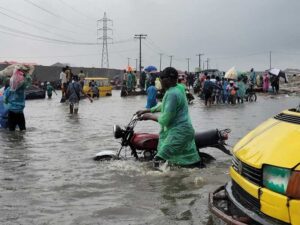
Côte d’Ivoire facing a deadly humanitarian emergency from rainy season’s flood: Among the hardest-hit countries is Côte d’Ivoire, where authorities have confirmed that at least 59 people have died since the rainy season began in mid-May. The commercial capital, Abidjan, has experienced some of the country’s worst flooding and landslides, particularly in densely populated municipalities such as Attécoubé and Yopougon, where homes built on fragile slopes and flood-prone land have suffered catastrophic collapses.
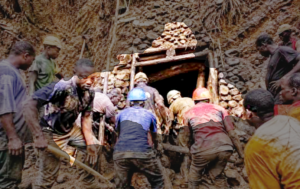
Neighbourhoods including Mossikro have witnessed deadly landslides that buried houses and trapped residents beneath debris. The tragedy has highlighted years of tension between urban growth and public safety. In several years, the Ivorian government has undertaken demolition and eviction exercises, targeting informal settlements located in dangerous flood zones. Officials claimed that many casualties occurred because some residents returned to previously evacuated areas, despite repeated warnings.
A government spokesperson – Amadou Coulibaly, had stated that authorities recorded no flood-related deaths in communities where residents complied fully with evacuation directives. Temporary relocation centres have been established throughout Abidjan, while emergency responders, including the Groupement des Sapeurs-Pompiers Militaires (GSPM), continue rescue operations alongside municipal authorities and the Ministry of National Cohesion. Presently, government authorities are urging residents to leave unstable hillsides, riverbanks and buildings marked for demolition, while monitoring official weather alerts.
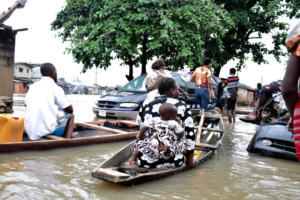
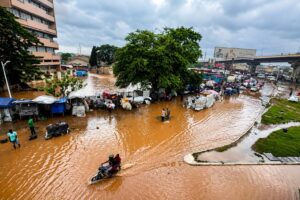
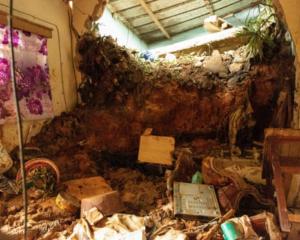
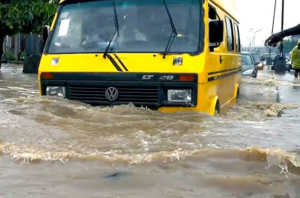
Nigeria’s economic capital battles rising flood/waters: Nigeria’s rainy season has once again paralyzed major commercial activities, especially in Lagos, where severe flash flooding displace families, damage properties, cutoff roads, continues to disrupt transportation, trade and everyday life. Major roads across Lekki, Victoria Island and parts of the mainland, regularly become impassable following heavy downpours. Commuters spend hours stranded in traffic while businesses lose valuable operating time.
Thousands of SMEs entrepreneurs, market traders and roadside vendors, see every storm as another financial setback and business displacements. Many shop owners spend more time removing floodwater than serving customers. Others have raised storefronts with concrete blocks, in desperate attempts to protect their merchandise, yet the results is worse. Both government managed and NURTW commercial transportation services, frequently suspend operations in severely flooded areas, which affect workers, students, transits, commercial deliveries and almost the entire chain of existence.
Federal agencies, including the Nigeria Hydrological Services Agency (NIHSA), have identified thousands of communities across 33 states, which are facing high or moderate flood risks this season. Other government agencies, including the National Emergency Management Agency (NEMA) and the Nigerian Meteorological Agency (NiMet), have sustained issuing early-warning advisories, while urging residents to avoid blocked drainage channels and refrain from dumping refuse into waterways.
Urban planners submits that rapid-city expansion, ageing drainage systems, inadequate town-planning development and the current development of the coastal geography, have combined to make Lagos highly vulnerable to severe flooding.
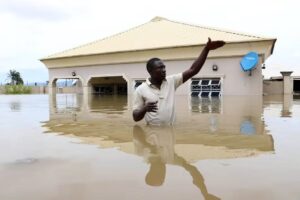
Ghana counts the cost of the raining-floods: Neighbouring Ghana has also endured deadly flooding, following torrential rainfall that submerged large sections of Accra. At least 13 people have reportedly lost their lives, while hundreds more have been stranded after roads, homes and vehicles disappeared beneath floodwaters.
Emergency teams from the Ghana National Fire Service, police and the National Disaster Management Organisation, have carried out rescue operations, evacuating trapped residents and protecting vulnerable communities. The concerned Ghana government agencies have been sustaining warning alarm that further heavy rainfall are possibly coming, while also urging residents to living in flood-prone locations to relocate to safe locations.
Urban/city builders/town planning experts say recurring flooding in Accra exposes a longstanding challenge of blocked drainage systems, illegal construction on waterways and insufficient storm-water infrastructure.
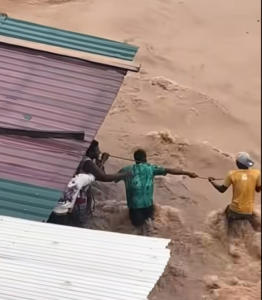
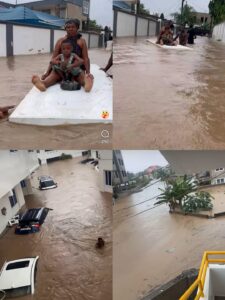
Togo activates an emergency plan as the rains ushered in great flooding visitor: In Togo, persistent rainfall along the Gulf of Guinea coastline, has submerged several districts of Lomé, disrupting human existence, transportation service, electricity supply and commercial activities. These communities include Adakpame, Nyekonakpoe, Agoe-Nyive and Akodessewa, are among the worst affected.
The Togolese government activated its national ORSEC emergency response plan, deploying firefighters, rescue personnel and emergency response teams to evacuate residents and clear flooded roads. Officials alarmed that increasing sanitation challenges in communities already vulnerable, will worsen flooding as rainfall continues. The flood crisis in Lome also reflects a wider regional weather pattern, affecting neighbouring Ghana, Benin and Côte d’Ivoire simultaneously.
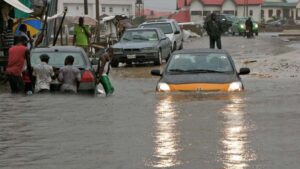
Benin Republic’s farmers watch harvests disappear by the hands of rainy season’s floods: In Benin republic, seasonal flooding persistently devastate farming communities, as rivers including the Niger and Ouémé overflow their banks. Thousands of hectares of farmland have been inundated with flood, destroying crops shortly before harvest time; and wiping out months of agricultural investment.
Fishing communities also face declining incomes, as infrastructure and equipment suffer damage. Schools have been flooded, roads rendered impassable, thousands of residents displaced into temporary accommodation, etc.
Humanitarian organisations are working tirelessly alongside government agencies, to distribute emergency sanitation supplies, hygiene kits and financial assistance, while supporting drainage improvement projects around Cotonou. Most rural families depend highly on farming, but rebuilding back to their former stage of livelihoods, may take several growing seasons.
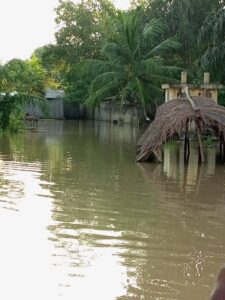
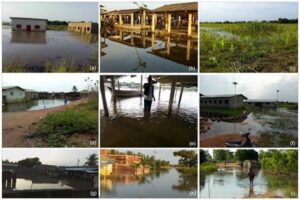
Liberia, in the face of a commanding raining season with growing national emergency: Liberia is confronting one of its most widespread flooding emergencies in years. The National Disaster Management Agency has identified that more than 300 vulnerable communities across the country, are facing severe flooding. Counties including Montserrado, Margibi, Grand Bassa, Grand Gedeh, Rivercess, Sinoe and Nimba have experienced widespread inundation.
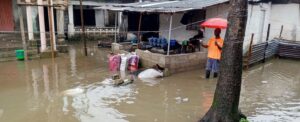
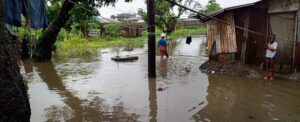
In greater Monrovia, floodwaters have overwhelmed informal settlements, including Johnsonville, New Kru Town, Chocolate City and Battery Factory. Homes have been submerged, while damaged bridges and flooded roads isolate communities.
Farmers have lost crops, markets have been disrupted and sanitation systems have collapsed in some areas, increasing the threat of disease outbreaks. Emergency agencies are assessing damage instances and distributing relief supplies, even though some government officials acknowledge that funding and logistical constraints are significant obstacles obstructing work-delivery progress.
Climate specialists noted that Liberia’s extremely high annual rainfall, rising sea levels and continued urban expansion into wetlands, are dramatically increasing flood vulnerability to the communities and living experience.
Cameroon battles floods and deadly mudslides: Further east, Cameroon continues battling severe flooding across both urban and rural regions. Major cities including Douala and Yaoundé have experienced extensive flooding, as drainage systems struggle to cope with sustained heavy rainfall. Same human indiscipline-act of environmental challenge, plaguing these coastal line of African countries.
In the Far North Region, overflowing rivers have submerged villages, destroyed bridges and flooded vast agricultural areas. Mountain communities around Buea, have also suffered dangerous volcanic mudflows and landslides, threatening homes built along steep slopes. Entire schools and healthcare facilities have been flooded, interrupting education and medical services, while worsening an already difficult humanitarian conditions.
Agricultural losses, is exceeding tens of thousands of hectares, which has intensified concerns over food security, particularly in communities already experiencing inflation and displacement, linked to conflict. Public health authorities are mostly concerned about the growing risk of cholera, malaria and typhoid, as contaminated water stagnates around overcrowded evacuation sites.
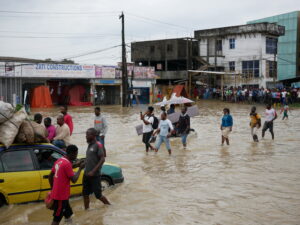
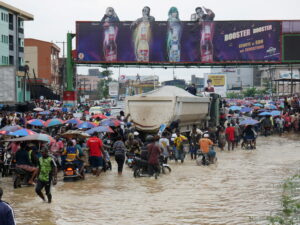
Businesses in some part of Africa, are struggling to stay afloat because of the sweeping rainy season. Apart from the immediate humanitarian crisis, flooding is inflicting enormous economic damage. Small businesses, which form the backbone of many African economies, remain among the hardest hit.
Retail shops lose inventory. Restaurants suspend operations. Public transport operators lose daily income. Manufacturers face interrupted supply chains. Agricultural producers watch harvests disappear beneath floodwaters. Insurance coverage remains limited across much of the continent, meaning most losses are borne directly by families and entrepreneurs. Some economists view, beam on warnings that repeated climate-related disasters will extremely threaten employment, reduce productivity and slow economic growth, unless governments invest more aggressively in robust infrastructure.
The rainy season’s growing pressure garments African governments, wearing her also a painful faze cap. Across affected countries, their governments have intensified an unplanned-budgeted emergency responses through evacuation orders, rescue operations, temporary shelters and public safety campaigns. Yet, each disaster renews difficult policy debates.
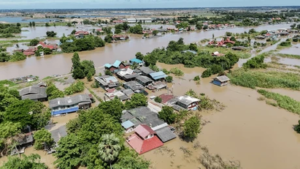
These debates by concerned authorities, confront questions surrounding urban planning, enforcement of building regulations, drainage maintenance, environmental protection and housing shortages that drive many low-income families into dangerous locations. On the outlook, a valid argument would be that emergency response alone, is insufficient.
Long-term investments in flood-control infrastructure, modern drainage systems, early-warning technology, climate-resilient housing and sustainable urban planning, are the urgent development priorities that African governments should uphold and drive; because, according to environmental scientists, climate change is increasing the frequency and intensity of extreme rainfall, across many parts of Africa. And this situation, requires African governments to integrate climate adaptation into national development strategies.
As Africa’s rainy season continues, the unfolding disasters serve as a powerful reminder that flooding has become more than a seasonal inconvenience, with a damaging-painful daze to African families and their entire existence. Rainy season is now a continental developmental challenge, simultaneously affecting families, businesses, agriculture, public health, education, national economies, etc.
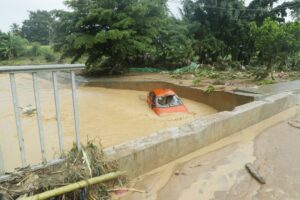
The human stories emerging from flooded neighbourhoods from Abidjan to Accra, Lagos to Lomé, Monrovia to Yaoundé, etc. mirror remarkable human strength of perseverance, and furthermore, highlighting the urgent need for stronger climate preparedness, improved infrastructure, coordinated regional disaster management and son on.
In regards to countless African families who have lost homes, livelihoods, loved ones, being displaced totally, etc., the hope is that future rainy seasons will no longer bring the same recurring cycle of tragedy. Until then, we believe that in one spirit of love for humanity, governments, humanitarian agencies, businesses and communities, face the shared task of rebuilding lives, while preparing for a highly uncertain climate future.