

Nigeria Discovers Extensive Deposits of Lithium, Rare Earth Elements, Gold, Nickel, Copper, etc.

Nigeria is positioning itself for what could become one of the country’s most significant mining developments in decades following the announcement of a major polymetallic mineral province in Kaduna State and a separate lithium reserve estimated at 3.3 million metric tonnes, near the Federal Capital Territory. The discoveries have renewed expectations that the solid minerals sector could become a major pillar of national economic growth, while supporting the global transition toward clean energy technologies.
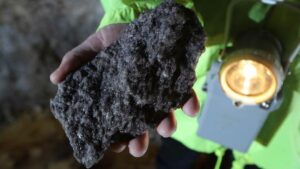
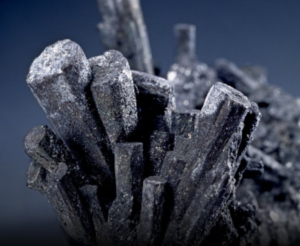
According to the Federal Government, the newly identified mineral province contains commercially significant deposits of lithium, rare earth elements, platinum group metals, gold, nickel and copper, these are minerals that are highly in demand for electric vehicle batteries, renewable energy systems, electronics, aerospace manufacturing and advanced industrial applications.
The announcement by the Minister of Solid Minerals Development, Dele Alake, reflects Nigeria’s ambition to transform its vast but historically underdeveloped mineral resources, into a sustainable engine of economic diversification, asides crude oil exports.
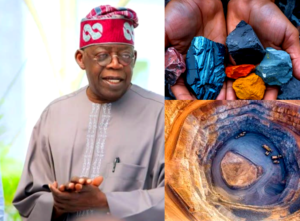
As a window of building a new economic frontier, economists and industry observers say the discoveries present an opportunity for Nigeria to strengthen her position, within the rapidly expanding global critical minerals market, where demand continues to rise as countries accelerate investments in clean energy infrastructure and battery manufacturing.
Rather than relying solely on exporting raw ores, the Federal Government says its strategy focuses on building domestic mineral processing industries, capable of producing higher-value products within Nigeria. Such an approach, could increase export earnings, improve government revenue, stimulate manufacturing and reduce dependence on commodity exports, with limited local value addition. Some government officials believe that attracting responsible private investment into exploration, processing and refining, could generate billions of dollars in long-term investment, while creating thousands of direct and indirect jobs across mining, engineering, logistics, construction, transportation and professional services. A channel where human benefits transcends the mine.
Apart from the economic indicators of this new discovered mineral province, communities located around prospective mining areas could experience significant improvements, if development is managed transparensively and sustainably.
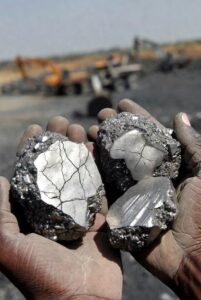
Mining projects often require investments in roads, electricity, water supply, telecommunications and other essential infrastructure that can also benefit surrounding communities. Expanded industrial activities, may create employment opportunities for engineers, geologists, technicians, environmental specialists, equipment operators, artisans and young graduates seeking careers in emerging industries. Educational institutions may also benefit through increased demand for technical training in geology, mining engineering, metallurgy, environmental management and mineral processing, helping prepare a new generation of skilled Nigerian professionals.
Also, small businesses will gain economically from supplying goods and services, catering, transportation to maintenance, accommodation rental, equipment support, etc., could equally benefit from increased economic activity, around the mining operations.
On another side of the discovery-picture, regulatory reforms would aim to improve investor’s confidence. To support the sector’s growth, the government has initiated reforms intended to improve transparency and encourage serious investment. Among the most notable measures is the revocation of more than 3000 inactive mining licences. Authorities say the act is intended to eliminate speculative licence holding, improve access for genuine investors and ensure that mineral assets contribute meaningfully to national development.
In validating, industry analysts noted that predictable regulation, efficient licensing procedures and strong environmental oversight, will remain essential in attracting responsible international and domestic investment, while maintaining public confidence.
Moving beyond raw mineral exports, a central feature of Nigeria’s mining strategy would be local beneficiation, which will engender processing minerals within the country before export.

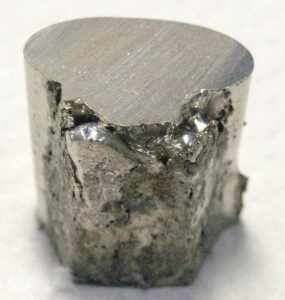
Government-backed industrial projects include a reported $600 million processing facility near the Kaduna-Niger border, an $800 million refinery close to Abuja and additional processing plants in Nasarawa State. These facilities are expected to strengthen Nigeria’s industrial capacity, create skilled employment and enable domestic participation in global supply chains for battery materials and advanced manufacturing. By encouraging value addition at home, policymakers hope that the government will avoid the historical pattern, in which resource-rich countries export raw materials, while importing higher-value finished products back to Nigeria to sell.
A focus of the political-strategic significance of this discovered province, reveals the province as one that carries wide-ranging political and strategic implications. Thus, a stronger mining sector could reduce Nigeria’s dependence on oil revenues, increase the national tax base and improve fiscal strength, during periods like the volatility in global petroleum markets.
Internationally, Nigeria could become an extremely important supplier of critical minerals, needed by countries pursuing energy transition goals. This may strengthen diplomatic and commercial partnerships with global manufacturers seeking secure and diversified supply chains, for strategic minerals.
However, experts caution that achieving these outcomes will require transparent governance, effective environmental regulation, community engagement and equitable sharing of mining benefits, to prevent resource-related conflicts. Looming as a grassroots test of sustainable development.
In consideration of the residents of Kaduna and other prospective mining communities, the success of these discoveries, will ultimately be measured by export revenues and tangible improvements in daily life. Because, many community leaders and civil society organisations have continued to stress the importance of ensuring that mining projects respect environmental standards, protect local livelihoods and provide meaningful opportunities for host communities, through employment, skills development and social investment.

If this mining processes are implemented responsibly, Nigeria’s emerging critical minerals industry could become a catalyst for rural development, industrial expansion and inclusive economic growth, which will help to position the country as both a leading African mining destination and a strategic contributor to the global clean energy economy.
As exploration advances and commercial development gathers pace, the standing challenge that may heat government officials, will be to convert geological potential into lasting national prosperity, through sound regulation, responsible investment and broad-based economic participation.