

South Africa, Afreximbank Seal US$14 Billion Partnership to Drive Industrial Growth, Jobs and Continental Trade
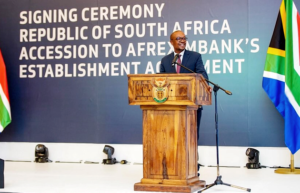
The Republic of South Africa has taken a major step toward strengthening its industrial economy and expanding its role in Africa’s growing single market after signing a US$14 billion Country Programme with the African Export-Import Bank (Afreximbank).
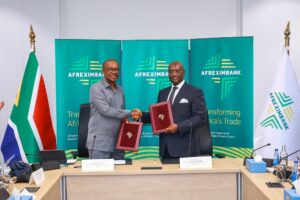
The agreement, which is formalised through a Memorandum of Understanding (MoU) in Alamein, Egypt, mirrors more than a financing package. It represents a long-term development partnership designed to stimulate industrialisation, strengthen regional trade, improve infrastructure and widen economic opportunities for millions of South Africans, particularly historically disadvantaged communities.
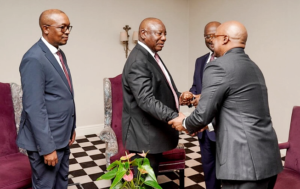
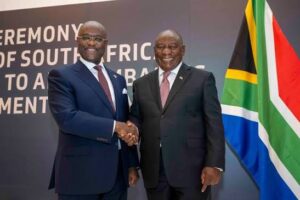
The MoU was signed by George Elombi and Mpho Parks Tau, following South Africa’s accession to the Afreximbank Establishment Agreement earlier this year, marking a new phase in cooperation between Africa’s largest industrial economy and one of the continent’s leading multilateral financial institutions.
The heart of the programme, host a commitment to channel investment into sectors capable of generating sustainable economic growth. These include industrial infrastructure, electricity generation and transmission, mineral beneficiation, agricultural processing, manufacturing and logistics, industries that are considered essential to increasing South Africa’s productive capacity, while reducing dependence on raw commodity exports.
The agreement carries significant human and social implications further than the financial figures. By strengthening domestic industries and expanding value-added production, the system expects the initiative to create employment opportunities, particularly for young people, women entrepreneurs and small businesses that often struggle to access affordable finance.
A key feature of the programme, is the Afreximbank Inclusive Development Support Programme for South Africa, backed by US$3 billion. The initiative seeks to address longstanding structural disparities, by improving access to finance for previously disadvantaged individuals and enterprises, enabling a larger participation in strategic sectors of the economy and promoting more inclusive wealth creation.
Development experts noted that expanding financial inclusion, is highly viewed as an essential move to reducing poverty and narrowing economic disparities, especially in communities that have remained on the margins of industrial growth, despite decades of democratic reforms.
The partnership also carries important political and diplomatic significance. It reinforces South Africa’s commitment to African-led development financing, while strengthening continental cooperation under the African Continental Free Trade Area (AfCFTA). By supporting stronger regional value chains and reducing barriers that continue to hinder cross-border trade, the programme aims to improve the movement of goods, services and investment, across Africa.
These kind of collaborations with governments across the continent, are extremely seen as practical tools for advancing economic sovereignty, reducing dependence on external financing and encouraging African countries to trade more with one another, through locally developed industrial capacity.
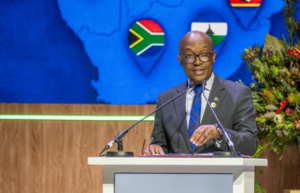
According to Dr. George Elombi, the programme will help unlock investment across strategic sectors while expanding South Africa’s trade with African markets, promoting South African investment throughout the continent and advancing wider financial inclusion. Minister Mpho Parks Tau said the partnership supports implementation of the AfCFTA, by strengthening regional value chains and addressing cross-border obstacles that continue to limit intra-African commerce.
The agreement also extends beyond financing. Both parties will collaborate on relaunching the South Africa-Africa Trade and Investment Promotion Programme (SATIPP) 2.0, support the establishment of a South African Export-Import Bank through technical and financial assistance, finance industrial parks and Special Economic Zones, co-invest in renewable energy and other energy infrastructure, promote mineral beneficiation, and provide institutional capacity-building and advisory services.
At the grassroots level, successful implementation could translate into expanded industrial activity, improved infrastructure, stronger support for local manufacturers and exporters, increased opportunities for SMEs; and more robust local economies linked to regional markets.
The Country Programme aligns with South Africa’s National Development Plan 2030, the Medium Term Development Plan (2024–2029) and the government’s Growth and Inclusion (GAIN) strategy, featuring a bigger ambition to build an economy that combines industrial competitiveness with social inclusion and greater regional economic integration.
As African governments intensify efforts to transform natural resources into higher-value products and strengthen continental supply chains, the South Africa-Afreximbank partnership is expected to serve as a significant test of how development finance, can be leveraged to deliver industrial expansion, inclusive growth and profound African economic cooperation.