

Reversing the Economics of Nigeria’s Cocoa Sales, from Raw Exports to Value Creation
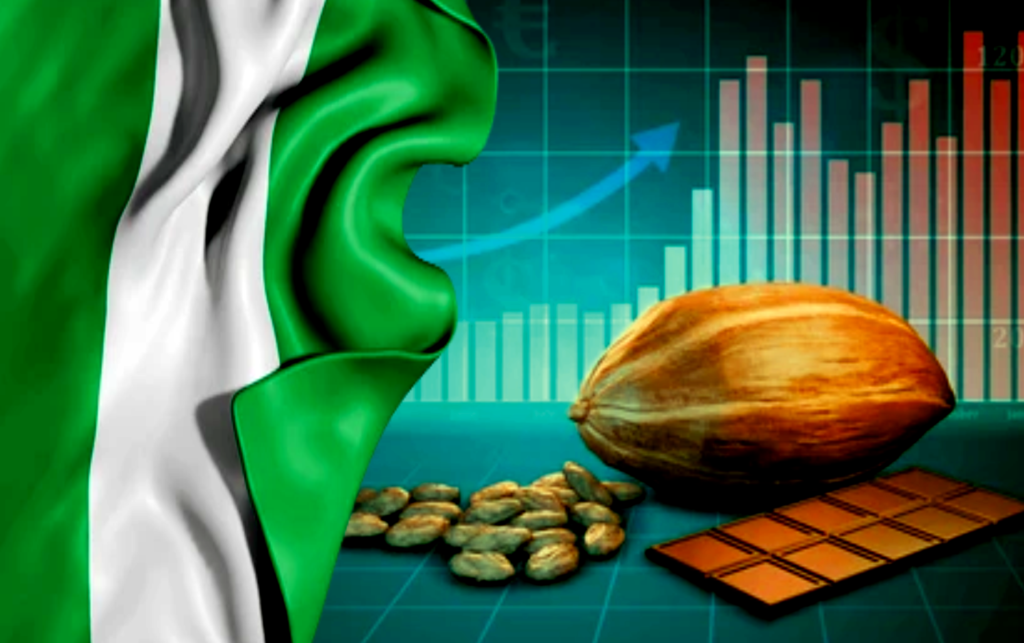
Nigeria’s cocoa industry stands at a defining moment. Although the country remains one of the world’s leading cocoa producers, and West Africa accounts for more than 70 percent of global cocoa production, but the overwhelming share of the wealth generated from cocoa, is still created outside the continent. The contrast, has become one of the clearest examples of how exporting raw commodities rather than finished products limits economic growth, job creation and industrial development.
Stakeholders of the cocoa business claim that the derived fiscal numbers, tell a compelling story. A metric tonne of raw cocoa beans may generate about $8,000 in export value. When those same beans are processed into cocoa butter and cocoa liquor, their value can rise to approximately $48,000 per tonne. But as at when the process fully transforms the beans into finished chocolate products, the turnover can increase the value to as much as $240,000 per tonne, which is around thirty times the earnings from exporting raw beans.

In Nigeria, such difference in earnings, represents more than higher raw cocoa exportation receipts. It echoes an opportunity to transform agriculture into a manufacturing-driven industry, capable of generating sustainable wealth, expanding employment and strengthening economic adaptability.
From January to April 2026, Nigeria reportedly exported about ₦596 billion worth of raw cocoa. Economic observers estimate that if even 20 percent of those exports had undergone domestic processing before shipment, export earnings could have risen to roughly ₦3.5 trillion, illustrating the enormous value that remains unrealized when raw commodities leave the country without industrial transformation.

The issue extends beyond export statistics. Cocoa remains one of Nigeria’s most important agricultural commodities, contributing significantly to foreign exchange earnings while supporting the livelihoods of more than one million Nigerians across farming, transportation, processing and export activities. Yet many cocoa-producing communities continue to experience low incomes despite producing a globally sought-after commodity.
Research into Nigeria’s cocoa processing industry points to one of the major barriers to reversing this trend. A study examining cocoa processors in Oyo State found that investment in processing technology is strongly influenced by access to finance, alongside political stability, market competition, consumer demand, technological advancement and skilled human resources. Among these factors, funding emerged as the strongest determinant of whether processors invest in modern machinery capable of increasing production and competitiveness.
The findings reinforce long-standing calls for targeted financing mechanisms, specialised agricultural credit facilities and development support tailored specifically to cocoa processors. Industry experts argue that expanding access to affordable financing would enable processors to acquire modern equipment, improve production capacity and move further along the value chain.
The broader economic implications are substantial. Expanding domestic cocoa processing would not only increase export earnings but also stimulate manufacturing, logistics, packaging, food technology, marketing and retail sectors. Thousands of new skilled and semi-skilled jobs could emerge in processing plants, while small and medium-sized enterprises would benefit from supplying inputs, packaging materials and distribution services.
The human impact could be equally significant. Higher domestic demand for cocoa would create stronger markets for farmers, potentially increasing farm-gate prices and improving household incomes. Better earnings could translate into improved access to education, healthcare and rural infrastructure in cocoa-producing communities, helping reduce poverty levels among farming families.


Politically, greater investment in value-added agriculture aligns with Nigeria’s long-term economic diversification agenda. Reducing dependence on crude oil exports while strengthening agro-industrial production has remained a central policy objective across successive administrations. Expanding cocoa processing could enhance Nigeria’s manufacturing base, improve trade balances and strengthen the country’s position in global agricultural markets.
Private sector investments are already demonstrating what is possible. Large-scale processors, including Johnvents Industries, a subsidiary of CapitalSage Holdings, have expanded cocoa processing capacity in Ondo State, producing cocoa butter, powder and liquor for international markets. At the same time, indigenous chocolate makers such as Luji’s Chocolate have shown that complete bean-to-bar chocolate production is achievable within Nigeria, creating premium products that celebrate local flavours while retaining more economic value within the country.
Industry leaders believe these initiatives represent the foundation of a broader industrial transformation. According to CapitalSage founder Mr. Alamu, processing cocoa into finished products locally can generate up to thirty times more revenue than exporting raw beans, underscoring the economic logic behind expanding domestic manufacturing.
Global market trends further strengthen the case for investment. International demand for cocoa products continues to grow, while sustainability-certified cocoa increasingly commands premium prices. At the same time, climate-resilient farming practices, improved seedlings and diversified export products offer opportunities for Nigeria to strengthen both production and competitiveness.
Nevertheless, challenges remain. Limited processing infrastructure, inadequate financing, unstable electricity supply, logistics constraints and fluctuating global commodity prices continue to affect the industry’s growth. Addressing these structural issues will require coordinated action involving government, financial institutions, private investors and development partners.

Ultimately, the future of Nigeria’s cocoa economy may depend less on producing larger harvests and more on producing greater value. The country’s comparative advantage lies not only in cultivating cocoa but in transforming it into high-value industrial and consumer products.
In respect to some economists’ viewpoint, the reversal case is straightforward; Nigeria’s greatest opportunity is no longer simply exporting cocoa beans—it is exporting Nigerian-made chocolate, cocoa butter and other premium cocoa products. By moving decisively from raw commodity exports to value-added manufacturing, the nation could significantly increase export revenues, strengthen industrial capacity, create thousands of jobs and ensure that more of cocoa’s global wealth remains where it is grown.