

Tanzania Considers Historic $500M Eurobond Debut to Meet $1B Borrowing Needs

Finance Minister Khamis Mussa Omar says a dollar-denominated bond is “an option on the table” alongside a groundbreaking shilling-denominated offshore issuance with the IFC. Against the backdrop of a volatile global bond market, Tanzania’s Finance Minister Khamis Mussa Omar dropped a signal that investors have been waiting years to hear: East Africa’s second-largest economy is finally considering a debut Eurobond sale.
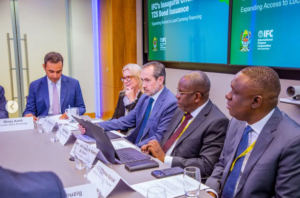
Speaking at a media briefing in the British capital on Thursday, Omar confirmed that a dollar-denominated sovereign bond was “an option on the table” to help cover approximately $1 billion in external borrowing needs, provided market conditions prove favourable. The statement marks the most concrete step yet toward what would be a landmark moment for Tanzania’s engagement with international capital markets.
Tanzania is not putting all its eggs in one basket. The potential Eurobond issuance would form just one pillar of a broader external financing strategy that also includes concessional borrowing and a pioneering local-currency bond.

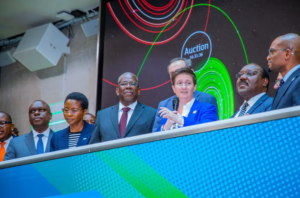
Alongside the Eurobond exploration, the government is preparing to launch an inaugural Tanzanian shilling-denominated offshore bond at the London Stock Exchange on Friday, in partnership with the International Finance Corporation (IFC), the World Bank Group’s private-sector lending arm. A government advisor indicated that if the Eurobond proceeds, it would likely be capped at $500 million, roughly half of the country’s total external borrowing requirement.
The dual-track approach reflects a carefully calibrated balancing act. Concessional loans from multilateral and bilateral partners typically carry lower interest rates and longer repayment terms, helping preserve debt sustainability. The shilling-denominated instrument, meanwhile, allows Tanzania to tap foreign capital while mitigating currency mismatch risks, a growing priority for emerging market borrowers facing dollar volatility.
Timing, as always, is everything. Global emerging market debt has faced sustained pressure from elevated U.S. interest rates, geopolitical tensions in the Middle East, and persistent concerns about debt distress across the African continent, yet Tanzania enters these discussions from a position of relative strength.

The economy maintained robust growth momentum in the first half of 2026, with real GDP expanding by approximately 6 percent on the mainland and 6.6 percent in Zanzibar, according to Bank of Tanzania Governor Emmanuel Tutuba. The expansion was broad-based, driven by agriculture, construction, mining, financial services, and transport.
Inflation has remained well within the central bank’s target range, and the shilling demonstrated notable stability in 2025, depreciating by just 1.3 percent compared to 6.3 percent the previous year. Foreign exchange reserves have strengthened to roughly 4.9 months of import cover, while the banking sector reports low non-performing loan ratios of 2.9 percent, well below the 5 percent prudential threshold.
The African Development Bank projects full-year 2026 growth at 5.4 percent, moderating slightly from 6.0 percent in 2025 due to spillovers from the Middle East conflict before rebounding to 6.1 percent in 2027. Public debt stood at approximately 47.6 percent of GDP in 2024, with the IMF and World Bank assessing Tanzania at “moderate risk” of external debt distress, a manageable classification compared to several regional peers.
Tanzania’s financing ambitions are underpinned by continued support from the International Monetary Fund. In early July 2026, the IMF Executive Board completed the sixth and seventh reviews of Tanzania’s Extended Credit Facility (ECF) arrangement, enabling an immediate disbursement of approximately $443.9 million (SDR 324.9 million). The 40-month ECF programme, approved in July 2022, has focused on safeguarding macroeconomic stability, strengthening revenue mobilisation, and advancing structural reforms.
The Fund’s confidence in Tanzania’s trajectory provides an important credibility signal for potential bond investors. Under the programme, authorities have committed to improving public investment management, enhancing fiscal transparency, and deepening domestic capital markets, reforms that directly support the country’s readiness for international market access.
Tanzania has been the notable absentee among major African economies in the Eurobond space, in decades. While neighbors including Kenya, Rwanda, and Ethiopia have tapped international markets, sometimes with mixed results, Dar es Salaam has relied primarily on concessional financing, domestic borrowing, and commercial loans to fund its ambitious infrastructure agenda.

That patience may now be paying off. By waiting, Tanzania has allowed its macroeconomic fundamentals to mature. Nominal GDP is projected to reach approximately $94.9 billion in 2026, with the economy consistently expanding at rates well above the continental average.
Moreover, the government’s financing needs are substantial. Authorities plan to borrow 4.43 trillion Tanzanian shillings (approximately $1.7 billion) from external sources to bridge budget gaps and fund priority projects under the Third Five-Year Development Plan. A successful Eurobond issuance would not only diversify the funding mix but also establish a benchmark yield curve that could benefit Tanzanian corporates and sub-sovereign entities in future capital-raising efforts.
Despite the encouraging fundamentals, the path to a debut Eurobond is not without obstacles. Global investor appetite for frontier market debt remains sensitive to shifts in U.S. monetary policy, and pricing could prove challenging if risk premiums widen. The government’s cautious language, emphasizing that the Eurobond is conditional on “favourable” market conditions, reflects a prudent awareness of these dynamics.

Debt sustainability will also remain under scrutiny. While Tanzania’s current debt levels are relatively moderate, the IMF has previously cautioned about downside risks from slow revenue mobilisation reforms and a rising external debt service trajectory. Any non-concessional borrowing will need to be carefully calibrated against these vulnerabilities.
All eyes will now turn to the London Stock Exchange, where Tanzania’s shilling-denominated offshore bond is set to make its debut. The success of that issuance, both in terms of subscription levels and pricing, will offer an early indication of investor appetite for Tanzanian paper.
If market windows open favourably in the coming months, a $500 million Eurobond could follow, potentially pricing at a premium to more established African issuers but offering investors exposure to one of the continent’s most consistently growing economies.
As for Tanzania, the stakes surpass the immediate $1 billion borrowing target. A successful market debut would mark its formal arrival on the global financial stage, unlocking new funding avenues, enhancing its sovereign credit profile, and sending a powerful signal that East Africa’s sleeping giant is ready to play in the major leagues.