
US Condemns Killing of Plateau Pastor’s Family, Demands Justice
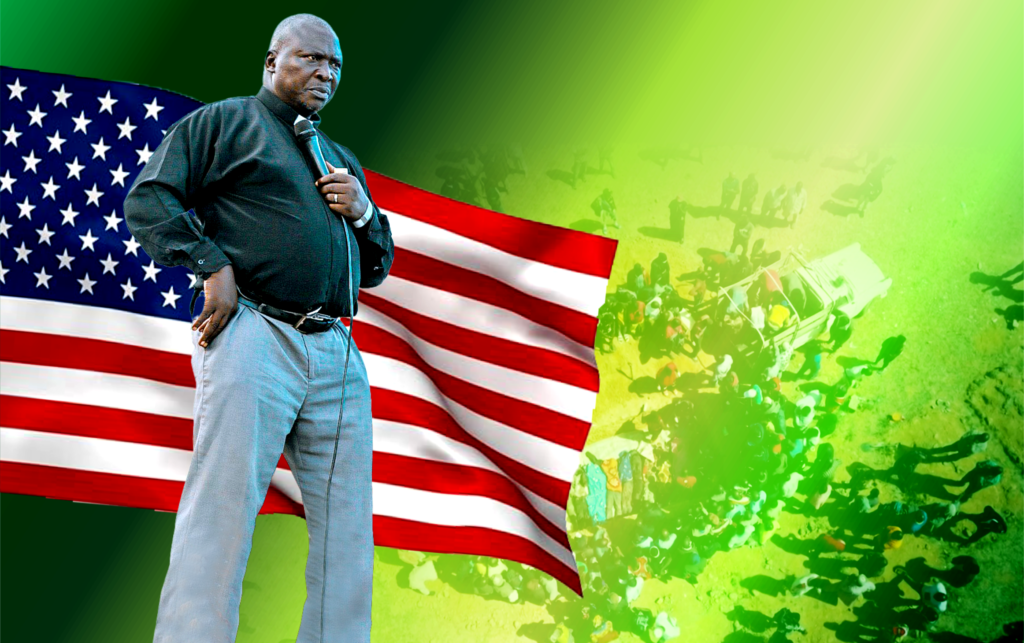
The United States has strongly condemned the massacre of nine members of the extended family of Rev. Ezekiel Dachomo, a prominent Plateau State cleric, calling the attack “horrific” and demanding that Nigerian authorities bring the perpetrators to justice.
In a statement issued Thursday by the US Department of State’s Bureau of African Affairs, Washington expressed deep alarm over what it described as the continued targeting of Christian communities and other vulnerable populations in Nigeria’s Middle Belt. “The United States strongly condemns the horrific killing of members of Rev. Ezekiel Dachomo’s family in Plateau State, Nigeria. The continued violence targeting Christian communities and other vulnerable populations in Nigeria’s Middle Belt is deeply alarming,” the bureau said.
The statement added that US officials had already engaged Nigerian authorities on the worsening security situation, stressing that urgent action was needed to prevent further bloodshed. The bureau reaffirmed Washington’s commitment to working with the Nigerian government to combat terrorism and violent extremism, insisting that Nigerians should be able to practice their faith without fear of violence.
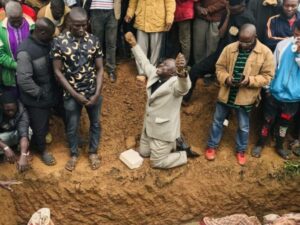
The condemnation was a result of a midnight assault on July 11 in Kum community, Riyom Local Government Area of Plateau State, where gunmen believed to be armed Fulani militias stormed a family compound and killed nine people, all members of Rev. Dachomo’s extended family.
The victims were identified as Celina James (38 years), Yohanna James (21 years), Janet Yohanna (18 years), Jenifer Yohanna (3 months), Sele James (18 years), Melody James (16 years), Rito James (10 years), Endurance James (8), and Peace James (3 years). Survivors reported that the attackers asked for Rev. Dachomo by name before opening fire, declaring, “Today you will learn a hard lesson.”
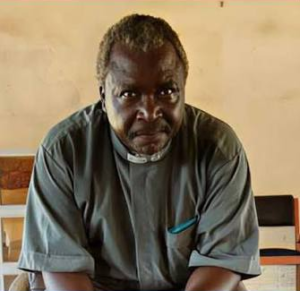
Dachomo, who serves as regional chairman of the Church of Christ in Nations (COCIN) in Barkin Ladi Local Government Area, conducted a mass burial for the victims. During the funeral, he revealed that this was not the first time his family had been targeted. “The same people killed my grandmother. They removed her heart after killing her. My uncle was also killed, and they cut out his tongue. “Yet they will say I am lying about genocide. But I have forgiven them“, he said
Days after burying his relatives, Rev. Dachomo disclosed that he and members of his church had received a written death threat from the same group, warning that he would be their next target. “A few days ago, Fulani herdsmen sent a threatening letter to me and to members of my church. The letter was written in both Hausa and English, and its message was terrifying. They vowed to attack me and kill me soon, just as they killed nine of my relatives“, he said. Copies of the letters were handed over to security agencies.
Despite the threats, Dachomo said he remained unafraid. “Many people have asked me if I am afraid. My answer is no. I am not afraid because my life is in the hands of Almighty God,” he stated, quoting Psalm 118:6. “If one day my voice is silenced, let the world remember that I never carried a weapon. My only weapon was the truth.”
The attack on Dachomo’s family is the latest chapter in a long-running crisis of farmer-herder violence that has plagued Plateau State and Nigeria’s broader Middle Belt for over two decades.
What began as resource-based disputes between sedentary farmers, predominantly Christian indigenous groups such as the Berom, Anaguta, and Afizere, and semi-nomadic Fulani herders has metastasised into a cycle of premeditated, armed violence with dangerous ethnic and religious dimensions.
According to the International Crisis Group, by mid-2018 the conflict was claiming roughly six times more civilian lives than the Boko Haram insurgency, with over 1,300 killed in the first half of that year alone and some 300,000 people displaced across Plateau, Benue, Nasarawa, and other states.
The violence has intensified sharply in 2025 and 2026. In April 2025, suspected Fulani militants attacked villages in Bokkos and Bassa local government areas, killing more than 120 Christians over two weeks. Plateau State Governor Caleb Mutfwang described the killings as “genocide”.
More recently, on Palm Sunday, March 29, 2026, gunmen opened fire in Angwan Rukuba, Jos North, killing at least 27 people and prompting a 48-hour curfew. In April 2026, another pastor, Rev. Ayuba Choji of the Evangelical Church Winning All (ECWA), was killed alongside his wife and two children in Rim community, Riyom LGA.
According to Open Doors’ 2026 World Watch List, more Christians were killed in Nigeria than in any other country during the reporting period, with 3,490 of the 4,849 Christians killed worldwide for their faith being Nigerian, an increase from 3,100 the previous year.
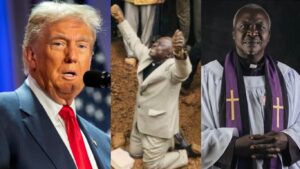
The US condemnation comes amid renewed international scrutiny of Nigeria’s security crisis. President Donald Trump had earlier designated Nigeria as a Country of Particular Concern, alleging that radical Islamists were “killing the Christians and killing them in very large numbers”.
Rev. Dachomo, who has been offered asylum in Australia and Austria but has refused to leave, continues to advocate for victims from within Plateau State. “I’ve been offered asylum in Australia, Austria and other countries, but I said no. I’m going nowhere. I stand with them,” he said earlier this year.
As of the latest reports, no arrests have been publicly announced in connection with the July 11 massacre, and Nigerian security agencies have not issued an official statement on the attack. Communities in Riyom and surrounding areas remain on high alert amid rumours of further attacks.