
FIFA Private Equity Plan Sparks Global Football Governance Storm

In Zurich, FIFA’s proposal to sell up to a 20% minority stake in a newly created commercial subsidiary, ignited one of the most significant governance debates in modern football, exposing weighty divisions over the future of the world’s most popular sport and raising questions that stretch far-outside the pitch.
The governing body says the proposed FIFA Forward Enterprise (FFE), valued at around $20 billion, would unlock billions of dollars in private investment to expand football development worldwide, while allowing FIFA to retain full control over the laws of the game, tournament calendars and sporting governance.
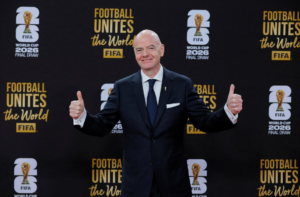
FIFA President Gianni Infantino has presented the initiative as a once-in-a-generation opportunity to strengthen football’s financial future, claiming that fresh investment could significantly increase funding for grassroots programmes, infrastructure, women’s football and youth development across all 211 member associations.
However, the proposal has quickly become a flashpoint, over who should control football’s commercial future; and whether the game’s global governing body should invite private equity into one of the world sport’s most valuable properties. To many across the globe, this seems like a picture of more than a financial deal.
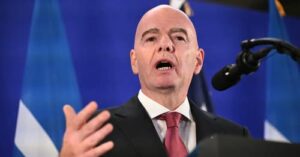
The core focus of FIFA’s proposal, is a plan to raise approximately $4.2 billion from outside investors, while maintaining majority ownership of the new commercial vehicle. To encourage member associations to support the proposal, FIFA has outlined substantial financial incentives, including immediate funding for national federations and long-term development commitments, extending to 2038.
Supporters contend that the investment could transform football in developing nations, where many federations struggle to finance coaching education, youth academies, training facilities and women’s competitions. This would complement the growing progresses of smaller football associations across Africa, Asia, Oceania and the Caribbean. Additional funding could help bridge longstanding resource gaps that have limited competitiveness at the international level.
However, the scenic-actors of criticism contend that tying development funding to approval of the proposal, risks politicising financial assistance, and would sponsor divisions-upsurge between football’s wealthiest confederations, and those with fewer economic resources, leaving players at the centre of the uprising-debate.

Although negotiations have focused on governance and finance, players remain central to the discussion. Professional footballers have repeatedly expressed concerns in recent years, over highly congested engagement of international schedules, growing commercial demands and rising injury risks. On the other hand, domestic leagues managements have warned that any expansion of FIFA’s commercial ambitions, must not come at the expense of players’ welfare or domestic competitions that sustain football ecosystems throughout the year.
Meanwhile, from diverse panoramic-views, there holds a stronger claim that youth tournaments represent far more than commercial assets; and in respect of many young players from emerging football nations, FIFA competitions have rarely provided opportunities to attract professional contracts, scholarships and international exposure to them. Any disruption to these developing events, could directly affect thousands of aspiring footballers and coaching staff worldwide.
It is also observed that women’s football have been facing some uncertainties. As such, sustained investment in women’s football, has been widely credited to be the accelerating-engine growth of the women’s game. And so, any form of protracted governance disputes, could complicate tournament planning, sponsorship agreements and long-term development programmes. This diverse supporting-submission, has developing global oppositions to face, anyways.
The proposal has drawn criticism from several regional football bodies, with concerns ranging from governance and consultation to transparency and commercial independence. European football authorities have been among the strongest critics, arguing that football’s governance should remain insulated from private investment interests.
Elsewhere, football officials in North America, Asia and Africa, have questioned the consultation process, the pace of decision-making and the wider implications for the governance of international football. The differing responses also highlight the contrasting realities of global football. While wealthier confederations emphasize institutional independence, many smaller associations must weigh those concerns against the prospect of transformative development funding. But FIFA believes the economic stakes extends to the betterment of football’s future.
The financial implications/impact extend farther than FIFA’s corporate post. Broadcasters, sponsors, host cities, domestic leagues and tourism industries, all depend on the stability and global appeal of FIFA competitions. Persistent argument on governance dispute and the current economic proposal dynamics, might hold uncertain future for commercial partners, media rights holders and tournament organizers, particularly if disagreements affect participation in future competitions.
And with respect to countries investing heavily in stadiums, infrastructure and tourism ahead of FIFA events, any disruption could have significant economic consequences, potentially affecting local employment, hospitality businesses and long-term investment plans. Conversely, this proposal has also intensified debate over the growing influence of private capital in global sport, following similar investment trends across football clubs, leagues and other major sporting competitions.
In this debate-thread, FIFA’s proposal has also acquired a political dimension, away from its focal economics pursuit. Queries are now emerging in regard to transparency, right governance-standards and FIFA’s relationships with prospective investors. As this is prompting calls from some lawmakers and football stakeholders for serious scrutiny of the FIFA’s commercial-strategy governing-body.
Experts in governance-approach are also saying that the controversy echoes a serious challenge that is facing international sport, which is, balancing commercial growth with institutional independence and public trust. Football’s global popularity has made FIFA one of the world’s most influential sporting organizations. Meaning, decisions about ownership structures, now carry diplomatic, political and regulatory implications that surpasses football itself.

Well, in flipping the page over, grassroots football ecosystem is also watching closely. At the community level, reactions are more nuanced than the political rhetoric surrounding the proposal. Many grassroots clubs, local coaches and youth football organizers, acknowledge that any form of amplified funding development would improve facilities, coaching standards and participation, particularly in lower-income countries, where football infrastructure have been underdeveloped.
At the same time, as football-supporters’ organizations claim that football’s identity is rooted in local communities rather than corporate investment models, different fan-groups are warning against grander commercialization, because they believe it could eventually influence ticket pricing, competition formats and the accessibility of international football.
From Lagos to Lima, Jakarta to Johannesburg and so on, millions of young players kicking ball on community pitches, expect the ongoing debated proposal to ultimately inject new investment that will strengthen opportunities at the grassroots, or shift football further towards commercial priorities for them, holding-down future hopes on the road to building a career in the football sports-subsector.

As FIFA moves forward with discussions over the proposed investment structure, the debate has evolved into something larger than a corporate transaction. It has become a test of how international football balances commercial ambition with sporting integrity; global development with institutional independence; and financial innovative business development with the longstanding values that defines the world’s game.
Nonetheless, the decisions made in the coming months, would shape FIFA’s financial future, the governance, accessibility and identity of football, for decades to come.
Picture Credit: Reuters | ESBS | Geo Super | Sports 247 | xinhuanet | AOL