
Mark Zukerberg Unveils a Vision for the AI Age
Mark Zuckerberg’s recent publication, “The Future is for Everyone”, signals a decisive paradigm shift in the global discourse on artificial intelligence. Mark views superintelligence as a systemic risk that requires institutional safeguards.
His philosophy instead centres on individual empowerment. The core thesis posits 3 major ideas, and they include
- Individual agency is the ultimate source of prosperity.
- AI inventions must supersede simple automation as their primary purpose.
- A balance of power serves as a more resilient foundation for safety than any centralised alignment effort.

His article identifies five critical domains where superintelligence will fundamentally transform human capability. Meta’s strategic role is framed not merely as a service provider but as the architect of a platform for universal agency. By dismantling technical barriers, the company seeks to mitigate regulatory friction and foster a new era of market dynamism.
- Personal Agents
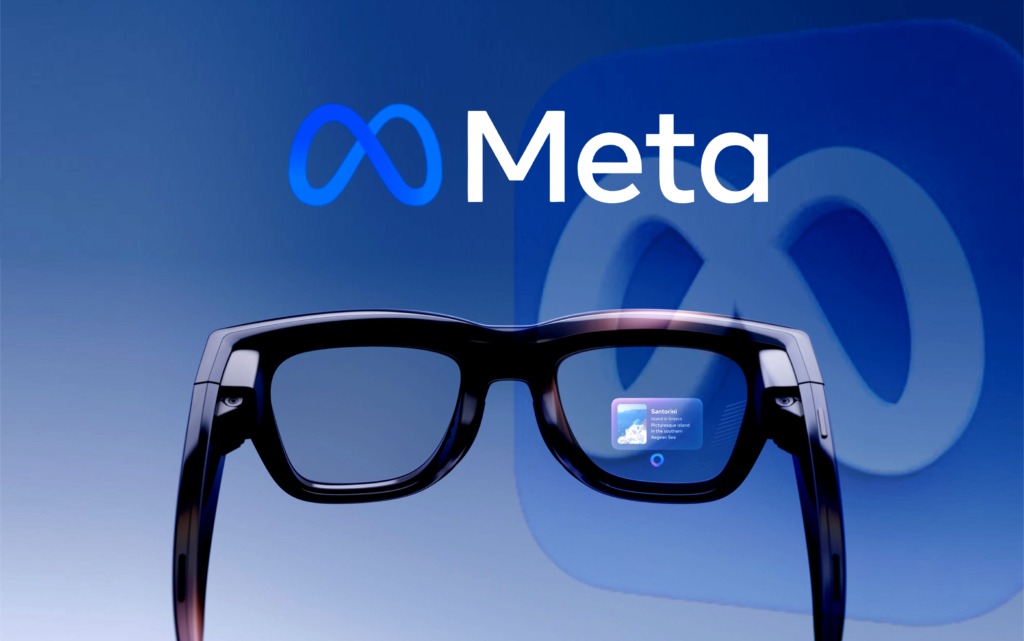
Personal AI agents are envisioned as always-available digital assistants that operate continuously on behalf of the individual. Zuckerberg envisions 24/7 agents built around strong privacy protections, including WhatsApp-style end-to-end encryption that prevents even Meta from accessing users’ data. Their integration with hardware, particularly augmented reality glasses, would allow users to remain engaged with the physical world while maintaining constant access to their digital counterparts.
This model shifts AI from a tool that users interact with occasionally to a persistent form of personal intelligence that can operate alongside them while preserving individual privacy and agency.
- Creation Tools
AI can move people from passive consumption to active creation by making complex forms of invention more accessible. The article points to examples such as his daughter coding her own ideas and designing a robot in a single evening to illustrate how AI can dramatically shorten the distance between an idea and its execution.
This will significantly help by reducing the technical barriers to creation, AI could allow more people to transform their ideas into tangible products, inventions and businesses without requiring advanced technical expertise.

- Entrepreneurial Engines
AI could lower the barriers to entrepreneurship by giving individuals capabilities that previously required significant capital, technical expertise or large organisations. Zuckerberg envisions AI enabling individuals to develop and launch products without relying on massive capital or large corporate structures, effectively creating one-person product studios.
This could shift economic activity towards entrepreneurship, with individuals and small businesses becoming stronger drivers of innovation and economic growth.
- Personalised Education:
AI could make highly personalised, expert-level education available to far more people. In the article, Zuckerberg suggests that the PhD-level tutor concept would provide students with patient, tailored instruction that adapts to their individual needs and learning pace.
This is important because personalised tutoring has historically been difficult to scale. AI could make individualised, high-quality learning accessible to a much broader population, narrowing some of the educational advantages traditionally available to the elite.
- Scientific and Medical Frontiers
AI could accelerate scientific discovery and expand the ability to address diseases that have historically been difficult to study or treat. Zuckerberg’s vision for the Biohub focuses on moving beyond common diseases to address rarer conditions, using technologies such as virtual cell modelling and personalised therapies to accelerate research and trials.
If AI can accelerate biological discovery and make personalised therapies more feasible, it could shorten the path from scientific insight to medical intervention and expand the range of conditions that researchers can realistically target.

Access and Equity
To ensure these capabilities are not restricted to the upper echelons of society, Meta has introduced a dynamic mechanism for use; their market-driven model determines that capacity is allocated based on what users collectively find most valuable, guaranteeing the lowest possible market prices and ensuring that compute remains a public utility rather than a luxury asset.
These tools redefine the value of AI, shifting its promise from simple efficiency gains to a fundamental expansion of individual agency. However, distributing such immense power necessitates a fundamental restructuring of traditional safety frameworks.
Mark explicitly rejects the idea of an alignment monoculture, the notion that a single, centralised AI can be perfectly tuned to a universal set of human values. He argues that humanity is a diverse collection of competing interests, making a single definition of values difficult to achieve. Instead, he suggests that safety is better achieved through a ‘balance of power’ similar to democratic governance.
Distributed superintelligence acts as a natural check against institutional overreach and tyranny. Mark argues that coupling distributed intelligence with a private mode secured by end-to-end encryption can prevent governments or corporations from easily weaponising a monopoly over data and insight. Even with Recursive Self-Improvement (RSI), the framework maintains a stable equilibrium as long as most AI intelligence remains directed by people toward their individual goals rather than by autonomous systems pursuing their own objectives.
A critical component of Mark’s vision is the social licence to operate. To mitigate the political risks and community resentment often associated with high-tech infrastructure, Meta is grounding its AI development in a Community Compact model. The model treats data centres as long-term community assets rather than isolated infrastructure projects, with a focus on three key areas:
- Sustainable Development: Direct fiscal benefits are prioritised. In Richland Parish, Louisiana, Meta’s investment generated tax revenues that funded $50,000 bonuses for local teachers. These incentives helped attract top-tier talent to the district.
- America’s Workforce Academy: To address the shortage of skilled workers in trades such as carpentry, electrical work, and construction, the initiative provides free training and guaranteed high-paying jobs. This ensures that the development of AI infrastructure also creates opportunities for the local labour market.
- Environmental Stewardship: Meta has committed to being water-positive by 2030. In high-stress areas, the target is to restore 200% of the water used. Additionally, by building independent energy-generating infrastructure, the company avoids straining local grids.

To mitigate ‘founder-control’ risks during the high-stakes transition to superintelligence, Meta is implementing a new governance structure. The newly established Meta Superintelligence Labs will be overseen by an independent board of directors.
This board is granted the specific authority to approve safety criteria and review model releases to ensure they adhere to rigorous standards. This level of independent oversight not only increases transparency but also positions Meta to influence broader industry standards, encouraging other frontier labs to adopt similar governance structures. This move aims to transform industry standards from opaque self-regulation to a more structured, accountable framework.
Crucially, Mark defines ‘alignment’ not as imposing a centralised set of values but as ensuring that AI agents reflect the goals and values of the individual rather than the company. This philosophy of distributed power suggests that the safest way to navigate the coming decades is to ensure that the “majority of intelligence” remains in human hands.