
Algeria Grapples with Wildfires, Exposing Community Strain and Infrastructure Gaps
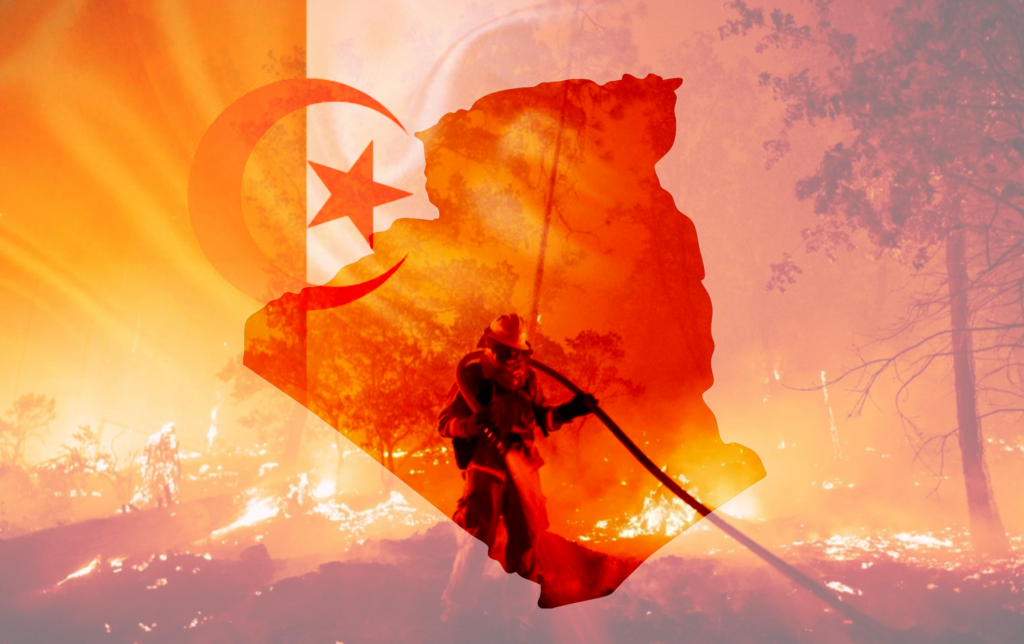
Algeria is battling one of its most severe wildfire emergencies in recent years, as dozens of fast-moving blazes spread across Northern provinces amid an intense heatwave that has pushed temperatures close to 48°C. The fires have scorched forests, farmland and residential areas, forcing emergency evacuations and stretching firefighting resources across nearly the entire northern region.
Authorities have mobilised civil protection teams in 45 provinces to contain more than 40 active fires, with major operations under way in Bejaia, Annaba, Skikda, Blida, Tizi Ouzou, Sétif and Aïn Defla. Hundreds of residents have already been evacuated from vulnerable communities as flames edge closer to homes and agricultural settlements.
The crisis is unfolding against the backdrop of one of the country’s harshest heatwaves, with Algeria’s National Meteorological Office issuing its highest Level-3 red alert for several northern and eastern provinces. Temperatures are forecast to reach or exceed 48°C, while parts of the Sahara are expected to approach 49°C. The extreme conditions have also strained infrastructure, contributing to technical failures that triggered widespread electricity disruptions in several provinces.
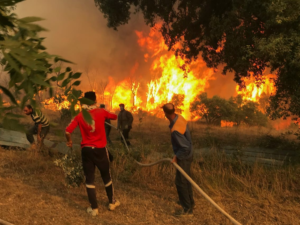
The rural communities see the wildfires as an instance that is much more than an environmental disaster. Families that are forced to flee their homes, often leave behind livestock, orchards and crops that provide their primary source of income. Olive groves, fruit farms and grazing lands across northern Algeria support thousands of households. Meaning, prolonged wildfires could extend economic hardship long after the flames are extinguished.
In Blida Province, approximately 200 residents were evacuated from communities near the Chrea forest, while around 100 people left villages in the Imarat area of Bejaia’s Barbacha municipality. Additional evacuations have taken place in Skikda, where several families were relocated from Kanoua, Oued Zeggar, El Eulma and Oum Toub. In Guelma, emergency crews moved 13 families, accounting for about 70 people, to safer locations as advancing fires threatened their homes.
The emergency also highlights the social burden carried by local communities. Schools, community centres and public buildings are serving as temporary shelters, while volunteers and neighbourhood associations are helping distribute food, water and basic necessities to displaced families. Local team-spirit, has become an essential complement to government-led emergency operations.
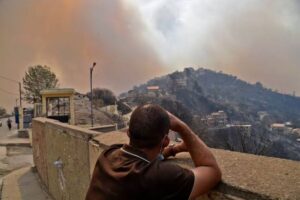
Scientists have repeatedly warned that climate change is extending wildfire seasons across the Mediterranean and North Africa. Rising temperatures, prolonged drought and highly dry vegetation, have created conditions in which even small fires can spread rapidly. Environmental experts say the frequency and intensity of such disasters, are likely to increase unless comprehensive climate adaptation measures, forest management and water conservation programmes, are strengthened.
At the same time, some persons in the Algerian authorities have said that some of the fire incidence, are not naturally caused. These officials report that several current and previous wildfires are suspected to have been deliberately started, referencing some arrests, which were made in connection with alleged acts of arson. So, investigators have carried out careful examination of whether criminal activities contributed to some of the latest outbreaks, adding a security dimension to an already complex emergency.
The wildfires also carry political and governance implications. Large-scale wildfire disasters often test the capacity of emergency services, disaster preparedness systems and coordination between national and local authorities. The effectiveness of evacuation plans, public warning systems and investment in firefighting equipment, is expected to come under closer public scrutiny, as climate-related disasters become more frequent.
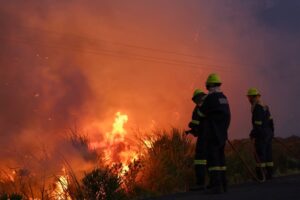
Some civil defence authorities urged residents across northern Wilayas to remain indoors, during the hottest hours of the day; they advise that residents should keep their homes sealed against extreme heat where possible, and be prepared to evacuate immediately, if local officials issue emergency orders. With forecasts indicating little immediate relief from the heat, firefighters face a difficult battle to prevent further destruction and protect vulnerable communities.
As Algeria confronts another devastating wildfire season, the crisis emphasizes the growing intersection of climate change, public safety, rural livelihoods and national capacity to withstand this situation, raising urgent questions on how communities across North Africa can better prepare for an increasingly volatile environmental future.