
Climate Risk Meets Infrastructure, AFC Launches Fund to Mobilise Nigerian Capital for Resilient Growth
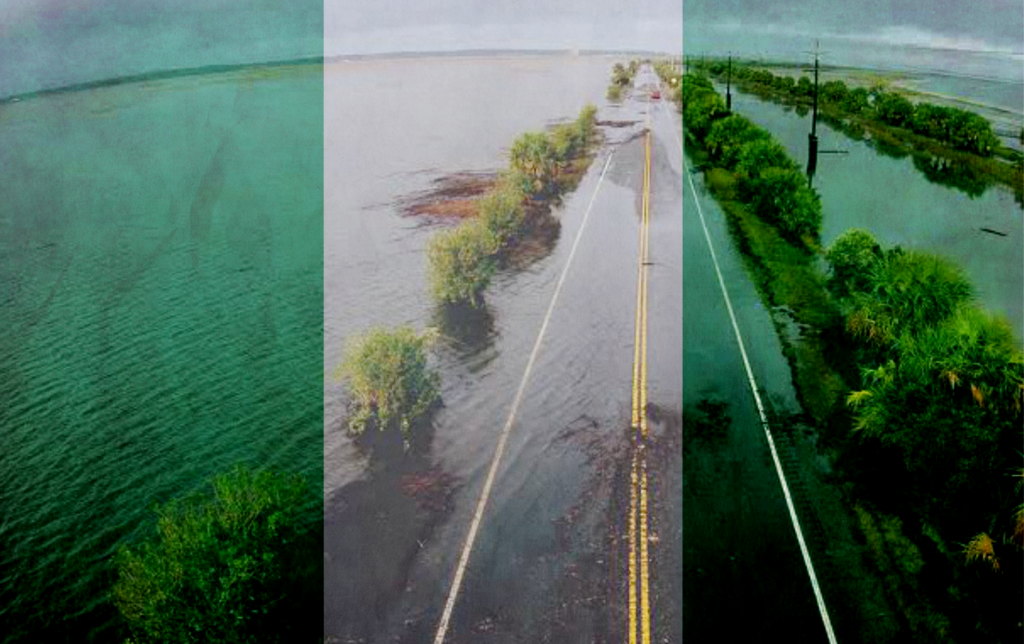
The growing cost of climate change is seriously becoming an infrastructure problem for Nigeria, damaging roads, disrupting electricity and transport networks; threatening businesses and placing additional pressure on government budgets. Against this backdrop, the Africa Finance Corporation (AFC), through its asset management subsidiary AFC Capital Partners (ACP), has launched the Infrastructure Climate-Resilient Fund Nigeria (ICRF Nigeria), a new platform aimed at directing domestic institutional capital into climate-resilient infrastructure.
Registered with the Securities and Exchange Commission (SEC) as a closed-end fund, ICRF Nigeria is designed to attract long-term investment from pension fund administrators, insurers, asset managers and other Nigerian institutional investors. The objective is straightforward but significant: to move more of Nigeria’s long-term savings into infrastructure capable of supporting economic growth while withstanding the increasingly disruptive effects of climate change.
Most communities that are already experiencing flooding, extreme heat, erosion, water shortages and deteriorating infrastructure, the issue is beyond an environmental one concern. When a flood destroys a road, farmers can struggle to reach markets. When extreme weather damages electricity infrastructure, small businesses lose productive hours and income. When transport corridors are repeatedly disrupted, food and other essential goods become more expensive. These consequences expose an extensive economic concern for government; infrastructure that is not designed for a changing climate, can become a recurring public expenditure, rather than a durable development asset.

Climate change raises the cost of development. Nigeria’s infrastructure deficit has been recognised as one of the major constraints on economic advancement, for a long period now. But climate change is adding another layer of risk. Infrastructure that is planned without adequate consideration of future climate conditions, can be more vulnerable to flooding, extreme rainfall, heat, coastal hazards and other environmental pressures. The result can be higher maintenance costs, interruptions to economic activity and shorter asset lifespans.
Consequently, this creates a difficult equation. Governments need to expand roads, railways, power systems, ports, digital networks and industrial facilities to support economic transformation. And these same investments must intentionally be designed to survive environmental conditions that are becoming less predictable.
This is where ICRF Nigeria seeks to intervene, by making climate resilience part of the investment decision from the beginning, instead of treating it as an additional cost, after infrastructure has already been built.
The fund forms part of ACP’s US$750 million Infrastructure Climate-Resilient Fund, established to integrate climate considerations across the infrastructure lifecycle, from planning and design to construction and operation.
The wider fund has attracted international and African institutional investors, including a US$253 million first-loss commitment from the Green Climate Fund (GCF), which is the largest equity investment in Africa to date. Other participants include the European Investment Bank, Development Bank of Southern Africa, Cassa Depositi e Prestiti, the Nigeria Sovereign Investment Authority and African pension funds.
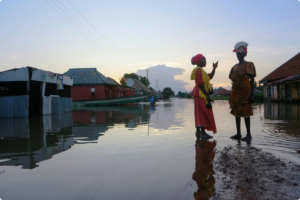
ACP expects the fund to mobilise as much as US$3.7 billion in total financing and develop, as a diversified portfolio of between 10 and 12 infrastructure projects across Africa. An act of unlocking money that already exists.
One of the more important questions raised by the initiative is, why Africa? Despite the fact that Africa has substantial domestic savings, it still faces a large infrastructure financing gap. AFC President and Chief Executive Officer Samaila Zubairu argues that the problem is not shortage of money.
Africa, he noted, holds more than US$4 trillion in domestic resources, including substantial pools of long-term capital in pension funds, insurance companies and sovereign wealth funds. Much of that money, remains concentrated in relatively low-risk and short-term instruments, instead of being channeled into infrastructure, industry and innovation.
ICRF Nigeria therefore represents an attempt to connect two resources that have often operated separately, the African savings and African development needs.
As for Nigeria, the implications could be considerable. Pension and insurance funds represent pools of patient capital that can, under appropriate regulatory and risk-management structures, support long-term assets. Directing a portion of this capital towards commercially viable infrastructure, could potentially strengthen domestic investment, reducing dependence on external financing.
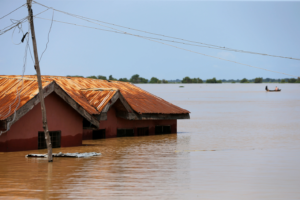
But the success of that strategy will depend much more than making capital available. Projects must be financially credible, transparently governed and capable of delivering measurable economic and social returns. Supporting this pinpoint with another view, it also means that from financial markets to the roadside economy, the significance of climate-resilient infrastructure, will become clearer and felt at the grassroots level.
A resilient transport network, can mean that a farmer gets produce to market before it spoils. Reliable electricity can allow a small manufacturer to operate for longer hours. Better digital infrastructure can enable businesses outside major cities to participate in the wider economy. Climate-resilient industrial infrastructure can protect jobs and investment from highly disruptive weather events. This makes infrastructure resilience, an economic issue for families as much as for investors.
The danger is that climate-related infrastructure failures, often produce costs that are not immediately visible on government balance sheets. A damaged road may raise transportation costs for traders. A flooded market can destroy inventory belonging to small businesses. Repeated power disruptions can reduce the productivity of enterprises. These accumulated losses can weaken incomes and local economic activity, even when no single weather-event appears large enough to dominate national economic statistics.
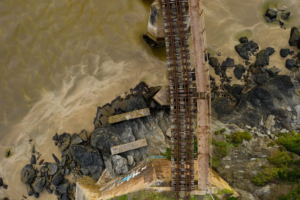
Therefore, beyond just building more infrastructure, government must take-up the challenge to ensure that the infrastructure remains functional, even under intensely difficult climatic conditions.
Thus, it is sufficient to say that ICRF is aimed at blending finance to reduce investment risk. As ICRF is designed to address one of the central problems in financing climate adaptation projects, noting that even though they may have strong social and economic benefits, they can still appear too risky or expensive for private investors.
The fund combines concessional and commercial capital, using blended finance and targeted de-risking mechanisms, to attract additional private investment. The Green Climate Fund’s first-loss commitment, is particularly important because such capital can absorb an initial portion of investment losses, potentially making projects more attractive to commercial investors.
The fund will focus on sectors central to Africa’s economic transformation, including renewable energy, transport and logistics, digital infrastructure and industrial development. Each proposed investment will undergo climate-risk screening and assessment, taking into account physical risks such as extreme weather as well as transition risks associated with changing emissions policies, energy systems and climate governance. This approach marks an important shift in how infrastructure can be evaluated.

Launching of ICRF Nigeria at a time like this, when the country needs substantial investment to expand productive capacity, improve infrastructure, create jobs, etc., for a rapidly growing population, is more of a test for Nigeria’s development ambitions
Ayaan Adam, CEO of AFC Capital Partners, said the ICR Fund will provide Nigerian institutional investors with a dedicated route into climate-resilient infrastructure, in Nigeria and across Africa, combining institutional capital with AFC’s infrastructure expertise and blended finance. The far-reaching implication is that climate resilience could become an investment strategy, instead of being basically a development obligation.
In the whole, if ICRF Nigeria succeeds, the model could help Nigeria use domestic savings to finance infrastructure that supports economic activity, while reducing exposure to climate-related losses. It could also demonstrate that adaptation spending, does not necessarily have to be viewed solely as a cost; properly structured, resilient infrastructure can protect existing economic value and create new opportunities.
Nonetheless, beyond the fund’s financial architecture, will the benefits reach communities that are most exposed to infrastructure failure? This is one of the many probes that the common man in Nigeria and Africa, will beckon for answer, over.
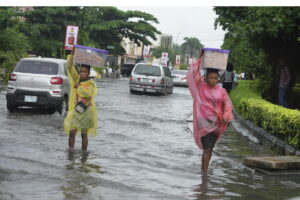
Eventually, ICRF Nigeria and similar initiatives would answer this and many other questions with diverse onsite infrastructural durability of roads construction, reliability of power, resilience of transport systems, protection of industrial assets, engineering the ability of businesses and enabling homefronts to keep earning even when extreme weather strikes.
Nigeria’s climate challenge is therefore becoming inseparable from its development challenge. Mobilising capital is an important first step. Ensuring that the capital produces infrastructure that is resilient, productive, accountable and accessible to the communities that need it most, will determine whether that investment becomes a genuine engine of inclusive economic advancement.