
The Dangote Refinery IPO’s Journey of Industrial Ambition, testing Nigeria’s Capital Market
The public offering of shares in the Dangote Refinery, is placing one of Nigeria’s most ambitious industrial projects at the centre of the country’s capital market, opening a new avenue for Nigerians and other eligible investors to participate in the ownership of Africa’s largest single-train refinery.
The Dangote Petroleum Refinery and Petrochemicals FZE is offering 4.1 billion ordinary shares at ₦525 each, with the base offer targeting approximately ₦2.15 trillion ($1.6 billion). The minimum subscription is 10 shares, meaning investors can enter the offer with ₦5250, subject to the applicable terms and requirements.
The offer that opened today September 14, 2026, and is scheduled to close on October 13, 2026, with trading on the Nigerian Exchange, expected around November 2026. Apart from the numbers of shares, the IPO represents a stage where ordinary Nigerians can become financial participants, in a major industrial asset that has already reshaped the country’s petroleum landscape, from a refinery to national economic asset.
Many years ago, Nigeria exported crude oil out of the country, while importing substantial volumes of refined petroleum products, exposing the economy to foreign exchange pressures, international price movements, shipping costs and supply disruptions. Conversely, the Dangote Refinery came and started altering that equation.
By processing crude domestically, the refinery has shown the potential to reduce dependence on imported refined products, conserve foreign exchange and strengthen the domestic petroleum value chain. Its expansion could also expand demand for Nigerian crude, transportation, engineering, logistics, maintenance, financial services and other supporting industries.
The proposed expansion is particularly significant. The company plans to invest about $14.3 billion to increase refining capacity to 1.4 million barrels per day by 2029. If achieved, the expansion would move the refinery way beyond its role as a major domestic fuel supplier, and strengthen its position as a regional refining and export hub.

The IPO gives investors an opportunity to own a stake in a large-scale industrial company, rather than buying exposure to a traditional financial institution or consumer business. At ₦525 per share, the entry point has deliberately been set low enough for smaller investors to participate, with the minimum investment of 10 shares. However, the larger significance, lies in what happens after the offering.
Funds that raised through the IPO are intended to support expansion and other strategic projects. To the would-be investors, it creates a potential connection between the growth of the refinery’s operations and the long-term value of their shares. In comparison to any equity investment, returns are not guaranteed and the market price can rise or fall.
The company has placed the enterprise value of the refinery at approximately $46.3 billion, maintaining that the valuation reflects normal market conditions, than the unusually high earnings associated with temporary geopolitical disruptions and elevated oil prices. This distinction will be relevant to investors and analysts, who might be assessing to know if the refinery’s earnings can be sustained, after exceptional market conditions fade.
The refinery reported approximately $1.82 billion in profit in the first half of 2026, following a full-year loss in 2025. The company has said the earlier period was affected by the refinery’s transition and testing phase, as operations moved towards commercial-scale production.

The sharp improvement in earnings, has strengthened the investment case, but it also post an important concern for the market, in which enquiries are trailing to know if the refinery would maintain strong profitability under normal crude prices, refining margins and operating conditions. This concerns, will follow the company into the public market. Also note that an IPO brings greater scrutiny. Investors will expect regular financial reporting, transparency, effective corporate governance and evidence that expansion spending is generating sustainable economic returns.
The refinery’s impact extends beyond shareholders. Large industrial projects create demand across a wide network of businesses, from haulage companies and equipment suppliers to food vendors, security firms, engineers, technicians and professional-service providers. The expansion could increase employment opportunities directly and indirectly, particularly around the refinery’s industrial ecosystem. SMEs businesses may also benefit as supply chains become deeper and more formalised.
There is also a wider social dimension to domestic refining. More reliable local fuel supply, could reduce some of the economic disruptions associated with shortages and import dependence. Lower exposure to foreign exchange pressures, could in favourable circumstances support greater stability across the petroleum-products market.
But expectations will need to remain realistic. A large refinery cannot by itself, solve Nigeria’s inflation, unemployment or energy-access problems. The wider benefits will depend on infrastructure, government policy, crude supply, transportation networks, electricity availability and the competitiveness of other industries.
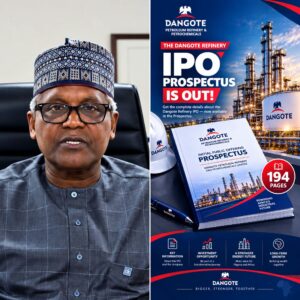
Perhaps the most politically and socially significant element of the IPO, is the invitation for Nigerians to participate directly in ownership. The offer can be accessed through officially approved banks, fintech and investment platforms, mobile-money operators, NGX Invest and licensed stockbrokers. Investors are required to meet the applicable identification and securities-account requirements, including a BVN and CSCS account number, for the shareholding process. The company has also warned potential investors to use only its officially approved channels, because of the risk of fraudulent platforms and impersonators.
You can subscribe digitally via mobile apps, USSD short-code, internet banking, or physically at any of the branches of these institutions nationwide:
| Commercial Banks | Approved Fintechs & Investment Apps |
| · Access Bank
· Ecobank · FCMB · Fidelity Bank · FirstBank (FirstMobile, FirstOnline, or FirstMonie agents) · Globus Bank · GTCO (Guaranty Trust Holding Company) · Jaiz Bank · Keystone Bank · Lotus Bank · PremiumTrust Bank · Providus Bank · Stanbic IBTC · Sterling Bank · TAJ Bank · Union Bank · United Bank for Africa (UBA) · VFD Bank · Wema Bank · Zenith Bank (Zenith Mobile App, website, or USSD) |
· Bamboo
· Flutterwave · Moniepoint · PiggyVest · Cowrywise · Paga · Remita · Sabivest · InvestNaija · Vetiva Invest · Payaza Ladder |
| Mobile Network Operators | Stockbrokers & Exchange Platforms |
| · MTN MoMo (MoMo PSB NG App)
· Airtel SmartCash
|
· NGX Invest: The primary digital portal powered by the Nigerian Exchange Group.
· Any licensed stockbroker registered with the Securities and Exchange Commission (SEC). |
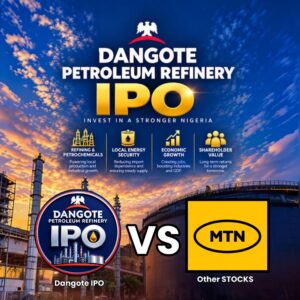
That warning is particularly important as public interest grows. Investors should verify the official offer documents and approved subscription channels, before transferring money or providing personal information.
As a define investment-stake on Nigerian industrialisation, the Dangote Refinery IPO is more than a fundraising exercise. It is driving a domestic refining capacity and the ability of the country’s capital market, to mobilise local investments into large-scale productive assets.
From the Dangote’s perspective, the IPO provides capital with a wider ownership base, as it prepares for another phase of expansion. In respect to the Nigeria government, a successful refinery operation could support energy security, reduce import dependence and strengthen industrial activity. While it could generate opportunities across an expanding petroleum value chain, in respect to businesses.
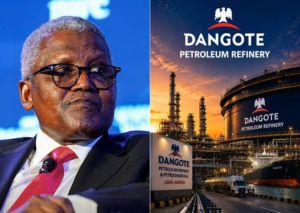
And to the Nigerians, the offer presents a different propositional-possibility of moving from being consumers of petroleum products, to becoming shareholders in one of the country’s most consequential industrial enterprises.
However, when the IPO closes, the success of the offering will in the end be measured by how the refinery can deliver sustainable profits, create comprehensive economic opportunities and translate its enormous scale, into lasting value for investors and the Nigerian economy.