
DR Congo Constitutional Overhaul Fuels Protests and Fears Over Tshisekedi’s Political Future
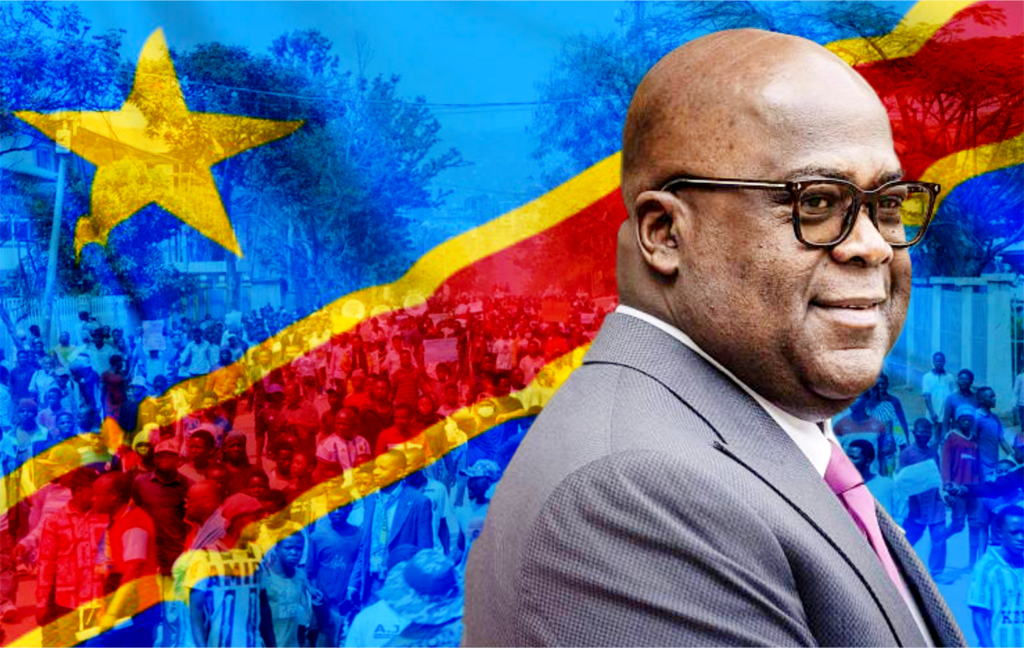
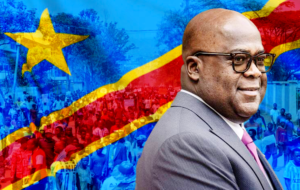
In Kinshasa, a proposed overhaul of the Democratic Republic of Congo’s (DRC) constitution, has moved beyond the corridors of parliament and into the streets, worsening an already tense political climate and raising demand on the country’s democratic future.
President Félix Tshisekedi has defended the drive to replace or substantially change the 2006 Constitution, describing the existing document as outdated and arguing that Congolese citizens should have the right to reconsider the country’s basic law. In 2024, he said the proposed changes had “nothing to do with a third term” and insisted that a commission would examine the Constitution. But his explanatory-defence, has done little or nothing to calm the opposition and tension mounting in the DRC.
The controversy has intensified because the Constitution currently limits a president to two 5-year terms. Tshisekedi began his second term in January 2024, meaning any constitutional change that alters the rules governing presidential tenure, could have direct consequences for the 2028 election. Opposition groups are contending that the proposed overhaul could eventually open a path for Tshisekedi to seek another term. Recent protests have been organised around precisely that concern. Really, what is Tshisekedi trying to change?
Some critics think the government’s debate of this proposition is bigger than presidential tenure alone. Tshisekedi and his supporters say the Constitution needs to be adapted to Congo’s present realities, to address weaknesses in the country’s political institutions. The president has also framed constitutional reform in terms of national sovereignty, maintaining that Congolese people should be able to determine for themselves, the kind of constitutional system they want. That statement, touches a sensitive historical nerve of the DRC.
The current Constitution, emerged from the political negotiations that followed years of war and political crisis. It was approved by a referendum in December 2005 and was activated in February 2006, with the stated goal of creating a democratic political order; and giving Congolese citizens the ability to choose their leaders through elections.
So, in respect to the view of most Congolese, changing the Constitution should not just be another legal exercise, carried out in the parliament. It should be premised on the debate of the political settlement that was supposed to help the country move away from decades of conflict and authoritarian rule.
The strongest political-opposition, centres their protest on the presidential term limits. That is one of the major reasons why people plunged out to protest. A parading-perception of analysts state that even if the government presents the exercise as institutional reform, changing the constitutional framework now, could alter the rules under which the next presidential election would be organised. The opposition coalition C64, has accused Tshisekedi of using a constitutional referendum to create a route to a third term. This dispute has severely become a street-level discussion issue also.
On the 15th of September, 2026, police used tear gas and warning shots to disperse protesters and political opposition massive rally demonstrations in several cities, including Kinshasa. The clashes between the protesters and police officers, highlighted how the proposed constitutional reform has become entangled with a muddled public distrust, political tensions and growing opposition to the government’s plans.
The average Congolese citizen is asking, what does the new Constitution say? Who benefits from changing it? And what happens to the country’s political rules afterwards?
From a panoramic viewpoint of the social dimension, the constitutional reform debate is happening in period where millions of people are already dealing with insecurity, unemployment, poverty and weak public services. Some opinion-polls across Africa, would review this reform quest as bad timing, particularly insensitive and thoughtless.
In eastern Congo, a prolonged armed conflict has sustained the disruption of communities and displacement of civilians, while the government faces the simultaneous challenge of addressing humanitarian needs, security concerns and mounting economic pressures. Also, as reflected in reports of cabinet deliberations, government discussions have consistently placed security, humanitarian and public-health concerns, alongside wide-range economic priorities.
As regards the population outside Kinshasa’s political circles, a Constitutional reform may seem irrelevant to their daily concern, mostlikely a far-thought from their everyday worries. To some of them, finding a paying job, keeping children in school, accessing healthcare, earning enough to feed a family and living without fear of violence, is their focal priority.
Although, the gap between national political ambitions and grassroots priorities, could become one of the most important dimensions of this dispute, you never can tell. Because, a constitutional change that produces stronger institutions, clearer accountability, better representation, economic development, etc., could eventually impact the ordinary citizen. But a reform that is perceived as one primarily serving political interests, could extend mistrust in government and increase tensions between supporters/opponents.
As a test of the Congo’s democratic system, the heated protest also pivots a larger beacon on the strength of Congo’s democratic institutions. The 2006 Constitution was designed partly to prevent the concentration of power, and provide predictable rules for political succession. If those rules are changed, the process itself becomes almost as important as the final document.
Opposition parties have already accused authorities of treating pro-government demonstrations differently from opposition protests, whereas the government and its supporters maintain that constitutional reform is a legitimate national process.
You may be wondering what this reform could mean for Congolese citizens. According to diverse analysis, the proposed constitutional overhaul, could have consequences transcending the 2028 presidential race. Meaning, if the proposition is broadly accepted, it will indicate that the new constitutional framework could reshape the balance between the presidency, parliament, courts and other institutions. It could also redefine the rules governing elections and political succession.
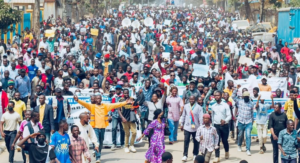
However, if the process is widely viewed as an attempt to extend presidential power, the consequences could be very different, featuring deeper political polarisation, more demonstrations, confrontation with security forces and further erosion of public confidence in state institutions.
In a swift response, President Tshisekedi has responded to the rising tensions, by calling for a national dialogue that is aimed at easing the political crisis.
At the end of the day, the debate over the proposition will be much more than changing, editing and re-editing words in a constitutional document. It mostlikely will be about who sets the rules of political power in one of Africa’s largest and most troubled countries; and if the constitutional reform will favour the citizens or those who govern DRC.