

The Red Sea Crisis is no Longer Just About Shipping
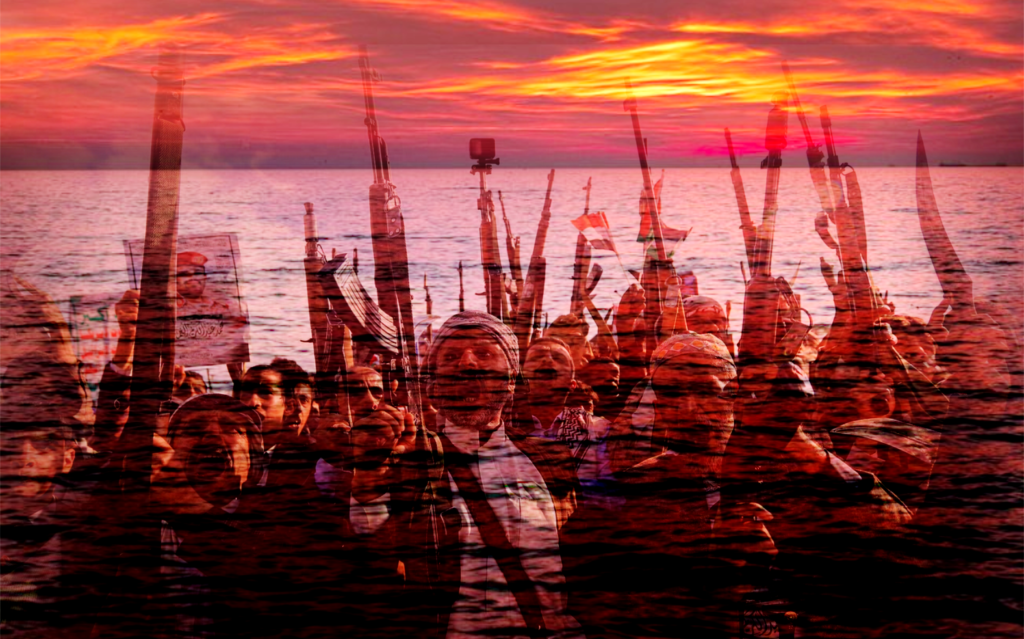
The reported Houthi advance along Yemen’s Red Sea coast is intensifying concerns over one of the world’s most important maritime corridors, with implications stretching from global supply chains and energy markets to regional security and the internal cohesion of the BRICS bloc.
The security environment around the Red Sea and the Bab el-Mandeb Strait has entered a more dangerous phase following reports that Houthi forces have captured the strategic port of Mokha and Mayyun Island, also known as Perim, at the entrance to the Red Sea.
The developments would represent a significant expansion of Houthi control along Yemen’s western coastline, giving the Iran-aligned movement greater strategic leverage over one of the world’s most important maritime chokepoints.

The significance of Mayyun Island lies primarily in its location. Situated in the Bab el-Mandeb, the island sits at the maritime gateway connecting the Red Sea to the Gulf of Aden and the wider Indian Ocean. The waterway is a critical route for ships travelling between Europe and Asia, meaning any sustained disruption could have consequences well beyond the immediate region.
Mokha carries a different but complementary significance. Its position on Yemen’s western coast provides a potential logistical platform from which maritime activity in the surrounding waters could be monitored or disrupted.
Taken together, control of these positions could alter the security calculations of shipping companies, insurers and governments operating around the Red Sea. What might initially appear to be a local territorial development therefore has the potential to become a broader economic and geopolitical concern.

A Wider Regional Security Challenge
The Red Sea crisis also cannot be viewed in isolation from developments in the Gulf. Tensions involving Iran, Saudi Arabia and the United Arab Emirates have created an increasingly interconnected security environment stretching from the Persian Gulf to the Red Sea.
This interconnectedness is particularly significant because the region contains two of the world’s most important maritime energy corridors: the Strait of Hormuz and the Bab el-Mandeb. Both sit close to major energy-producing and energy-consuming economies, making their security critical not only to regional stability but also to the global economy.
Any simultaneous disruption across the two corridors could therefore have consequences far beyond the Middle East, potentially affecting oil prices, shipping insurance, manufacturing costs and food supply chains.
The issue is not simply whether either waterway can be disrupted. It is the possibility that growing instability across multiple strategic corridors could compound existing pressures on global trade and expose the vulnerabilities of supply chains that depend on predictable maritime access.
The Human Cost
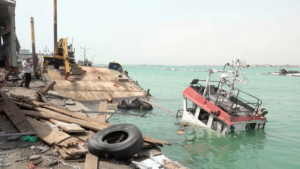
Yet behind the calculations surrounding shipping routes, oil markets and geopolitical influence is a rapidly deteriorating humanitarian situation.
Reports from humanitarian organisations indicate that thousands of people have been displaced by fighting around Yemen’s western coastal areas, with vulnerable populations moving toward safer areas, including Aden and across the Gulf of Aden toward Djibouti.
The displacement adds another layer to Yemen’s already protracted humanitarian crisis. Families arriving in temporary shelters face overcrowding and limited access to basic services, while women and children are among those particularly vulnerable to the consequences of renewed displacement.
For neighbouring countries, increased arrivals also create additional pressure on humanitarian and border-management systems.
The humanitarian consequences therefore run alongside the strategic risks. As military activity increases around critical maritime infrastructure, the effects are felt not only by governments and commercial operators but also by communities already living through years of instability.
The Changing Face of Conflict
The implications of the conflict extend beyond territory, maritime routes and conventional military capabilities. They also point to how rapidly accessible technology is beginning to reshape the nature of modern warfare.
One of the more unusual developments associated with the conflict is the reported use of commercially available artificial-intelligence tools by actors linked to the Houthi movement.
According to reported findings involving Anthropic’s AI systems, users associated with Houthi-linked activity attempted to use advanced AI tools to develop software related to the control and stabilisation of flying vehicles.
The significance of the episode goes beyond the specific technology involved. It highlights a growing challenge for governments and technology companies: tools developed for legitimate programming, research and productivity can potentially be repurposed by actors seeking to advance military capabilities.

This creates a new layer of complexity for an already volatile security environment. The same technologies that are becoming increasingly accessible to businesses, researchers and ordinary users can also become accessible to actors operating outside conventional military structures.
The reported case therefore forms part of a much broader debate about the governance of increasingly capable AI systems. How governments, technology companies and international institutions respond to this challenge could determine whether AI remains primarily a tool for economic and social advancement or becomes an increasingly important enabler of modern conflict.
In that sense, the Red Sea crisis is not only exposing vulnerabilities in global trade and regional security. It is also offering a glimpse into how the battlefield itself is changing.