
AfDB and European Stability Mechanism Sign Cooperation Pact, to Strengthen Institutional Collaboration
A new partnership between the African Development Bank Group (AfDB) and the European Stability Mechanism (ESM) is framed, beyond being a technical agreement, to assist in building capacity to mitigate economic/fiscal shudder. Some analysts say it could quietly reshape how African economies prepare for financial shocks and protect vulnerable populations.
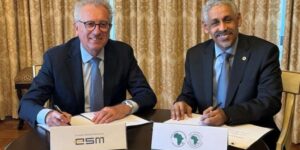
Signed as one of the features of the 2026 IMF-World Bank Spring Meetings in Washington, DC, the Memorandum of Understanding (MoU) sets out a framework for cooperation on capacity building, research and policy dialogue. But ahead of the formalities, lies a firm-ambition of transferring crisis-management expertise developed in Europe, to a continent still lacking a unified financial safety-net.
Considering concerns from small businesses, entrepreneurs and family-frontline, the implications could be tangible. Economic shocks, whether from currency volatility, commodity price swings, or climate-related disruptions, they often translate into job losses, inflation and reduced access to credit. By strengthening early-warning systems and financial governance, the partnership aims to reduce the frequency and severity of such disruptions, particularly for informal workers who form the backbone of many African economies.
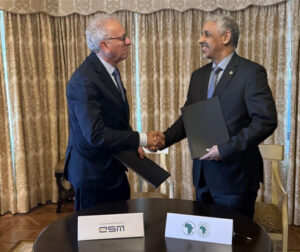
At the institutional level, the agreement supports ongoing efforts to establish an African Financial Stability Mechanism, an initiative that has been undergoing series of discussions, endorsed by the African Union.
Africa remains the only major region without a coordinated financial backstop, leaving countries to respond to crises individually, often with limited fiscal space. Observers note that lessons from Europe’s sovereign debt crisis, where the ESM played a central stabilising role, could inform the design of a more robust African framework.
“This is not just about dialogue, it’s about preparedness,” said ESM Managing Director Pierre Gramegna, pointing to the need for coordinated responses in an era of increasingly frequent global shocks. AfDB President – Sidi Ould Tah, echoed same view, emphasizing that structured cooperation will allow African policymakers to draw from tested international practices in governance and market financing.
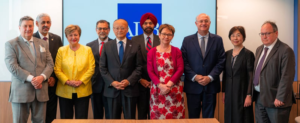
Economically, the partnership could improve the corridor-of-confidence on investments across boards. Stronger financial oversight and clearer crisis-response mechanisms, tend to lower borrowing costs, making it easier for governments to fund infrastructure, healthcare and education. Over time, that translates into bigger development gains, from expanded electricity access to improved public-services offering.
Politically, the agreement also indicates a move towards stronger intercontinental cooperation, at a time when global financial governance is being reassessed. It positions African institutions beyond just experiencing a recipients-support, to becoming active partners that are shaping the global economic space.
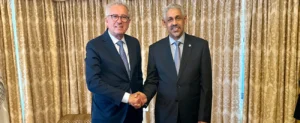
Furthermore, some experts caution that technical agreements must translate into real institutional change, to deliver results at the grassroots level also. They also believe that the effectiveness of the MoU, will ultimately depend on implementation and how quickly knowledge-sharing can turn into policy reforms; and whether those reforms would reach communities that are most exposed to economic shocks.
At the moment, the agreement highlights a growing recognition of an interconnected global economy, where financial stability is no longer a regional concern, but a shared responsibility with direct consequences for livelihoods across continents.