
Liberia’s $50 Million IMF Signal, from Stabilisation to Economic Buoyancy
How fiscal discipline, financial reform and climate-risk management could shape Liberia’s next phase of growth.
Liberia’s latest agreement with the International Monetary Fund (IMF) is more than unlocking US$50 million in financing. It is a test of whether macroeconomic discipline, institutional reform and climate resilience can be integrated into a single development strategy.
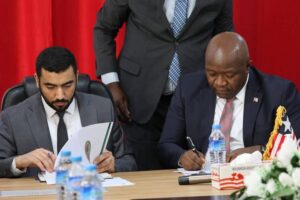
The IMF and Liberian authorities have reached a staff-level agreement on the fourth review of the Extended Credit Facility (ECF) and the first review of the Resilience and Sustainability Facility (RSF). Subject to approval by the IMF Executive Board, expected in late September 2026, the agreement could unlock approximately US$26.1 million under the ECF and US$23.9 million under the RSF.
Its significance, however, extends well beyond the financing package. The ECF provides conventional macroeconomic support, while the RSF links financing to reforms designed to strengthen Liberia’s resilience to climate-related shocks. Together, they point to a broader policy proposition: fiscal stability and climate resilience cannot be treated as separate agendas.
Liberia now enters the next phase of its IMF-supported programme, facing a more difficult question: can macroeconomic stabilisation be converted into stronger institutions, deeper private-sector activity and a more resilient economy?
The agreement is the latest stage in a broader IMF-supported reform programme. In September 2024, the IMF Executive Board approved a 40-month ECF arrangement for Liberia, providing access to SDR 155 million, or approximately US$210 million, to support the country’s macroeconomic stabilisation agenda. In April 2026, the International Monetary Fund (IMF) Executive Board approved a Resilience and Sustainability Facility (RSF) arrangement for Liberia with a total access of SDR 193.8 million (equivalent to approximately US$ 265 million
The June 2026 IMF mission therefore assessed more than conventional programme performance. It examined whether Liberia was translating macroeconomic stabilisation into structural reforms capable of strengthening fiscal management, financial stability, and climate-risk preparedness.
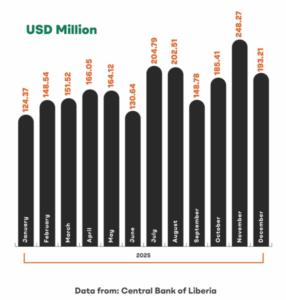
One of the clearest indicators of Liberia’s recent progress is its fiscal performance. Liberia’s primary fiscal surplus, excluding grants, is projected to improve by 1 percentage point to 2.4% of GDP in 2026, reflecting stronger domestic revenue mobilisation and continued spending discipline.
The improvement matters because stronger domestic revenue can give Liberia greater capacity to finance development priorities without deepening its dependence on external financing. The more difficult challenge will be ensuring that this additional fiscal capacity is directed towards productive investment rather than absorbed by expanding recurrent expenditure.
That makes the planned introduction of Value Added Tax (VAT) in 2027 and reforms to the mining tax regime particularly important. These measures could strengthen and diversify domestic revenue, but their long-term value will depend on implementation. The reforms must create predictable fiscal space for development without weakening incentives for productive investment.
Liberia is expected to grow by 5.5% in 2026, supported by mining, construction, and manufacturing. Growth is projected to moderate to 5.1% in 2027 before returning to around 5.5% over the medium term.
The headline growth figures are encouraging. The more consequential question, however, is whether this expansion can translate into broader economic opportunity. Growth concentrated in a relatively small number of sectors may not, by itself, generate the employment, productivity and access to credit needed to deliver sustained improvements in living standards.
Liberia’s growth outlook also remains exposed to external shocks. Inflation averaged 4.5% in the first half of 2026 but is projected to rise to 6% in the near term, reflecting imported inflationary pressures and oil-price volatility associated with conflict in the Middle East. The Central Bank of Liberia is therefore maintaining a tight monetary policy stance to contain price pressures.
This highlights a fundamental vulnerability facing small, open economies: domestic progress can be quickly disrupted by developments beyond their borders. Strong domestic growth can coexist with renewed inflationary pressure when energy and import costs rise, making macroeconomic management a continuing balancing act.
The task now is to make growth more resilient to these shocks and more capable of generating opportunities beyond the sectors currently driving the expansion.
Turning Stability into Private-Sector Growth
Macroeconomic stability matters most when it creates the conditions for private investment, productive lending and job creation. Liberia’s financial sector is therefore an important bridge between stabilisation and broader economic growth.
Reforms to restructure weak banks and reduce non-performing loans remain a policy priority. Weak balance sheets can constrain lending precisely when businesses need access to finance to invest, expand and create jobs. Bank restructuring is therefore more than a financial-sector repair exercise. It is a critical part of converting macroeconomic stability into investment, business expansion and private-sector growth.
Institutional reform is equally important. The administration is using the findings of the recent Governance Diagnostic and its accompanying time-bound action plan to strengthen accountability and address broader weaknesses in public institutions. Stronger institutions can reduce uncertainty, improve accountability and reinforce the confidence of both domestic and international investors.
The combination of financial-sector reform and stronger governance matters because sustainable growth depends not only on the availability of capital, but also on the institutional environment in which that capital is deployed.
When Climate Risk Becomes Fiscal Risk
The RSF introduces another dimension to Liberia’s reform agenda by recognising climate vulnerability not simply as an environmental concern but as a direct challenge to fiscal and economic management.
Liberia has completed its scheduled RSF reform measure by establishing and publishing a comprehensive database that records the fiscal costs of disaster responses on an ongoing basis. Developed with IMF technical assistance, the database is intended to improve transparency and give policymakers a clearer basis for managing the fiscal consequences of climate and disaster-related shocks.
The underlying principle is simple: climate shocks eventually become fiscal shocks. When governments lack a clear picture of the cost of disasters, climate events can quickly become unplanned budget pressures, forcing difficult trade-offs between emergency spending and development investment.
By systematically tracking disaster-related fiscal costs, Liberia is beginning to transform climate risk from an unpredictable budgetary burden into a measurable and manageable element of economic planning. That can improve the quality of fiscal planning and help policymakers anticipate the financial implications of future shocks.
This is potentially one of the most consequential aspects of the RSF programme. Climate resilience is not only about protecting infrastructure or responding to disasters; it is also about ensuring that repeated shocks do not undermine fiscal stability and development progress.
What Liberia’s Experience Means for Africa
Liberia’s experience offers a broader lesson for African economies attempting to move from post-crisis stabilisation towards sustainable growth. At a time when several economies across the continent are confronting debt pressures, currency volatility and limited fiscal space, Liberia’s relatively stable exchange rate in 2026, following a modest appreciation in 2025, illustrates the value of coordinated fiscal and monetary policy.
Liberia’s current account deficit is projected to widen in 2026–27 as strong domestic demand increases imports. However, the projected deficit is expected to remain financed through a combination of foreign direct investment and highly concessional borrowing. The experience reinforces the importance of macroeconomic and institutional stability in sustaining investor confidence, particularly amid heightened global uncertainty.
The climate component of Liberia’s programme also offers a potentially useful model. Integrating disaster-related fiscal costs into budget planning can help governments move from reacting to climate shocks toward anticipating their fiscal consequences.
The broader lesson is that economic resilience is increasingly multidimensional. Macroeconomic stability, credible institutions, access to finance and climate-risk management reinforce one another. Treating them as separate policy agendas can leave important vulnerabilities unaddressed.

The External Shock Test
Liberia’s recent experience also demonstrates how quickly external shocks can disrupt the progress of small, open economies. Oil-price volatility and geopolitical conflict can quickly filter through energy markets into higher import costs and domestic inflation, even when underlying economic conditions remain comparatively strong.
The expected rise in inflation to 6% underscores this exposure. Maintaining price stability will therefore require continued coordination between fiscal and monetary authorities, particularly as the economy expands and external conditions remain uncertain.
At the same time, Liberia’s alignment with international standards through its governance diagnostic, IMF programme and technical cooperation can strengthen its institutional credibility among development partners and concessional lenders. For a country that continues to rely on external financing, that credibility is itself an important economic asset. For a country that remains reliant on external financing to support development, institutional credibility is itself an economic asset.
The next phase will test whether Liberia can convert programme compliance into durable institutional change. The immediate milestone may be Executive Board approval of the US$50 million financing package, but the more consequential test will be implementation. Beyond that, the more consequential tests will be the implementation of VAT in 2027, reform of the mining tax regime, execution of the governance action plan and restructuring of weak banks.
Each reform addresses a different structural vulnerability. Together, however, they will determine whether Liberia can build a growth model that is more diversified, resilient and capable of withstanding future shocks. Revenue reform should create fiscal space; financial-sector reform should improve access to credit; governance reform should strengthen institutional confidence; and climate-risk management should reduce the fiscal impact of future shocks.
The challenge will be implementation. Reforms that exist on paper but are weakly executed will have limited impact on productivity, investment, or resilience. The next phase therefore requires not simply continued policy commitment but consistent execution.
These reforms will determine whether the current improvement in macroeconomic indicators becomes a durable foundation for private investment, economic diversification, and broader opportunity.
Liberia’s latest IMF agreement is therefore about more than securing US$50 million in additional financing. It represents a test of whether macroeconomic discipline can be translated into a more resilient development model.
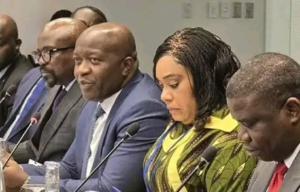
The country has made progress in strengthening fiscal management, maintaining monetary stability, and integrating climate risk into public financial management. But the next phase will be harder: revenue reforms must create space for productive investment, bank restructuring must unlock private-sector credit, governance reforms must strengthen institutional confidence, and climate-risk management must become embedded in broader fiscal planning.
To Liberia, the real measure of success will not be whether the US$50 million is approved, but whether the reforms attached to it outlast the programme itself. The ultimate test is whether stronger fiscal management, healthier financial institutions, credible governance and climate-aware economic planning can leave Liberia better prepared for the next shock and better positioned to turn stabilisation into sustained and inclusive growth.