
Megacities Rise, Urbanization Reshapes Economies, Governance and Social Life
The rapid expansion of cities and suburbs, is becoming one of the defining demographic and economic transformations of the 21st century, creating new opportunities for employment, public services and social mobility, placing growing demands on governments to manage housing, infrastructure and environmental pressures.
The change is particularly evident in the rise of megacities, urban clusters with more than 10 million inhabitants. Their share of the world’s urban population, increased from just 2.5% in 1950 to 16.4% in 2020. United Nations projections indicate that the proportion will remain approximately stable through mid-century, even as the absolute populations of many metropolitan areas continue to expand.
At the same time, the relative share of urban residents living in smaller cities of between 50,000 and 500,000 people, declined from 50.8% to 38.6% between 1950 and 2020. The trend replicates the continuing movement of people towards metropolitan areas where jobs, education, healthcare, transport networks and other public services are more concentrated. Urban growth has become a domestic development priority.

Suburbanization and urbanization are no longer a call of population distribution. They are progressively shaping national economic policies, local governments’ capacities and the quality of everyday life.
The development of expanding metropolitan areas can provide access to formal employment, universities, hospitals, digital services and wider markets. Businesses benefit from larger pools of workers and consumers, while governments can potentially deliver infrastructure and public services more efficiently when populations are concentrated.
But these benefits depend heavily on effective planning. Rapid and uncoordinated expansion can produce housing shortages, congestion, informal settlements, inadequate sanitation and unequal access to public services.
The political dimension is therefore seen as highly domestic and practical; governments must ensure that urban growth translates into better living standards, more than expanded divisions between prosperous metropolitan districts and underserved communities.
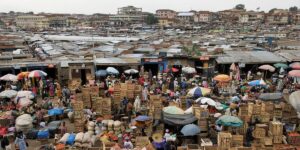
Asia is still the central-focus of the world’s megacity transformation. The latest UN urbanization evaluations, emphasize the scale of the transition. Jakarta, Dhaka and Tokyo rank among the world’s largest urban accumulations, while Delhi, Shanghai, Guangzhou, Manila and Mumbai demonstrate the continuing concentration of population and economic activity across Asia.
Africa is also entering a period of particularly rapid urban expansion. Cities such as Lagos, Cairo, Kinshasa and Addis Ababa are expected to absorb millions of additional residents over coming decades as populations grow and people increasingly seek employment and services in urban centers.
The result will be a changing geography of economic power. Large metropolitan areas are becoming important engines of domestic production, innovation, consumption and investment, connecting national economies to regional and global markets.

In 2025, the UN introduced a new geospatial assessment methodology that reshaped traditional megacity rankings, most notably placing Jakarta at the top by more accurately capturing sprawling, continuously built-up urban areas. The 2025 United Nations World Urbanization Prospects, provide the following global estimates for the leading urban clusters:
| Rank | Urban Agglomeration | Country | Estimated Population (2025) |
| 1 | Jakarta | Indonesia | 42,000,000 |
| 2 | Dhaka | Bangladesh | 37,000,000 |
| 3 | Tokyo | Japan | 33,400,000 |
| 4 | Delhi | India | 35,000,000+ |
| 5 | Shanghai | China | 30,000,000+ |
| 6 | Guangzhou | China | 27,000,000+ |
| 7 | Manila | Philippines | 27,000,000+ |
| 8 | Mumbai | India | 27,000,000+ |
| 9 | Mexico City | Mexico | 25,000,000+ |
| 10 | Cairo | Egypt | 23,000,000+ |

In considering the human dividend and pressure, you will discover the promise of urbanization is ultimately measured in tangible improvements, reliable electricity/water, affordable housing, safer transportation, better schools, accessible healthcare and opportunities for productive employment. A growing metropolitan consumer base, can also support small businesses, technology companies, manufacturers and service providers, which can create economic opportunities beyond traditional agricultural peasantry.
Notwithstanding, the same concentration of people, can heighten social and environmental risks. Traffic congestion, air pollution, inadequate waste management and rising housing costs, can erode the gains of urban development. Rapid construction can also reduce vegetation and intensify the urban heat-island effect, exposing residents to higher temperatures, worsening health pressures.
Climate and disaster risks add another layer of concern. Flooding, storms, earthquakes, drought, extreme heat, etc. can cause disproportionate damage, when millions of people and large amounts of economic infrastructure are concentrated in vulnerable locations. Planning for more robust cities would have to be prioritised.


Seriously, the central challenge for governments, is the ability to turn demographic growth into a developmental advantage, through deliberate planning. This means strengthening local institutions, expand mass transit, develop more affordable housing, protect green spaces, improve drainage and water systems; and ensure that suburban expansion is connected to employment and public services. It also requires a more inclusive approach to urban governance. Residents of rapidly growing suburbs and informal communities need a voice in decisions affecting sociocultural and socioeconomic interfaces.
By 2050, roughly two-thirds of the world’s population is expected to live in urban areas. Nonetheless, the future of urbanization will not be determined by population numbers alone. The decisive actions will be for governments to prove they can manage metropolitan growth in ways that will develop economic opportunities, strengthen social cohesion and protect communities from environmental/disaster risks.
Megacities may therefore become more than symbols of population concentration. Properly governed, they can serve as platforms for national development—bringing jobs, services, innovation and greater social mobility closer to millions of people. Poorly managed, however, their size can turn infrastructure and inequality challenges into national economic and political pressures.
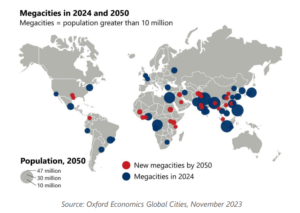
Projected 2050 trajectory of the world’s leading megacities’ rankings and demographic developments
- Dhaka, Bangladesh: Dhaka is projected to grow from roughly 37 million residents to 52.1 million by 2050, potentially making it the world’s largest megacity. Rapid population growth will be driven largely by rural-to-urban migration and regional demographic expansion.
- Jakarta, Indonesia: Jakarta is expected to remain among the world’s largest urban economies, although its global population ranking is projected to fall to second place as growth accelerates elsewhere in Asia and Africa.
- Tokyo, Japan: Tokyo faces a contrasting trajectory. Population ageing and a shrinking working-age population are expected to reduce its demographic weight, potentially pushing the city to around seventh globally by 2050.
- Delhi and Mumbai, India: India is expected to account for a substantial share of global urban population growth, adding an estimated 416 million urban residents by mid-century. Delhi and Mumbai are therefore likely to remain major demographic and economic centers.
- Karachi, Pakistan: Karachi could enter the global top five, with its population approaching 33 million by 2050. Its economic significance will depend increasingly on infrastructure capacity, employment creation and integration into regional trade networks.

Global urbanization outlook for 2050
- Urban Population: Approximately 67–68% of the world’s population is expected to live in urban areas by 2050, compared with roughly 55–58% today.
- Africa’s Urban Expansion: Africa’s urban population is projected to rise sharply, potentially reaching 1.4 billion, compared with around 700 million today. Cities such as Lagos are expected to exceed 40–50 million residents, reinforcing their position as major global economic centers.
- Emergence of New Megacities: The number of cities exceeding 10 million residents is expected to increase, with urban centers such as Kuala Lumpur and Addis Ababa among those positioned to join the megacity group.
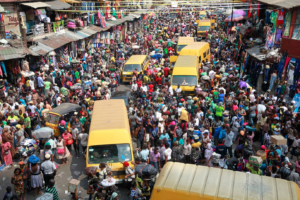
By 2050, the global economic center of gravity is likely to move further towards Asian and African urban economies. Oxford Economics forecasts substantial gains in average household incomes across many emerging cities, over the next quarter-century. However, demographic expansion alone will not guarantee higher productivity or living standards.
The contrast between mature and emerging megacities will become highly pronounced. Tokyo and other advanced economies will face ageing populations, tighter labor markets and slower domestic demand, whereas rapidly expanding cities in South/Southeast Asia and Africa, could generate large surges in employment, consumption and investment, provided infrastructure and institutions keep pace.
South Asia is positioned to capture a large share of future urban economic growth. Expanding populations, industrialization, technology adoption and rising household incomes could transform cities such as Dhaka, Delhi and Mumbai into increasingly important consumer and investment markets.
Growth will progressively depend on the transition from low-productivity employment toward manufacturing, technology, finance and business services. Dhaka for example, could evolve from an export-oriented manufacturing center, into a much larger domestic consumption market as its population and middle class expand.

Jakarta in Southeast Asia, is expected to remain a major regional economic hub, despite significant constraints, including land pressure, congestion, infrastructure gaps and labor-market discrimination. Sustaining growth, will require continued investment in transport, housing, utilities and productive industries. The city’s long-term economic performance will therefore depend less on population growth itself and more on its ability to convert a large labour force, into higher productivity and higher incomes.
Regarding Lagos and Kinshasa in Africa, their demographic expansion represents one of the largest potential sources of future urban economic growth. Cities such as Lagos and Kinshasa could become major employment centers, considering the expansion of manufacturing, logistics, finance, technology and services sectors.
Nigeria’s long-term development ambitions, envisage sustainable economic growth, with Agenda 2050 targeting annual real GDP growth of around 7% and substantially higher per-capita incomes. Achieving these objectives, will require significant improvements in infrastructure, human capital, energy supply and institutional capacity.
The urban growth mechanism: Rapid Urbanization → Larger Labour Markets → Higher Investment → Greater Productivity → Expanding Consumer Markets

The economic opportunity created by megacities, rests on four interconnected forces:
- Labor concentration: Large urban populations create deeper labor markets, allowing businesses to access specialized skills and workers at scale.
- Capital accumulation: Urban concentration can redirect investment from low-productivity activities toward manufacturing, technology, logistics and advanced services.
- Consumer-market expansion: Rising incomes and expanding middle classes will increase demand for housing, retail, transportation, financial products and digital services.
- Infrastructure investment: Transport, energy, water, housing and telecommunications will determine whether population growth translates into productivity gains.
As for countries such as Nigeria, the scale of required investment is substantial. Long-term development scenarios envisage investments rising towards 40% of GDP by 2050, compared to roughly 29% that it is currently in.

The central risk here is the interface of Productivity against Urban Strain. The economic dividend from urbanization is not automatic. Rapid population growth can generate substantial economic gains when cities provide productive employment, reliable infrastructure and efficient public services. When these conditions are absent, population growth can instead amplify congestion, social discrimination and fiscal pressures. Some the main risks include:
- Urban discrimination and inadequate access to formal employment,
- Infrastructure deficits, particularly in transport, electricity, housing and water,
- Environmental pressures, including flooding, pollution and water scarcity,
- Climate-related displacement, which could impose significant relocation and infrastructure costs,
- Low productivity, if expanding labor forces remain concentrated in informal or low-value activities.
So the bottomline of defining economic problem for 2050, will not just be how large megacities become, but how productive they can absorb their expanding populations. Asian and African cities have the demographic scale to become major engine-rooms of global growth, but their success will depend on converting urban population growth into higher productivity, formal employment, rising incomes and sustained investment.
Source: Statista