

The Breach at the Edge of Europe, Fanning Unanswered Questions in the Ceuta Crisis

The thin line separating Europe from Africa dissolved in a matter of hours as an unprecedented tide of humanity overwhelmed the Spanish enclave of Ceuta. This was not a slow leak but a structural failure of a border where geopolitical leverage and human desperation collide. While the immediate rush of people has subsided into a tense quiet, an investigation into the machinery behind the crisis reveals a story of ignored warnings, digital weaponisation, and a continent’s fragile unity fracturing under pressure.
Evidence is mounting that the central government in Madrid may have been standing on the tracks as the train approached. While the Interior Ministry has categorically denied the existence of specific warnings, reporting suggests the National Intelligence Centre (CNI) sent several assessments predicting a mass movement toward the territories of Ceuta and Melilla.
Observable signs were also present in the open. Arrivals had already begun to spike, and local reception facilities for minors were at a breaking point long before the primary surge began. The regional presidency in Ceuta had publicly pleaded for urgent assistance, yet the border remained vulnerable until it was too late. The question now haunting Spanish halls of power is whether the central authorities were truly blindsided or if they simply failed to reinforce a frontier they knew was in peril.
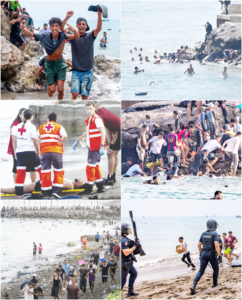
The catalyst for this movement appears to be a sophisticated blend of legal developments and digital misinformation. Trafficking networks reportedly seized upon a Supreme Court ruling regarding the return of people intercepted at sea, spinning it into a legal opening that suggested a guaranteed right to remain in Europe.
This was amplified through social media channels, acting as a beacon for tens of thousands driven by economic hardship. The result was a humanitarian catastrophe: at least 72 people died, their bodies recovered from the surf or found crushed in the chaotic press of the crowds. In a city of roughly 85,000 residents, the arrival of nearly 60,000 newcomers represented a demographic shock that brought daily life to a complete standstill.
Beneath the surface of the migration data lies a complex diplomatic tango between Madrid and Rabat. While official statements from both sides currently laud their exemplary cooperation, the historical precedent is impossible to ignore. Observers point to previous instances where border controls were loosened during diplomatic friction, such as the dispute over Western Sahara.
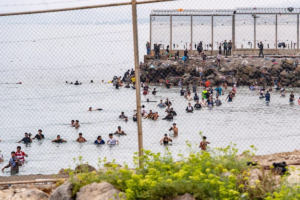

The timing of this latest surge, following a significant diplomatic outreach by the Spanish leadership to Algiers, has led to speculation that the border relaxation was a calculated signal of Moroccan displeasure. Though unproven, the operational reality remains clear: Spain’s ability to hold its African borders depends entirely on the political will of its neighbour to prevent mass gatherings on the other side of the fence.
The fallout has reached far beyond the beaches of North Africa, triggering a diplomatic civil war within the European Union. In a move that challenged the very concept of open borders, Italy suspended its participation in the Schengen agreement with Spain, introducing passport checks for travelers arriving from the peninsula.
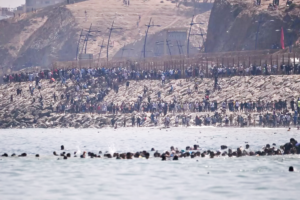

This has exposed deep-seated structural divisions between frontline states and inland members. Far-right movements across the continent have moved quickly to weaponise the images of the breach, using the chaos in Ceuta to fuel campaigns built on public insecurity and the perceived failure of European border management.
As a 500-metre floating barrier is anchored into the seabed and soldiers patrol the jetties, the immediate breach may be sealed, but the underlying vulnerability remains. Europe is left to grapple with a border that is as much a political lever as it is a physical barrier, held together by fragile agreements and the unpredictable winds of North African diplomacy.
Picture Credit: AP