
Top South African Investigator – Secret Military Trail behind Lt. Col. Frans Mathipa’s Assassination
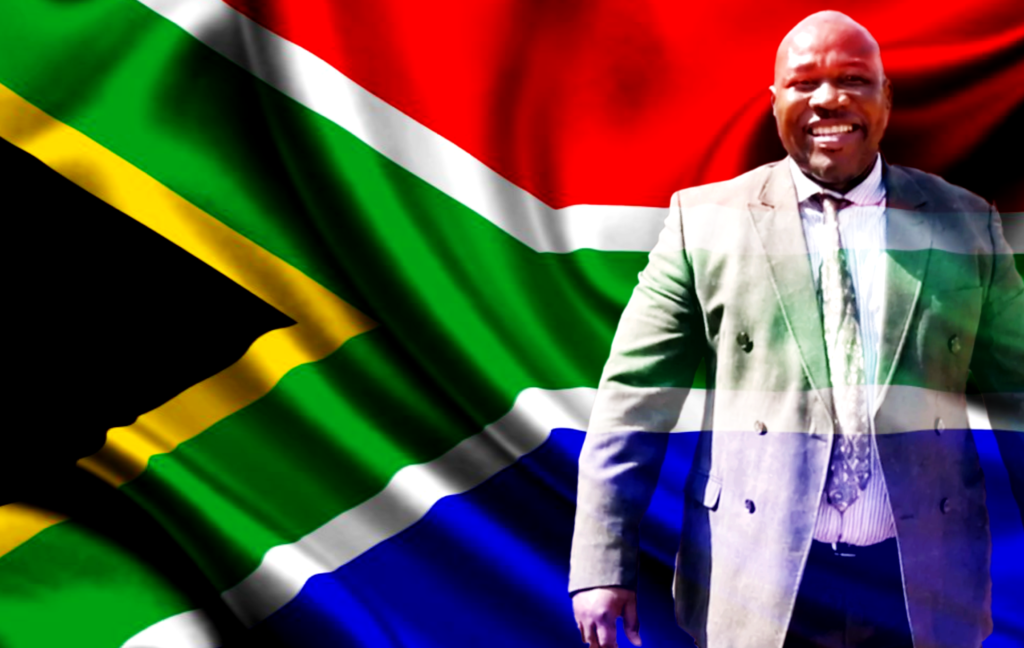
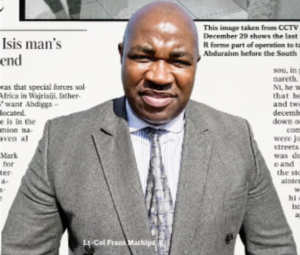
The murder of South African police investigator Lieutenant Colonel Frans Mathipa has opened a disturbing window into alleged links between the country’s elite military structures, intelligence operations and a suspected cover-up involving the disappearance of an alleged Islamic State operative.
Mathipa was not investigating an ordinary criminal case. Before his death, he was pursuing the disappearance of Abdella Abadigga and his bodyguard, Kadir Abotese, who were allegedly abducted in broad daylight at Johannesburg’s Mall of Africa in December 2022. His investigation increasingly pointed toward members of the South African National Defence Force (SANDF) Special Forces.
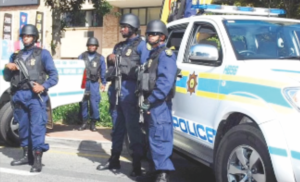
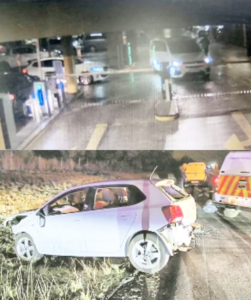
Then, on August 6, 2023, Mathipa was shot through the window of his vehicle while driving along the N1 near Pretoria and Hammanskraal. His car overturned. He died at the scene. What followed has raised a painful enquiry from South Africa – was Mathipa killed because he was getting too close to the secrets of a military operation that was never supposed to become public?
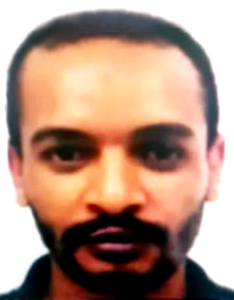
From an alleged terrorist asset to a missing man. Pivotal to the investigation is Abdella Hussein Abadigga, a Sudanese national whose background was anything but straightforward. US authorities had identified him in 2022 as an alleged senior Islamic State organiser, recruiter and financial facilitator in Africa, with links to senior ISIS figures in Somalia. Despite those allegations, he was living in South Africa without facing terrorism charges.
According to evidence cited in investigations and court proceedings, Abadigga may have occupied a contradictory position of an alleged extremist on one side and an intelligence asset on the other. Senior counter-terrorism officials reportedly told investigators that military and Home Affairs officials had helped bring him into South Africa, allegedly because he was being used for intelligence purposes.
If established in court, that relationship would help explain one of the central mysteries surrounding his disappearance. Why would a man regarded internationally as an ISIS operative, be allowed to operate freely in South Africa; and why would highly trained military personnel allegedly become involved when he disappeared? But then again, there was another, more local dimension to the story.
Abadigga was accused of operating an extortion network around the Taqua Mosque in Johannesburg, where community members allegedly lived under intimidation. People on the ground knew the case was not simply about terrorism or intelligence. It was about an alleged power structure operating in their neighbourhood, involving a man whose identity appeared to change depending on who was dealing with him.
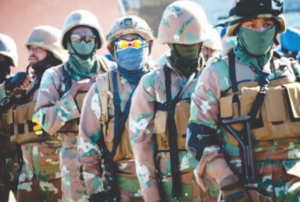
On December 29th/2022, Abadigga and Abotese disappeared from the Mall of Africa. Their bodies have never been found. The investigation into their disappearance eventually produced a remarkable trail of vehicles, surveillance footage and digital records. Investigators allegedly traced vehicles used during the Mall of Africa operation to Peters Communications Trust, or PCT, a company described in investigative material as a front associated with the Special Forces. One of the company’s directors at the time was Major General Herbert Mashego, then commander of the 5 Special Forces Regiment.
Surveillance footage reportedly placed PCT-linked vehicles at the shopping centre, around the time Abadigga and his bodyguard were abducted. Major Sunnyboy Wambi was also allegedly captured on CCTV paying for parking shortly after the disappearance. The significance of this evidence, became much greater after Mathipa began investigating the case. According to the prosecution’s case, a BMW associated with PCT was used to follow Mathipa shortly before his death. Vehicle-tracking information allegedly placed it near the murder scene at the relevant time.
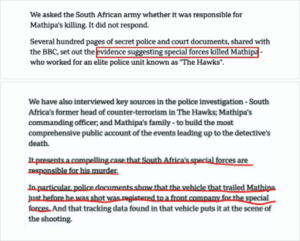
Investigators also identified a burner telephone, allegedly used to contact Mathipa and arrange the meeting that preceded his killing. That device was reportedly connected through digital evidence to a vehicle associated with the SANDF. Individually, each piece of evidence could potentially have an innocent explanation. Taken together, as the prosecutors argued the matter, they reveal something far more troubling – a chain connecting the alleged abduction, the investigator who pursued it and the military personnel accused of killing him. So, it seems as a storyline where the investigator became the target.
Mathipa reportedly responded to the growing evidence, by demanding information from the military, including records that could help establish who was operating the vehicles and why. That made his investigation highly sensitive.
The military initially offered explanations for its apparent presence around the Mall of Africa operation, including claims that vehicle number plates may have been cloned. That explanation was subsequently abandoned, with officials instead saying the Special Forces personnel and vehicles were there as part of a training exercise. However, Mathipa’s colleagues’ query was not seeking to know if the military had been at the mall, but to find out what it was doing there at that same time. Notwithstanding, the Mathipa’s determination to obtain answers, supposedly placed him in conflict with powerful institutions. On August 6, 2023, his investigation ended with his death.
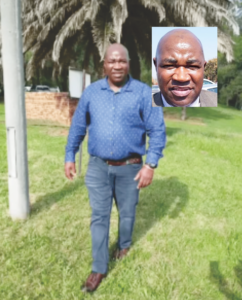
Seven Special Forces members and a military police officer have been charged in connection with Mathipa’s murder. The wider group of 12 military personnel arrested in the broader investigation face allegations including the abduction and murder of Abadigga and Abotese, Mathipa’s premeditated murder, fraud and obstruction of justice. All the accused deny the allegations, as such it has become a case caught between the courtroom and the barracks. The most disturbing aspect of the case may be what happened after the arrests.
Although the accused were initially granted bail. But another court later revoked the bail of six suspects, including Wambi, ordering them back into custody. Yet, authorities reportedly encountered resistance in securing their return back to custody. Military officials did not hand them over as expected; and their defence lawyers cited mental-health treatment, as an explanation for their absence from court.
With regards to the views of critics, the episode exceeds an individual criminal case. It promotes the fundamental constitutional demand, of if South Africa’s military is ultimately answerable to civilian institutions and the courts or not. Consequently, the controversy of this case hollowed-out, when officers facing allegations in the case were officially promoted in ranks. Brigadier General Solomon Lechoenyo, who was out on bail, was promoted to General Officer Commanding of the Special Forces. Lieutenant Colonel Doris Neenz, another implicated officer, was reportedly promoted and posted abroad as a military attaché.
So, to ordinary South Africans, such developments can produce a particularly corrosive message that an allegation of serious wrongdoing, does not necessarily damage a career, when the institution behind the accused is powerful enough. This is an alleged alarm that would be frightening other investigators.
Drawing from earlier source, the BBC Africa Eye investigation titled – Anatomy of a Cover-Up, added another chilling dimension to this series. According to the investigation, detectives who took over aspects of Mathipa’s work, were purportedly warned through Criminal Intelligence that the Special Forces would kill them. The reported warning goes as follow – “we will kill all of them”, became one of the most disturbing elements surrounding the case. If this threat is ultimately proven, it would suggest that Mathipa’s death was not simply an isolated act of violence, but a part of an atmosphere designed to frighten investigators away from the military trail. As for most police officers and investigators working at the street level, assassination possibility carries a profound implication. If those tasked with investigating murder can themselves be intimidated or killed for pursuing evidence, then the ordinary state-provided protection for officers, has begun to collapse from within.
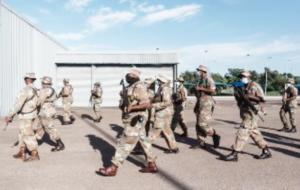
A military institution under a cloud: the SANDF has a legitimate constitutional role in protecting South Africa. Its Special Forces are among the country’s most highly trained military personnel. That is precisely why the allegations are so serious.
A military unit equipped and trained for national security operations, is fundamentally different from an ordinary criminal gang. If serving military personnel were found to have conducted unauthorized abductions, interfered with civilian policing and murdered an investigator, the consequences would extend farther than the individuals involved. It would paint pictures about command responsibility, intelligence oversight, parliamentary scrutiny and the limits of military power inside a constitutional democracy.
Civil-society groups, including Open Secrets, have consequently promoted concerns about an institutional cover-up and about public resources being used to defend accused personnel. The issue has also reached Parliament, where inquiries about military accountability and civilian control have intensified.


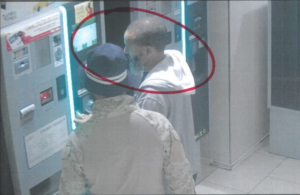
President Cyril Ramaphosa and senior defence officials have largely pointed to the ongoing judicial process, rather than offering substantive public commentary. But political opponents and critics put up that judicial proceedings cannot substitute for executive responsibility, where the integrity of state institutions is at stake.
Considering the human implication beneath the politics. Lost within the arguments about intelligence, military structures and constitutional authority, are the people at the core of the story. Abadigga is still missing. His bodyguard is still nowhere to be found. Their families have been left without the basic closure that comes from knowing what happened to their loved ones. Mathipa’s family lost a police officer who, according to the allegations, was doing precisely what the public expects investigators to do, to follow evidence wherever it leads. And the communities that are watching the case, are left with a more unsettling problem.
The problem is – if an alleged ISIS financier could become an intelligence asset, who disappeared in an operation allegedly involving elite soldiers, and then the investigator examining that disappearance could be murdered, where does legitimate state secrecy end and unlawful state power begin? This is eventually what makes the Mathipa case bigger than just another murder trial.

Can South Africa’s institutions investigate themselves, when the case trail leads into the most secretive corners of the state concerning powerful people/institutions? Can the country’s constitutional protections stand strong enough to protect her investigators, witnesses and ordinary citizens, when those mediums are challenged from within the system?
Well, until Abadigga’s fate is established; the circumstances surrounding Mathipa’s death are fully processed in court; and the alleged military links are independently accounted for, much of the story would remain contestable, not ignoring the too-serious unanswered questions flying around, already.
Picture Credit: Global Southworld