
Zambia Heads to the Polls, Economic Recovery Tries the forthcoming Election
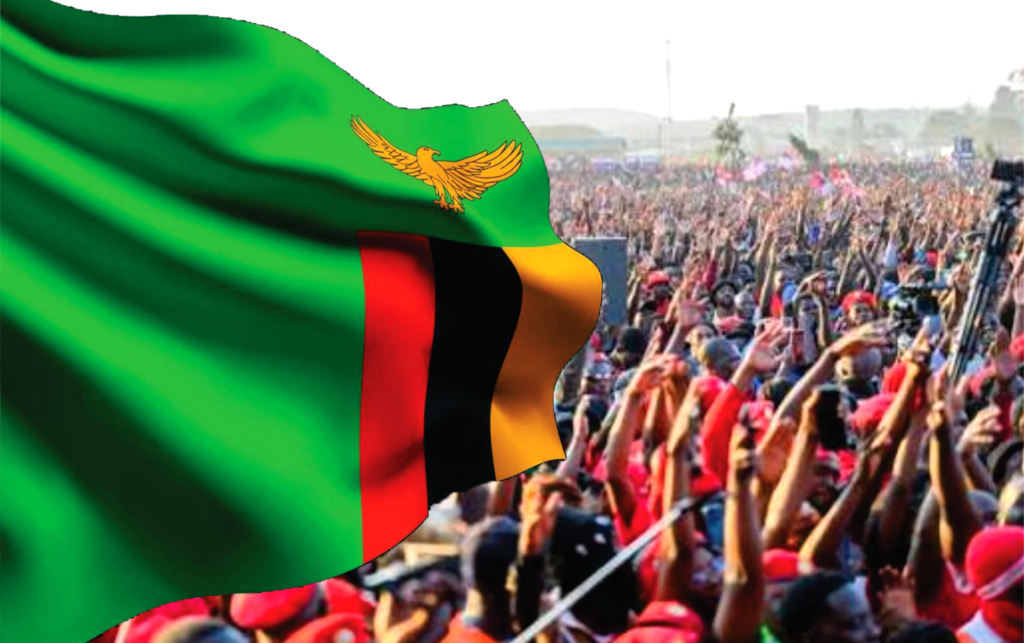
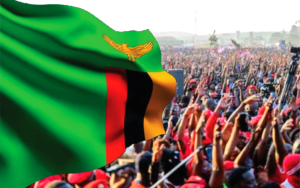
As Zambians prepare to elect their president on August 13, the campaign transcends Hakainde Hichilema versus a fragmented opposition. It is a referendum on if the economic recovery is impacting homes/families; whether the country can preserve its reputation for peaceful elections; and if copper wealth can finally translate into comprehensive prosperity.
In Lusaka, Zambia’s political rallies and speeches, are about development. On the streets, in markets, at bus stations and across neighbourhoods, the conversation is often more basic – how much does a family need, to survive a week? This question may prove more important than the government’s projected-campaigned economic statistics, when nearly 8.8 million registered voters go to the polls on August 13/2026.
The Electoral Commission of Zambia says women account for 53.1% of registered voters, while young people make up 46.3%. Together, those figures describe an electorate with enormous political weight; and an election in which everyday economics, employment clamour and the future of young people, could matter as much as party loyalty. As Zambia heads to the polls on 13th day of August, the biggest question may not simply be who wins the presidency, but a show to connote if voters believe their lives have improved enough, to give the existing government another mandate.
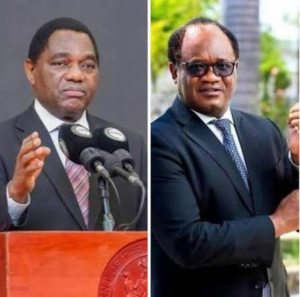
The August 13th election, is a referendum on a difficult path of bargain, in respect to millions of Zambians. A bargain that beckons on questions like – should the country stay the course with President Hakainde Hichilema’s economic reforms, or should voters give the opposition a chance to pursue a different path? The election is also about to test one of Africa’s more closely-observed democracy; in the sense that it will be watching out to see, if Zambia can once again conduct a competitive national poll, without allowing political differences to descend into violence.
In a clear attraction, the central focal-political flag-bearer of the upcoming election is the incumbent – Hakainde Hichilema, leader of the United Party for National Development (UPND); who is seeking a second term after winning the presidency in 2021, after 6 unsuccessful attempts. His 2021 ascension into the State House, welcomed him with an inherited economy that was weighed down by debt and a sovereign default. His government has since then overseen a major restructuring of Zambia’s debt, and pursued international financial support, while investors responded to the reforms/renewed opportunities, in mining and other sectors.
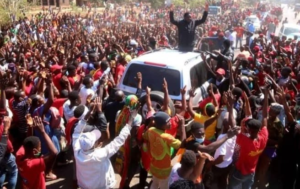
But the language of economic recovery, can sound very different from the experience of a family trying to buy food on a daily basis. With reference to families in crowded townships, a young person searching for work, farmers worrying about markets or a small trader coping with electricity and transport costs, the real measure of recovery is knowing that there is money in their pocket at the end of the week, to fend for the homefront. This view is far from GDP growth or foreign reserves projections. And this is the central political challenge that has been facing Hichilema’s current government.
The World Bank estimated that 71.7% of Zambians lived below the $3 per-day poverty line in 2022, which illustrates how profound poverty-line is embedded in the society, despite periods of economic growth. On this note, most rural communities carry a particularly heavy burden. A created gap between macro/microeconomic progress and household reality.
Hichilema government’s economic reform points to debt restructuring, investment, economic stabilisation, free education, efforts to expand jobs and develop infrastructure. His 2026 campaign manifesto promises faster economic growth in this direction, promoting lower living costs and provision of millions of new jobs. Nevertheless, voters are likely to ask a simpler question like – when will these gains become visible in our homes?

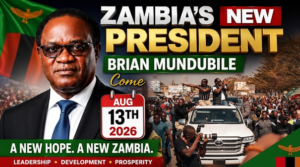
Flipping to the next page, Hichilema faces a diverse factional opposition, with Brian Mundubile emerging as the leading challenger, after securing the backing of opposition forces. But he is not the only presidential candidate. The 2026 race includes candidates such as former foreign minister – Harry Kalaba, Socialist Party leader – Fred M’membe, Kelvin Fube Bwalya, Given Mwenya Chansa and Richard Silumbe, among others. The Electoral Commission of Zambia, has certified 14 presidential candidates. The fragmentation shows the election is not merely a contest between two personalities. It is also a struggle over the opposition, which can translate dissatisfaction with the cost of living, into a coherent national alternative, for campaign.
However, party structures may matter less than the barrage of practical questions to regular voters. Questions: can their children find jobs? Can farmers sell their crops at a fair price? Can families afford daily meal and other basic food? Can electricity become reliable enough for businesses to operate? Can young graduates find opportunities without leaving the country? And can copper wealth generate better schools, hospitals, roads and livelihoods beyond the mining towns?…
Considering the copper wealth in comparison to the questions that the common Zambians ask, there are few issues that illustrate Zambia’s economic dilemma, better than copper. The country is one of Africa’s major copper producers, and the government has set an ambitious target of tripling production to 3 million metric tons annually by 2031. Mining accounts for more than 10% of GDP and around 70% of export earnings, making the sector crucial to Zambia’s economic future. But copper production alone, does not guarantee an overall socioeconomic wellbeing.
The civil probings is seriously about what happens after each quantity of copper is extracted. Will more mining create decent jobs for Zambians? Will local businesses supply the mines? Will more copper be processed inside Zambia? Will mining revenues translate into better public services? And can the country reduce its dependence on foreign capital, while still attracting the investment needed to expand production?
Chinese companies are the most important players in Zambia’s mining economy, besides other international investors who are also growing their playing-presence. It is also true that foreign investment can bring-in capital, technology, enable employment, etc., but it raises concerns about how much mineral value Zambia has, and how widely can this value impact lives.
This debate is intensely localised, with regards to communities living alongside the mines’ sites. National economic development means little or nothing, if a given family sees billions of dollars in mineral exports caption, whereas the extreme struggle to pay school fees, buy food or keep a small business running, is the conductor of their daily lives.
The other question hanging in a balance, over the upcoming election and its buildup campaign is – can Zambia protect its reputation for peaceful democratic transfers of power? Will the election remain peaceful? Although, Hakainde Hichilema has repeatedly called for a peaceful, free and fair election; and had been warning against political violence and intimidation.
The memory of the 2021 election still lingers. As at then, the Hichilema’s victory produced a peaceful transfer of power, after years of political contest. He demonstrated that Zambia’s electoral system, could deliver a change of government through the ballot box. That achievement has raised expectations for 2026 election. Because to traders, parents, students, farmers, civil servants, businesses, the socioculture, etc., peace is not an abstract political slogan. It is a socioeconomic necessity.
A peaceful election allows markets to remain open, transport to continue, businesses to trade and families to plan beyond election day. Political instability, by contrast, can frighten away both small/big investment, disrupting livelihoods, expanding economic uncertainty, and so on. Therefore, the test would be that if political flag-bearers accept the result, their supporters should also do too.
Ultimately, Zambia’s election may come down to the distance between economic recovery on paper and economic security at the practical level. Similarly, Hichilema might contend that his government inherited a severely damaged economy and has spent its first term repairing the foundations. The opposition could also maintain that a four or five years of reform, should have produced more visible benefits for the everyday citizens. Anyways, both arguments will compete for support-space at the polling station, on the day of election.
The electorate is also becoming more diverse and politically consequential by demographic response. Note that women make up the majority of registered voters, while millions of young Zambians are eligible to vote now. Put forward, their cardinal priorities are jobs, education, technology, affordable housing, macro/micro entrepreneurship and social opportunities; for the reasons that these anticipations could shape the country’s direction for years. Subsequently, this is why the 2026 election is would be more than a contest for the State House seat.
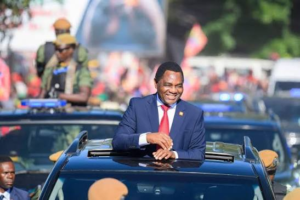
Apparently, the forthcoming election is a choice over what kind of economic growth Zambia wants; who should benefit from its mineral wealth; how much power the ordinary citizens should have, in shaping government; and if political competition can remain peaceful.
Henceforward, the voter who will be standing in a queue on the August 13/2026, might have a painful but simple pondering-reminiscence, asking if the country’s economic recovery has reached his/her homefront; and, if it hasn’t, who can make it happen? Thereby, will lie his/her decision to thumb-print the candidate he/she deems fit to make it happen. As this might be the scenic-question that could determine Zambia’s next president and political chapter.