
Recap of Togo’s Constitutional Transition, Analysis of Democratic Reforms, Political Continuity and the Future of Governance in Africa
Across much of Africa, the debate over political leadership has increasingly moved beyond campaign promises and electoral contests to a more fundamental question: How should political power be acquired, exercised, and transferred in democratic societies?
That conversation has intensified following the Republic of Togo’s constitutional reforms, which replaced the country’s long-standing presidential system with a parliamentary model and ended the direct election of the president by universal suffrage. Supporters describe the reforms as an institutional restructuring designed to improve governance and align the country’s political framework with parliamentary democracies practiced elsewhere. Critics, however, argue that the constitutional changes reduce direct electoral participation while reinforcing the political dominance of an already entrenched ruling family. The developments in Togo have consequently reignited a wider continental discussion about constitutional reform, leadership succession, democratic accountability, and the balance between political stability and public participation.

A Constitutional Turning Point
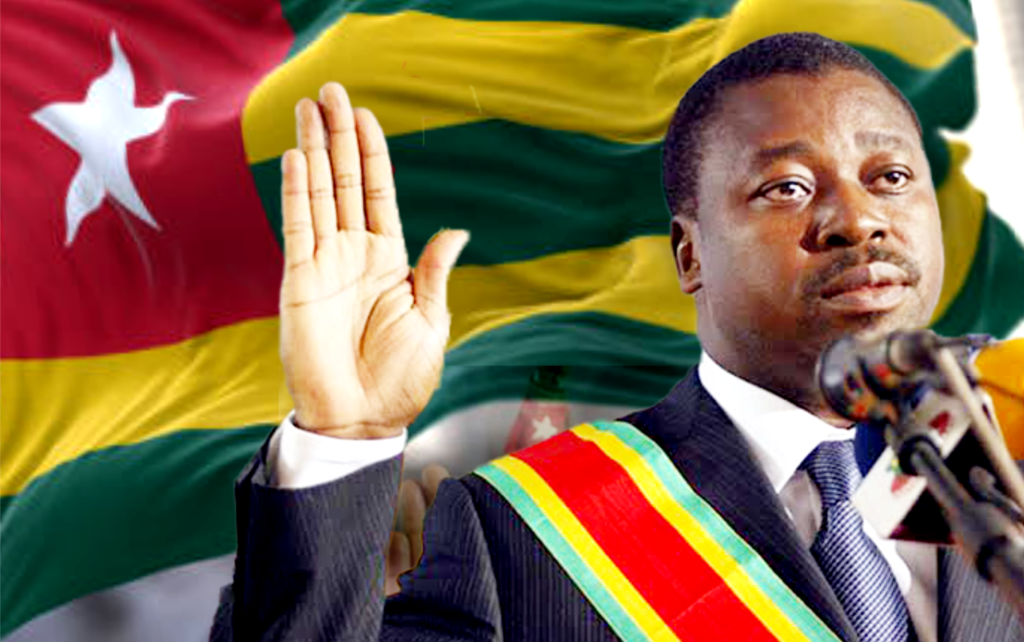
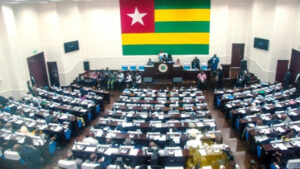
Under Togo’s revised constitutional framework, promulgated on 6 May 2024 after adoption by the National Assembly on 25 March and a second reading on 19 April, citizens no longer elect the President of the Republic through nationwide popular voting. Instead, the President is elected by members of parliament and assumes a largely ceremonial role. Executive authority is transferred to a newly created office, the President of the Council of Ministers, who leads government policy and is expected to emerge from the parliamentary majority. The President of the Council serves a six-year mandate, renewable indefinitely so long as the ruling power retains legislative confidence, while the ceremonial President of the Republic serves a four-year term, renewable once.
Government officials have presented the reform as a transition from a presidential model to a parliamentary democracy, arguing that such systems often encourage closer cooperation between the executive and legislature while reducing institutional friction. They point to established parliamentary republics across Europe and Asia that operate successfully without directly electing their heads of state, noting that governments in those systems derive legitimacy through parliamentary elections while executive leadership depends on legislative confidence rather than direct presidential mandate.
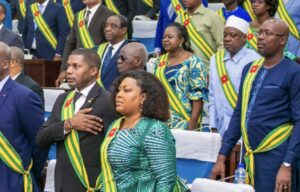
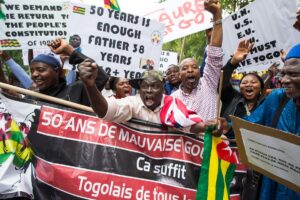
Opposition parties, constitutional analysts, and several civil society organisations have questioned both the process and the political implications of the reforms. Their concerns stem largely from the country’s long political history, during which the Gnassingbé family has remained at the centre of national leadership for 57 years. Critics contend that although governmental titles have changed, political authority may remain concentrated within the same ruling structure, thereby reducing opportunities for genuine electoral contestation. The reform was adopted by a parliament whose mandate had technically expired in December 2023, without a popular referendum, and amid protests that were banned by authorities. Opposition figures have labelled the legislative action a “constitutional coup,” arguing that it effectively circumvents the two-term presidential limit reintroduced in 2019 after widespread civic pressure.
From the government’s perspective, parliamentary systems are neither unusual nor inherently undemocratic. Supporters claim that parliamentary systems may provide policy continuity, improve legislative efficiency, and reduce prolonged constitutional confrontations between presidents and assemblies. Whether those intended benefits materialise, observers note, will ultimately depend on the strength of democratic institutions, judicial independence, legislative oversight, political pluralism, and electoral integrity.
Questions of Democratic Accountability
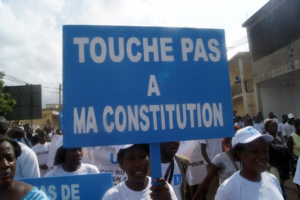
For many constitutional scholars and governance advocates, the principal concern extends further than the choice between presidential and parliamentary systems. Rather, attention has focused on whether constitutional reforms are undertaken through broad national consensus and whether they preserve meaningful public accountability. Opposition leaders contend that removing direct presidential elections diminishes citizens’ ability to determine the country’s highest political office through universal suffrage. The civil society coalition “Touche pas à ma constitution” (“Don’t Touch My Constitution”) has brought an action before the ECOWAS Court of Justice, while Togolese Catholic bishops publicly questioned the legitimacy of the reform given the expired parliamentary mandate and the absence of inclusive dialogue.
Several governance experts caution that constitutional reforms introduced by dominant ruling parties often invite public suspicion when they appear capable of extending the political influence of incumbent leaders, particularly in countries where leadership transitions have historically been limited. The bigger issue is not whether parliamentary government is democratic in principle, but whether constitutional restructuring reflects genuine institutional reform or serves narrower political interests. The timing of the revision, hurriedly passed just weeks before the 29 April 2024 legislative and regional elections, in which the ruling Union for the Republic (UNIR) secured 108 of 113 seats, has reinforced perceptions that the reform was calculated to lock in ruling-party control.
Leadership, Continuity, and Succession
Across Africa, constitutional debates frequently intersect with a larger philosophical question regarding political leadership itself: should leadership be viewed primarily as stewardship with clearly defined transitions or as continuity centred on long-serving individuals?
Political scientists generally maintain that democratic institutions become stronger when leadership succession occurs peacefully, predictably, and within constitutional limits. Regular leadership transitions often encourage institutional resilience, reduce excessive concentration of power, and create opportunities for new policy directions. Conversely, prolonged tenure, particularly when accompanied by constitutional amendments favouring incumbents, can weaken public confidence in democratic institutions if citizens perceive political competition as increasingly limited.
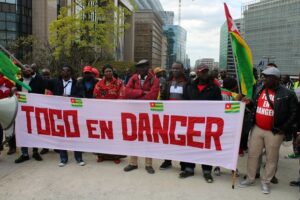
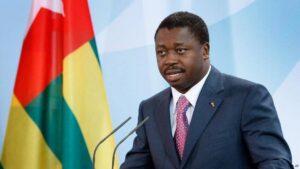
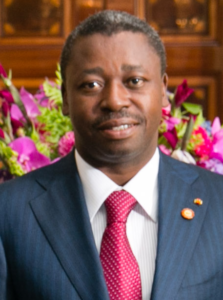
Nonetheless, some scholars have acknowledged that leadership continuity may provide benefits under certain circumstances, especially where governments pursue long-term infrastructure, education, healthcare, or industrial reforms requiring sustained implementation over many years. The challenge, therefore, lies in balancing continuity with accountability. In Togo, the question is particularly acute: Faure Gnassingbé, who succeeded his father in 2005 after nearly four decades of Eyadéma rule, was sworn in on 3 May 2025 as President of the Council of Ministers, the new powerful executive position, effectively resetting the clock on term limits and creating a pathway for indefinite incumbency.
Economic Consequences of Political Stability
Political systems do not operate independently of national economies. Investors, development agencies, and international financial institutions frequently assess governance quality alongside economic indicators when making long-term commitments. Stable constitutional arrangements, transparent institutions, and predictable political transitions generally contribute to investor confidence by reducing uncertainty surrounding public policy. However, where constitutional disputes generate prolonged political tensions, economic planning can become more difficult. Businesses may delay investment decisions, financial markets may react cautiously, and employment generation could slow if uncertainty persists.
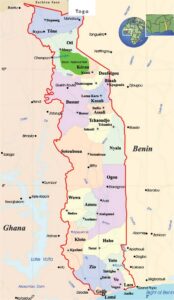
Conversely, governments that combine political stability with institutional credibility often create more favourable environments for entrepreneurship, manufacturing, innovation, and foreign direct investment. For developing economies seeking industrial expansion, governance quality increasingly functions as an economic asset rather than merely a political ideal. Togo, with an annual per capita income of roughly $900 and a population of 8.6 million, faces the additional burden of stabilising its northern regions against a growing threat from militant Islamist violence spilling over from Burkina Faso. National disunity driven by constitutional controversy risks distracting from these pressing security and development challenges.
Human Capital and the Everyday Experience of Citizens
Apart from constitutional theory lies the everyday experience of ordinary citizens. Most Togolese families, and indeed citizens across Africa, measure governance not by the elegance of constitutional design but by access to quality education, affordable healthcare, reliable electricity, employment opportunities, agricultural productivity, transportation infrastructure, and social protection. Political reforms are ultimately judged not only by legal scholars or constitutional courts but by their practical impact on people’s lives.
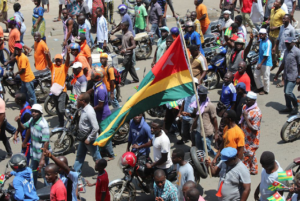
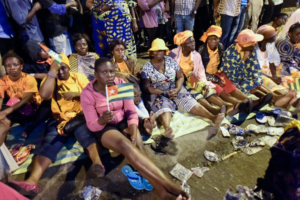
Citizens generally expect governments to improve living standards, reduce poverty, strengthen public services, and expand opportunities for younger generations. Whether political systems are presidential or parliamentary, governance derives legitimacy largely from their capacity to deliver tangible improvements in human development. Yet when constitutional changes are accompanied by rising repression—such as the June 2025 protests against the high cost of living and the new constitution, which were met with lethal force, arbitrary arrests, internet blackouts, and the suspension of international media outlets—citizens may conclude that institutional reform is divorced from their daily struggles.
Africa’s Continuing Democratic Conversation
Togo’s constitutional reforms have become part of a wider continental discussion occurring across several African countries, where debates continue over presidential term limits, constitutional amendments, decentralisation, electoral integrity, and institutional independence. Many governance experts argue that durable democracies depend less on specific constitutional models than on adherence to principles of transparency, accountability, independent institutions, respect for the rule of law, and meaningful political competition. Both presidential and parliamentary systems have demonstrated successes and failures across the continent and beyond.
Ultimately, democratic performance depends on how constitutional frameworks are implemented, how institutions function in practice, and whether citizens retain meaningful avenues for political participation and oversight. This underscores the enduring tension between stability and democratic renewal. The constitutional transformation in Togo illustrates a larger dilemma confronting many emerging democracies: Governments seek policy continuity, institutional efficiency, and long-term national planning, while citizens increasingly demand transparency, participation, and competitive democratic choice.
Political leadership inevitably requires balancing stability with renewal, continuity with accountability, and effective governance with public legitimacy. As Africa continues its democratic evolution, constitutional reforms will likely remain subjects of intense public debate, not merely because they alter political structures, but because they shape the relationship between governments and the people they govern.
The enduring strength of any constitutional order lies not simply in how leaders attain office, but in whether institutions safeguard democratic accountability, protect citizens’ rights, foster inclusive development, and ensure that political power remains anchored in the public interest rather than in the permanence of any individual or ruling family.