
The Kiss of Fireworks and Delta Air Lines Flight 1076, at Chicago Airport on the 4th of July’s Celebration
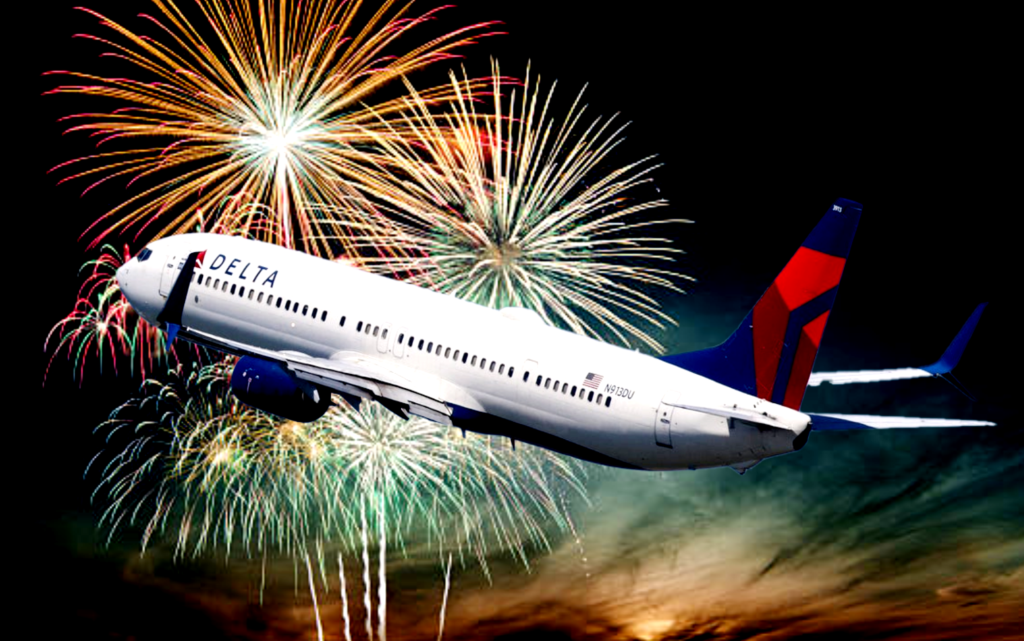
Fireworks are woven into the fabric of the Fourth of July, a symbol of patriotism and community from city parks to suburban backyards. But for the passengers and crew of Delta Air Lines Flight 1076, one explosion served as a stark reminder that festivities can collide with public safety in the most unexpected ways.
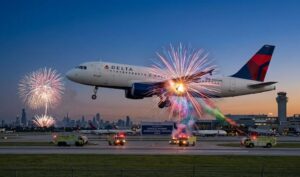
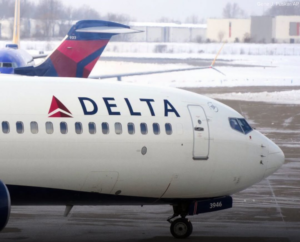
On the evening of July 4, 2026, the Airbus A319 arriving from Atlanta with 52 passengers and six crew members was on final approach to Chicago Midway International Airport. At roughly 200 to 250 feet above ground level, the pilots reported hearing what they described as a “loud bang.” Air traffic controllers had already cautioned the crew that “multiple homes near the approach” were shooting off fireworks. The aircraft, investigators believe, had encountered a consumer-grade firework at one of the most critical moments of flight.
Despite the jolt, the crew remained calm. They assessed the aircraft’s handling, confirmed the engines and instruments were reading normally, and continued the stabilised landing rather than initiating a risky go-around over a densely populated urban area. The plane touched down safely and taxied to the gate, and no injuries were reported.
Yet the incident did leave a mark. Chicago police later confirmed the firework caused minor paint damage to the aircraft, an outcome that, while seemingly small, underscores how close the encounter came to being far worse. Delta removed the jet from service for a full inspection, and the Federal Aviation Administration has opened a formal investigation to determine the firework’s origin.
Midway Airport presents a unique challenge. Unlike many major airports situated far from city centers, Midway sits in the middle of densely populated residential neighbourhoods. Aircraft on approach pass directly over homes at low altitudes, meaning that a backyard firework launched a few blocks away can enter the same airspace as a descending commercial jet. On busy holiday evenings, that geography turns celebration into a genuine hazard.
The regulatory divide only complicates matters. Professional fireworks displays near airports are required to coordinate with the FAA, allowing controllers to adjust routes or impose temporary restrictions. Consumer fireworks, however, are governed primarily by state and local laws. Chicago prohibits nearly all consumer fireworks within city limits, stricter than Illinois state law, yet enforcement on a night when thousands of launches happen simultaneously is extraordinarily difficult. By the time authorities respond, the evidence is often gone.
Investigators now face the daunting task of tracing a single firework back to its source amid widespread neighbourhood activity. Air traffic recordings, witness statements, and timing analysis will all play a role, though identifying a specific individual remains uncertain.
For aviation professionals, the incident is less about the damage that occurred and more about the damage that was avoided. At 200 feet, the crew had seconds to evaluate an unexpected threat while managing speed, altitude, runway alignment, and weather. Their disciplined response continues to the landing and inspection afterward, reflecting a fundamental principle of aviation: stabilise the situation first and then assess.
The broader lesson extends beyond the cockpit. Residents living near airports often do not realise how low descending aircraft actually fly; from the ground, a plane can appear much further away than it is. Public awareness may prove as valuable as enforcement in preventing future encounters.
Delta Flight 1076 ended as a story of resilience, not tragedy. But it is a reminder that modern aviation safety depends not only on pilots, engineers, and controllers but also on the choices made by people far beyond the airport fence. The skies above our neighbourhoods are invisible highways, and every safe landing depends on hazards remaining firmly on the ground.