
Android’s Billions of Users, Dictating the Global Market Share with 67.45% and AI Revolution
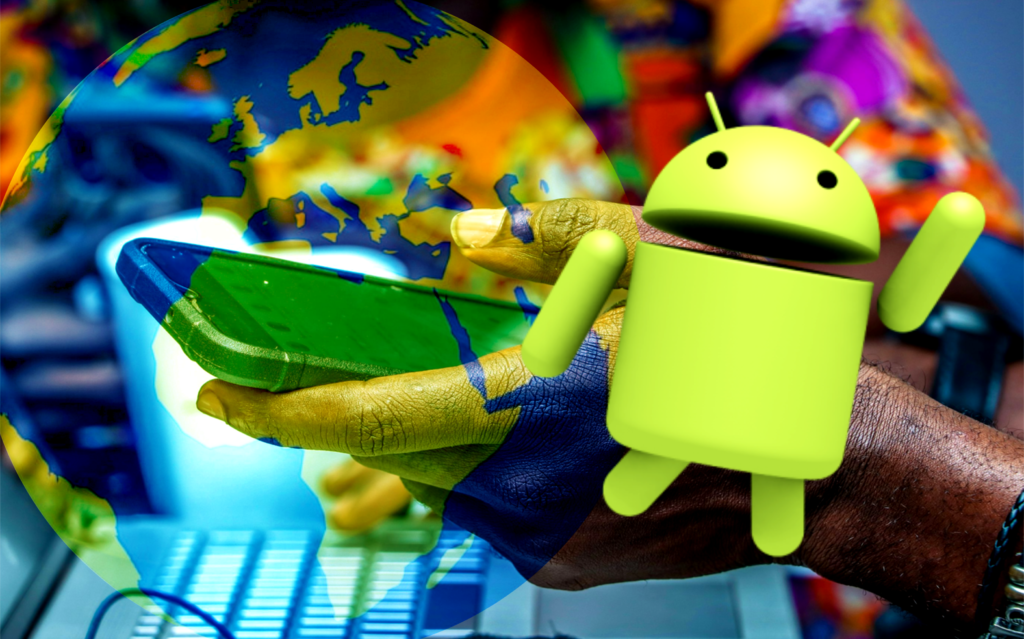
In 2026, Android has become far more than a mobile operating system. It is one of the world’s most widely distributed digital platforms, connecting billions of people to information, commerce, financial services, work and increasingly artificial intelligence. It is a staggering leap for a project that once lived in the shadow of early smartphone pioneers.
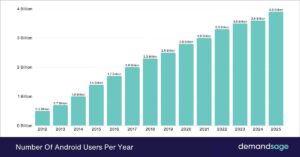
Today, Android now sits at the centre of the digital lives of billions of people, with the platform estimated to serve roughly 3.9 billion users, shop for essentials, and conduct their professional lives. The most surprising shift is not just the sheer number of users but how Android has pivoted from being the budget alternative to the leading edge of the artificial intelligence revolution.
Android’s ascent from a niche alternative to a 3.9-billion-user ecosystem is the defining narrative of the mobile era. While historical accounts often emphasise its rapid entry into the market, the technical reality is a story of relentless, sustained momentum. Android’s rise was unusually rapid; after launching commercially in 2008, the platform expanded dramatically over the following years, surpassing 500 million users in 2012 and reaching the 1 billion-user milestone in 2014, a record-breaking three-year sprint that set the stage for its current dominance. Android’s scale comes with a structural trade-off: fragmentation. Different manufacturers and devices adopt new Android versions at different speeds, creating uneven access to security updates, features and emerging AI capabilities. Scale, in other words, has never meant uniformity.
Why the Global South Became Android’s Stronghold
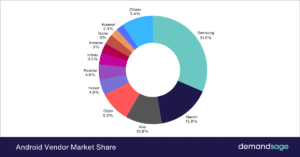
Much of Android’s extraordinary scale has been built in markets where affordability, device variety and mobile-first access matter more than ecosystem exclusivity. In many of these markets, Android has become the dominant mobile platform. The platform’s dominance is underpinned by an unmatched variety of hardware vendors, led by Samsung (31.5% vendor share) and Xiaomi (15.9%), who have perfected the art of delivering high-performance tech at accessible price points.
Picture Credit: DemandSage
- India: Android accounts for approximately 95% of the country’s mobile operating-system market.
- Indonesia: A dominant 86.8% market share where mobile-first is the only way of life.
- Brazil: A massive 84.1% share, where Samsung and Motorola command the mid-tier market.
- Vietnam: Holding strong with an 84.0% share of the mobile landscape.
- Africa: In Africa affordable Android devices have helped narrow parts of Africa’s digital access gap, particularly by lowering the cost of entry to mobile internet, but device affordability alone does not eliminate the digital divide; connectivity, data costs, digital literacy and reliable infrastructure remain significant barriers.
- The Penetration Leaders: Morocco leads the continent with a smartphone penetration rate exceeding 90%. South Africa follows closely (80% to 85%), supported by a mature handset financing ecosystem.
- The Volume Kings: Nigeria remains one of Africa’s largest mobile markets, with more than 163 million active mobile connections.
- The Inclusion Engine: In Kenya, Android’s role in the mobile economy has been reinforced by the country’s mature mobile-money ecosystem, most notably M-Pesa. Android has become the essential gateway for financial inclusion, turning every handset into a bank branch.
- GSMA $40 entry-level 4G smartphone: This expansion is being pushed further by $40 entry-level 4G smartphone pilots, which are attempting to close the digital divide by bringing high-speed connectivity to the final frontier of the unconnected.
 Picture Credit: DemandSage
The Great AI Flip: When Distribution Became the Advantage
The most important shift may not be that AI has arrived on smartphones. It is that Android gives AI something the technology industry has historically struggled to achieve: distribution at extraordinary scale. Generative AI does not need every user to own a premium device to become transformative. It needs access to a device, connectivity and an interface simple enough to use. Android’s enormous installed base provides all three at a scale few platforms can match.
In 2025, ChatGPT recorded 727 million downloads on Android, roughly double its iOS downloads. These downloads demonstrate distribution and interest. By combining affordable hardware with increasingly accessible AI services and free-to-use AI tools, Android has successfully democratised artificial intelligence. High-end AI is no longer a luxury gated by thousand-dollar hardware; it is a tool for the masses, proving that Android users are now the leading edge of global tech adoption.

Android Without Google: The Open-Source Sovereign
China remains the great paradox of the mobile world. While Google has no control over the OS in the region, Android is the market leader with a share between 58% and 77.85%. This highlights the sheer power of Android’s open-source DNA. In this environment, 75% of users bypass the Play Store in favour of third-party app ecosystems.
From Operating System to Digital Infrastructure
As we move through 2026, it is clear that Android has evolved into much more than a mobile OS; it is the commerce engine of the planet. With the Google Play Store hosting 2.36 million apps and generating upwards of $49 billion and $65 billion in annual revenue, the commerce of apps has become a pillar of the global economy. From $40 handsets in Lagos to AI-driven workflows in Mumbai, Android is the primary gateway for information, finance, and labour. As this ecosystem nears the 4-billion-user mark, we must ask: has Android become so deeply woven into the fabric of global society that it is now effectively unchallengeable? The next frontier is not just winning more users; it is seeing how this massive, interconnected population uses that “green robot” to redefine the world again.