
China’s Expanding Farmland Footprint Across Africa
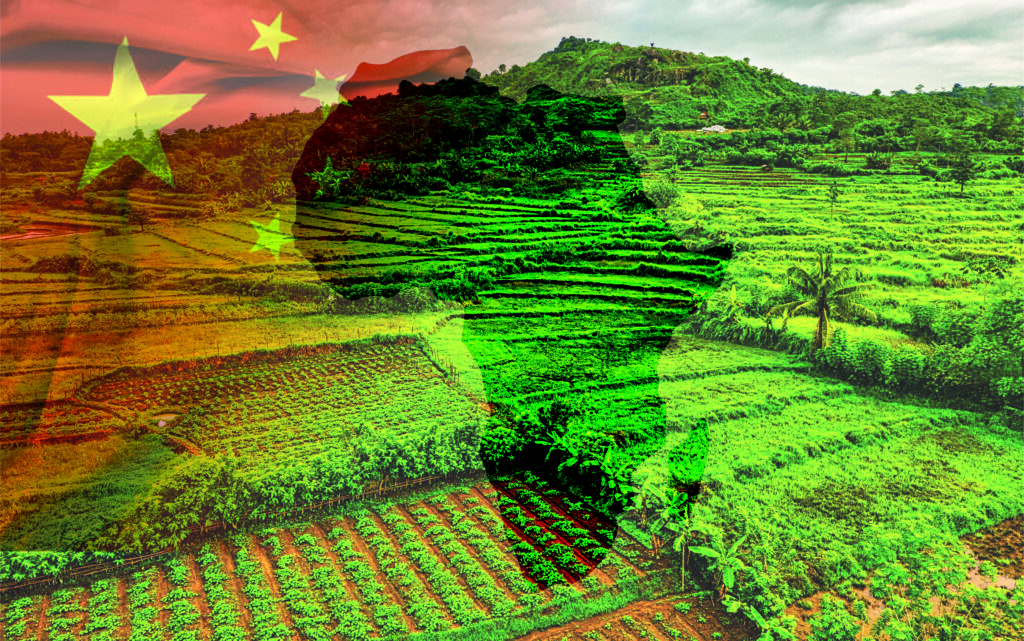
China has quietly become a major force in African agriculture. But the claim that it has simply “acquired 6 million hectares” across the continent and that she is shipping all the food back to China, is more displaced than the stories making the round online.
The reality of the story is a growing network of Chinese backed-up farms, long-term leases, joint ventures and agricultural investment projects, stretching across some countries including Angola, Ethiopia, Tanzania, Zambia, Mozambique, Zimbabwe, Nigeria, Ghana, Benin, Guinea and the Democratic Republic of Congo. Enquiries into this progression, has also outlined a hundreds of documented Chinese overseas farmland investment projects globally. The spread of their agro-investments in Africa, is structured as leases, development rights or commercial partnerships, which is quite the opposite of ownership.
The China’s agroeconomy in Africa is focused on farming rice, maize, soybeans, wheat, cassava, sugarcane, sisal, cotton and other commercial crops. These crops reveal the strategic importance of their relationships with each country they have pitched their farming-tents in. In Tanzania, the agricultural investment comprise thousands of hectares of sisal farms; also, fresh investments in Angola focuses on grains and soybeans. In another flipped-page, Chinese-backed agricultural financing across Africa, has also supported irrigation, fisheries, farm development, mechanisation, rural infrastructure, etc.

Some communities living around these farm projects, have benefited somehow, but at different stages. Large farms can create jobs, introduce machinery and irrigation schemes, build access roads and connect rural producers to bigger markets. Governments also see agricultural investment as a route to higher output, export earnings, technology transfer and industrial growth.
In the course of finding who controls the land, and who keeps the value created from it, China and African governments are officially promoting local processing, mechanisation, agricultural technology and expanding African food exports, to the Chinese market.

Note that human beings across the globe would always cherish landed property as security-asset. Accordingly, for the indigenous African people and their communities, land is much more than an economic asset. Landed property is inheritance, it represents food security, origin, ethnicity and identity. When governments lease large areas to foreign investors without transparent consultation or strong protections for customary land rights, families can find themselves losing farms, lands and farmlands that they have cultivated for generations. Even jobs from commercial estates, may not be able to replace a long-term security that comes with owning or controlling productive land.
On a diplomatic front, the political stakes between China and African governments in this pursuits, are equally high. A successful agricultural partnership with China, could help some of these host countries to reduce food imports, develop agro-processing industries, create rural employment, earn foreign exchange, etc. A poorly regulated agroinvestment scheme could expand dependency, leaving African countries with roads and raw crop exports, while the most profitable parts of the agro-chain, which includes processing, storage, cultivational technology, mechanisation supplies and international trading, could be lost in being localised and controlled.
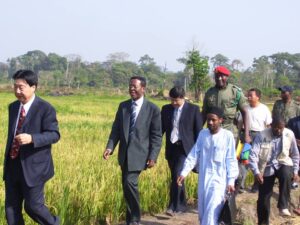
Therefore, China’s agricultural footprint in Africa, is simply not a secretive “land-grabbing” nor is it an automatic developmental miracle. You and I can perceive the Chinese spread in Africa as one pointing-out to a progressive-partnership drive. And so, regardless of how fertile a land might be in Africa, if it is not powered to be put to use for productivity, this same Africa’s most valuable resource called land, would be dormant and useless.
In the longrun, the real deal of success on this note, will be measured on how many hectares that are leased to Chinese investors plus the number African farmers that are part of the agro-investment and ownership chain; how local communities benefit from the process; and how the food, business, technology and wealth generated from African soil, ultimately strengthen African economies.
Because, when the harvest comes, the most significant question may be, who owns the future that is to be derived from the planted crops, engineered by the leased lands?