
Emmanuel Macron Raiding Africa, as France Rebuilding Its African-Strategy of New Scramble for Influence

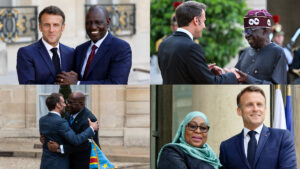
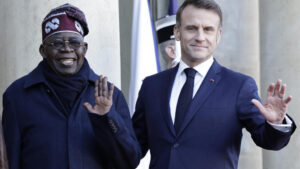
As French President Emmanuel Macron intensifies diplomatic outreach across Africa, from Angola/South Africa to Kenya, a growing chorus of African intellectuals, activists and policy observers say, the continent may be witnessing not simply renewed cooperation, but the reconfiguration of old power structures, under modern language.
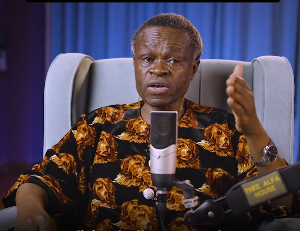
Among the most vocal critics, is Kenyan legal scholar and pan-African thinker PLO Lumumba, who argues that France’s evolving diplomacy under Macron, reflects a strategic effort to preserve geopolitical influence, as Paris loses ground in several former colonies in West and Central Africa. Speaking about the France-Africa summit in Nairobi, Lumumba framed Macron’s diplomacy as part of a larger contest for economic access, military positioning and political relevance, on a continent progressively central to global competition over energy, rare minerals, technology and trade routes.
But apart from the theories, an indepth question lies unfolding across Africa. The question is – can foreign partnerships can genuinely support African development, or are they reproducing dependency in more sophisticated forms?
There is a changing position of France in Africa. France’s relationship with Africa has long been shaped by the legacy of colonialism and the post-independence political network, often referred to as Françafrique. It is a system critics say, it allowed Paris to maintain influence through military alliances, economic controls and elite political relationships.
Historically, France retained military bases across several African states, while the CFA franc currency system, linked numerous West and Central African economies to the French treasury. In decades, Paris has positioned itself as both a security guarantor and economic partner in francophone Africa. However, this influence has weakened dramatically in recent years.
Military coups in Mali, Burkina Faso and Niger, have led to the withdrawal or reduction of French military operations. Public protests against French presence have intensified across the Sahel, with many young Africans accusing Paris of paternalism, resource extraction and failed security policies. In countries such as Senegal and Gabon, political tensions have further complicated France’s traditional alliances. Against this backdrop, Macron’s recent engagements in anglophone and lusophone African states, are being closely scrutinized.
To the supporters of France’s renewed outreach, the strategy imitates adaptation rather than domination. French officials are progressively emphasizing partnerships in green energy, infrastructure, artificial intelligence, education and entrepreneurship, instead of the overt military-heavy diplomacy associated with earlier decades. Nonetheless, a lot of people are arguing that the underlying objectives remain unchanged. Despite all, Nairobi is at the center of this geopolitical challenge.

The decision that led to hosting this major France-Africa gathering in Nairobi, an anglophone capital, outside France’s traditional sphere of influence, is symbolically significant. Kenya has emerged as one of Africa’s most strategically important diplomatic hubs. It hosts major United Nations agencies, including United Nations Environment Programme and UN-Habitat, while positioning itself as a regional technology, logistics and financial center for East Africa. As part of its positive-edges, its ports, expanding energy sector and relatively diversified economy, make it attractive not only to France, but also to China, the United States, Turkey and Gulf states.
Some analysts currently believe that this France’s rerouting of new influence across Africa, reflects a larger geopolitical modification. Africa’s growing population, vast mineral reserves and expanding consumer markets, have transformed the continent into a major arena of strategic rivalry. Cobalt from Democratic Republic of the Congo, gas projects in Mozambique, oil pipelines in Uganda, renewable energy investments across East Africa, etc., are all growingly tied to global supply chains powering electric vehicles, artificial intelligence, infrastructure and digital economies.
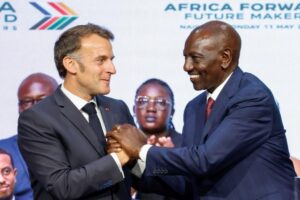
In this context, diplomatic summits are not merely ceremonial gatherings. They are platforms where infrastructure contracts, military partnerships, technology investments and resource access are negotiated. And these situations carry heavy-touch on human impact, behind the diplomacy. The diplomatic-networking, partnerships and influence crusade, should host socioeconomic promises for many ordinary Africans, but in most cases, they are often felt from a distant in their day-to-day realities. In Nairobi, Dakar, Abuja, Lagos, Bamako, Kampala, Johannesburg alike, unemployment, inflation on daily-living cost, limited industrial growth among other pressuring economic situations, are the frustration that frequent the lives of Africans, despite the long flood-in periods of foreign investment.
Besides, a critical/difficult questions hang in the balance: if multinational corporations dominate logistics, telecommunications, energy distribution and retail sectors, how much local capacity is truly being built? Are African economies becoming more self-sufficient, or more externally dependent?
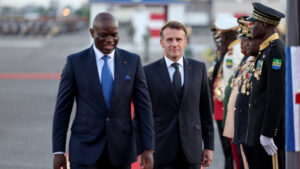

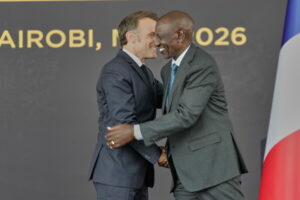
Presently, some French companies remain extremely entrenched across different sectors ranging from oil and transport to retail and digital services. Some pro-French companies, promote that their investments create jobs, expand infrastructure and stimulate economic activity. While non-supporters of French companies/presence, counter that their profits largely flow outward to Europe; leaving African states as continuous exporters of raw materials, rather than manufacturers of finished goods. This debate is particularly sharp around energy and mining.
Communities near extraction projects often report uneven benefits, environmental concerns and limited local ownership. In parts of the Sahel and Central Africa, anti-French sentiment has also been fueled by perceptions that security partnerships protected political elites more effectively, than civilians facing insurgencies.
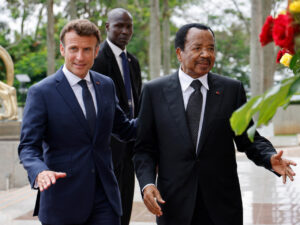
At the grassroots level, many Africans want the diplomatic relationships to be built on technology transfer, industrialization and fairer trade, rather than aid dependency or extractive economics, driven by the current instance masked in diplomatic-partnership, with cosmetize dependency. On this note, PLO Lumumba and other pan-African thinkers, say that Africa’s profound challenge is not simply foreign interference, but fragmentation within the continent itself. Regional blocs such as African Union, Economic Community of West African States and the East African Community, were envisioned as mechanisms for collective bargaining and economic integration. Yet, African states often continue their negotiations individually with larger global powers. That imbalance matters.
European economies negotiating with smaller African states, frequently possess greater financial leverage, technological capacity and institutional power. Careful-thinkers say, this negotiating-dimension weakens Africa’s ability to secure favorable trade terms, or insist on local industrial participation. The African Continental Free Trade Area (AfCFTA) has been promoted as one possible corrective-measure. An attempt to strengthen intra-African trade and reduce external dependency. If fully implemented, proponents believe it could help African countries negotiate globally, from a stronger collective position. Still, implementation challenges remain substantial, including infrastructure gaps, tariff disputes and political fragmentation.
In a new era of competition: The current geopolitical landscape differs from the Cold War era, but many observers see echoes of earlier struggles for influence. China’s Belt and Road investments, Turkey’s expanding diplomatic footprint, Russia’s security partnerships, Gulf investments in ports and agriculture, and the renewed European engagement, all point to intensifying global interest in Africa.
Unlike the colonial period, African governments today possess formal sovereignty and wider diplomatic choices. But, critical-warnings linger that unequal economic relationships, can still produce forms of dependency, even without direct political control. As for most African citizens, the central issue is no longer whether foreign investment should exist, but under what terms? Can partnerships generate meaningful industrial growth? Will African states retain control over strategic resources? Can diplomacy translate into jobs, skills and infrastructure that remain locally owned? These questions, now shape debates from across board and social classes.
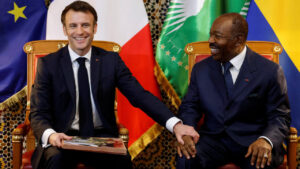
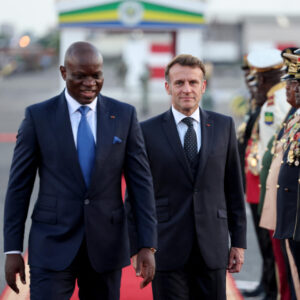
As world powers compete for influence across the continent, Africa itself is also changing younger, more urban, more digitally connected and increasingly vocal, about sovereignty, dignity and economic justice. If the new French diplomatic race will ultimately empower African societies, or develops external dependency, it may depend more on the ability of African institutions to negotiate collectively, strategically and transparently, than it will on the ambitions of Paris, Beijing or Washington.
SOURCE: PLO Lumumba | Thee Alfa House