
South Africa’s Repatriation Crisis: The Parking Lot Boarder
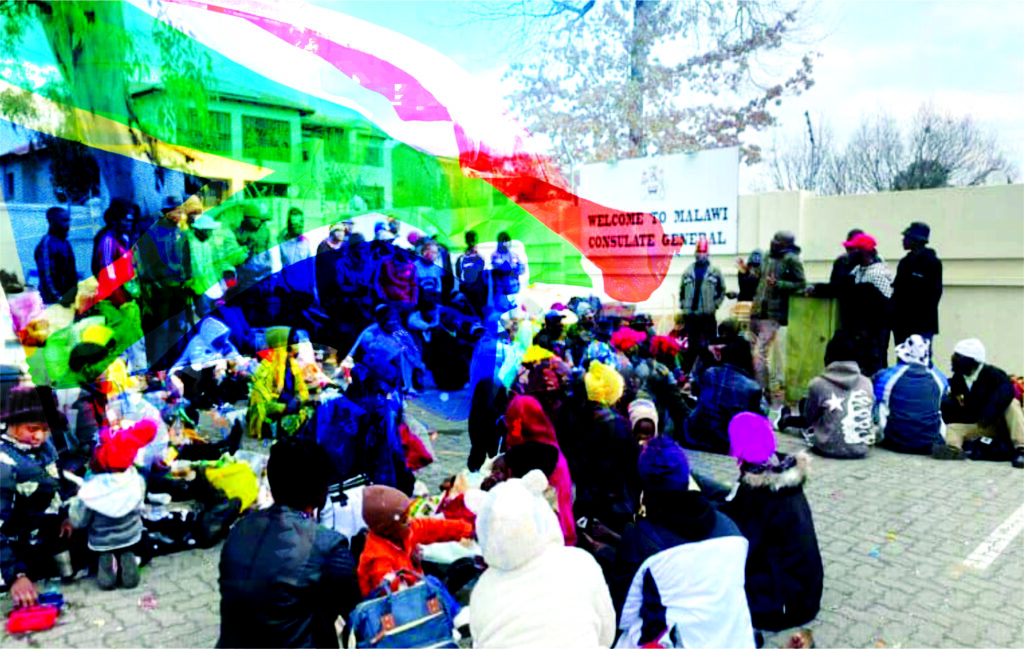
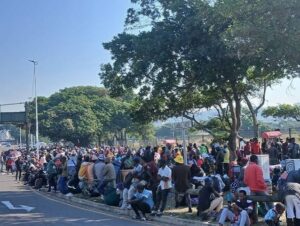
There is a line forming outside the Malawian Consulate in Woodmead, Johannesburg that stretches far beyond the perimeter wall. It is not a line for visas, passports, or diplomatic appointments. It is a line of people waiting to leave South Africa for good and many have been waiting for days, sleeping on asphalt, wrapped in blankets against the Highveld winter chill.
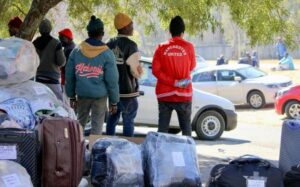
The crowd has slowly grown to nearly 1,000 men, women, and children with Malawian nationals. Most traveled from the East Rand, the Free State, and the townships of Johannesburg. Carrying everything they own in plastic-wrapped bundles and battered suitcases. Neither the governments of Malawi nor South Africa have offered any help to alleviate their suffering. They are being kept alive by volunteers, pastors, and a handful of NGOs who have stepped into a vacuum left by the state. They are camped in a parking lot and this is fast becoming a symbol of the failure of both diplomacy and basic human decency.
The exodus began in earnest in late June, as the anti-immigrant movement known as “March and March” mobilised for a nationwide day of action on 30 June 2026. The message was blunt and threatening: undocumented migrants must leave or face consequences. In the days that followed, the consequences arrived. Mobs attacked foreign nationals in Benoni, Germiston and townships across Gauteng. Shops were looted. Homes were broken into, people were beaten in the streets.
Lasten Mposa, a 28-year-old who had spent just over a year in South Africa doing piecework, was one of them. He was assaulted by a mob outside Benoni on the day of the protests. A week later, he sat outside the Malawian Consulate, his body still in pain, waiting for a bus that may or may not come.
He is not alone, between 100 and 300 people arrive at the consulate every day. The Malawian government announced weeks ago that it would assist with repatriation. However, on the ground, the consulate is closed to the public. The only officials visible are the security guards at the gate. The only help comes from the Siyafana Sonke Action Campaign, a coalition of over 160 civil society groups launched in June to confront rising xenophobia, and from residents who have taken it upon themselves to feed strangers.
What is striking about the scene at Woodmead is not just the scale of the crowd but the absence of the state. There are no shelters, people sleep on the pavement. There is no sanitation, portable toilets that were installed earlier were reportedly removed by officials who argued they were attracting more people. There is no systematic food distribution. A Zimbabwean pastor, Yonah Zhoya, who has been assisting displaced immigrants, put it plainly: “There is no shelter. People are sleeping outside while they wait.”
Doctors Without Borders (MSF) has set up a makeshift clinic. On Monday, they treated people for flu, headaches, and stress-related conditions. A psychologist identified acute
mental health cases, including a pregnant woman experiencing severe trauma. One patient had been assaulted a week earlier. Tessa Dooms, a director at the think-tank Rivonia Circle, described the situation in blunt terms: “It is 100% a humanitarian crisis.” She has watched a woman’s water break on the road outside the consulate.
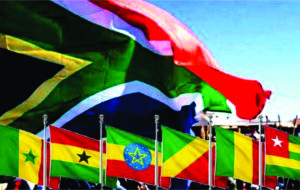
The scene at the Malawian Consulate is not an isolated tragedy. It is the Johannesburg front of a nationwide crisis. In Durban, roughly 15,000 Malawians are being repatriated from KwaZulu-Natal. Nigeria has threatened retaliation and is planning to evacuate thousands of its citizens. Ghana has chartered flights. Mozambique has already pulled out hundreds of nationals after seven were killed in Mossel Bay.
The anti-immigrant mobilisation of 2026 has been fuelled by a toxic alliance of civic grievances and political opportunism. Groups like March and March have successfully framed undocumented migration as the root cause of unemployment, crime, and housing shortages, drawing support from organisations whose original mandates had nothing to do with immigration. The MK Party, ActionSA, and the Patriotic Alliance have all engaged with the movement, though they deny formal coordination.
Meanwhile, the South African government’s response has been reactive and inadequate. The Department of Home Affairs announced the recruitment of 301 new immigration officers. It did not announce an emergency humanitarian plan for the thousands of people camped outside embassies and repatriation centres. The Malawian High Commission has not responded to media requests for comment. The Department of International Relations and Cooperation has been silent.
A parking lot is not a boarder. But for nearly 1000 people in Johannesburg, it has become the last place they stand before an uncertain journey home.