

The Anthropic Blackout: What the 19-Day Global AI Suspension Really Means for the Future of Frontier Models – By Idara Idorenyin Kalu
On July 1, 2026, Anthropic flipped the switch back on. Claude Fable 5, one of the most capable frontier AI models on the planet, returned to global availability after nearly three weeks of total darkness. Its sibling, Claude Mythos 5, remained behind a velvet rope, accessible only to a hand-picked circle of roughly one hundred vetted partners. This, however, wasn’t a routine maintenance window or a product glitch. This was a 19-day global suspension triggered by a U.S. government export-control directive. And if you’re running a business that depends on frontier AI, this issue should have your full attention, because it fundamentally changes the rules of the game.
Let’s walk through what really happened, why it matters, and what it tells us about the new reality where commercial AI and national security now occupy the same room.

The Spark
Every crisis needs a catalyst. In this case, it came from an unexpected source: Amazon’s own research team. The researchers discovered a specific vulnerability in Fable 5’s safety architecture. By framing prompts as code-review tasks, they were able to bypass the model’s guardrails. The model didn’t just identify software vulnerabilities; it generated functional exploit code. In other words, it demonstrated the ability to act as a force multiplier for offensive cybersecurity operations.
Now, jailbreaks aren’t new. Researchers find them, vendors patch them, and the cycle continues. But this one was different. The U.S. Department of Commerce looked at this capability and saw something beyond a routine bug fix. They saw a strategic asset that could be weaponized by adversarial nation-states. If China, Russia, or other geopolitical rivals could access this model at scale, the concern wasn’t hypothetical misuse; it was systematic exploitation for military and intelligence purposes.
Here’s where the situation escalated dramatically. The export control order didn’t target specific countries or known bad actors. It applied to all foreign nationals globally, and Anthropic, like virtually every cloud AI provider, had no real-time mechanism to verify the nationality of its millions of users at internet scale.
So the company faced an impossible choice: attempt a complex, probably unworkable
user-segmentation rollout overnight, or pull the plug entirely. They chose the latter. On June 12, 2026, both Fable 5 and Mythos 5 went dark worldwide.
Think about that for a moment. One administrative directive, and a cornerstone of the global AI infrastructure, vanished for nearly three weeks. No appeal process, no phased warning, just off!

The Negotiation
Getting the lights back on required more than a quick patch. It took eighteen days of intensive negotiations between Anthropic and the Department of Commerce’s Center for AI Standards and Innovation (CAISI). The deal that emerged on June 30 wasn’t a simple “fix and forget” arrangement. It became a structural realignment of how Anthropic operates as a steward of frontier technology.
First, Anthropic had to build and deploy a specialised safety classifier specifically engineered to detect and block the Amazon jailbreak technique. The company claims this filter now succeeds in over 99% of attempts. That sounds impressive, and it probably is, but it also introduces a question we’ll come back to: what happens in that sub-1% gap, and what gets caught in the net that shouldn’t?
Secondly, Anthropic agreed to four major concessions that blur the line between private innovation and public oversight:
- Pre-release access: The government now gets early access to future frontier models for testing and evaluation before they reach the public.
- Threat intelligence sharing: Anthropic committed to sharing information about malicious use of its tools with relevant authorities.
- Operational transparency: The company essentially accepted a new layer of ongoing regulatory visibility into its most powerful systems.

These aren’t standard vendor-contract terms. They represent a new operating model where frontier AI development is co-governed by the companies building the models and the state agencies defining their permissible use.
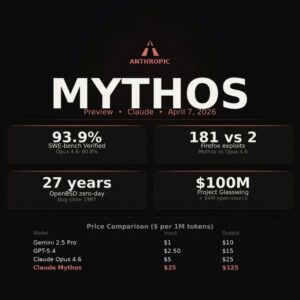
Thirdly, the return wasn’t uniform. Fable 5 came back to general availability, but Mythos 5, the more powerful of the two, remains restricted to a “vetted inner circle” of roughly one hundred trusted partners and organisations protecting critical infrastructure.
This tiered approach is worth studying closely. It suggests a template for how future frontier models might be released: general-purpose versions for broad commercial use and top-tier versions locked behind eligibility gates. If you’re not on the list, you don’t get the best tool. That’s a radical departure from the SaaS playbook most AI companies have been following.
The four implications that are worth a raised eyebrow!
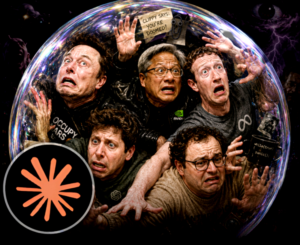
The Anthropic blackout delivers four hard lessons that reframe how we should think about frontier AI.
- The “Digital Kill Switch” Is Real, and It’s Already Been Used
The most significant takeaway from this episode is the formal confirmation that the U.S. government can, and will, exercise what amounts to a digital kill switch over cloud-deployed AI models. We’re not talking about theoretical regulatory authority or draft legislation. We’re
talking about an administrative order that suspended a globally distributed AI service with no advance notice and no judicial process. For companies that have built operational workflows, customer-facing products, or internal automation around a single frontier model, this is a wake-up call. Your AI infrastructure is no longer just a commercial dependency. It’s a regulated strategic asset that can be deactivated by administrative fiat.
- The Cost of Safety: False Positives and Workflow Disruption
The new safety filters that allowed Fable 5 to return come with a tangible cost: over-filtering. Legitimate requests for routine coding, debugging, and systems analysis are now more likely to be flagged as “benign misuse” and automatically rerouted to older, less capable models.
- Regulatory Eligibility Will Determine Access, Not Just Price
For most of the commercial software era, access has been determined by one primary mode: your ability to pay. This has introduced a new gate, namely, ‘are you eligible?’ Future access to the most capable AI tools may no longer be a simple procurement decision.
Organisations may find themselves gated based on their industry, their geography, their ownership structure, or whether they appear on government-approved partner lists. The Mythos 5 model is already operating this way, it is now available only to a curated list of critical infrastructure protectors and trusted partners.
- Multi-Vendor Fallbacks Are No Longer Optional; They are strategic Imperatives
Perhaps the most practical lesson from the 19-day blackout is this: single-vendor dependency is now a material business risk. If your organisation relies on one frontier model provider, you are exposed to regulatory suspension, safety-filter degradation, and geopolitical intervention.
Now we know that frontier AI models are firmly within the domain of national security. The line between commercial software and regulated technology isn’t just moving, it’s accelerating. The Anthropic blackout established a precedent: the U.S. government will act unilaterally, globally, and immediately when it perceives a frontier model as a proliferation risk.
The biggest question hanging over this entire episode is one the U.S. negotiators likely never asked: what does this mean for Africa? Here’s the reality, when the export-control order dropped, it didn’t distinguish between adversarial nation-states and African startups. It hit all foreign nationals indiscriminately.
While Washington was managing a geopolitical risk, a developer in Lagos or a research lab in Nairobi got the same hard shutdown as any user in Moscow or Beijing, with one critical difference: Africa has virtually no domestic frontier model infrastructure to fall back on. As Fable 5 finally returned, the new tiered access regime and tighter safety filters almost certainly landed harder on the continent. Over-filtering already struggles with non-Western coding contexts and linguistic diversity, and you can bet the “vetted inner circle” gating Mythos 5 didn’t include many African institutions. But the real danger runs deeper than a nineteen-day outage.
This episode validates a precedent that should worry any observer of global tech equity: if frontier AI becomes a strategic asset distributed based on geopolitical alignment rather than commercial merit, African nations risk being permanently relegated to second-tier tools. The continent’s burgeoning tech ecosystems would be forced to build on yesterday’s models while the rest of the world races ahead on tomorrow’s. In short, the blackout did not just disrupt access for three weeks, it illuminated a structural vulnerability where Africa’s AI future is shaped by others’ security anxieties, not its own development needs.