
Nearly 30 Years Later, Tupac Shakur’s Assassination Starts its Court Sessions
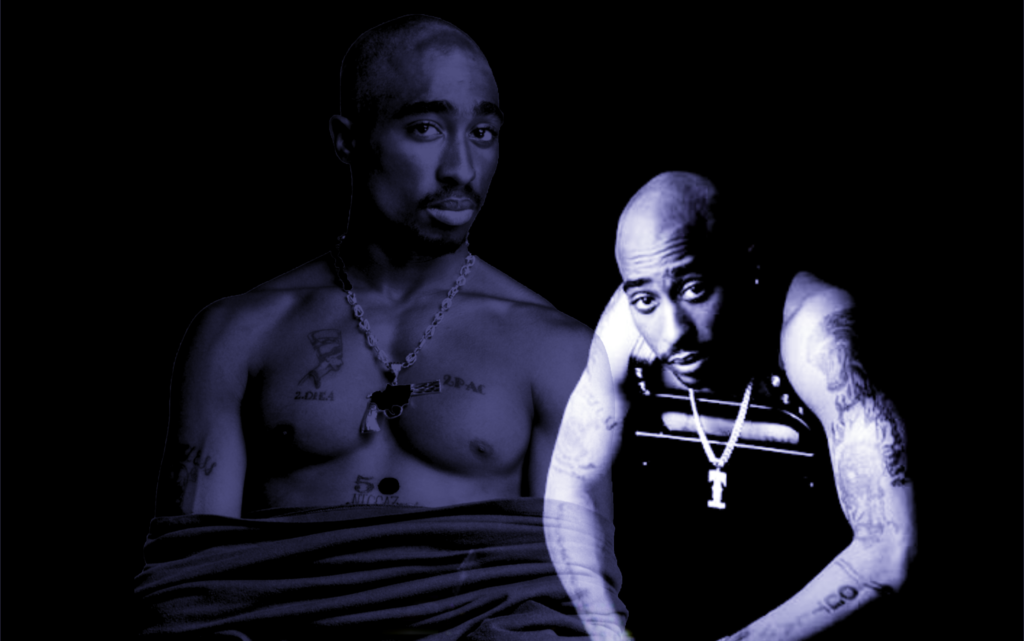
In Las Vegas, after nearly three decades that Tupac Amaru Shakur, whose birth name was Lesane Parish Crooks, before his mother changed it during his childhood, was gunned down in a Las Vegas drive-by shooting, the case that became one of the most enduring mysteries in American popular culture, has finally entered the courtroom.
Jury selection began on August 10 in the murder trial of Duane “Keffe D” Davis, the former gang figure accused of orchestrating the 1996 attack. Davis has pleaded not guilty and is not accused of pulling the trigger. Prosecutors allege that he helped organised the retaliation shooting and supplied the weapon.
However, the just started proceedings, represent additional chapter in this celebrity murder investigation, to the Shakur’s family. It seems as if the court just reopened a wound that has disappeared from public view for almost 30 years, forcing relatives, longstanding friends, witnesses and investigators to revisit a night that transformed hip-hop, leaving out unanswered questions about violence, allegiance and answerability.
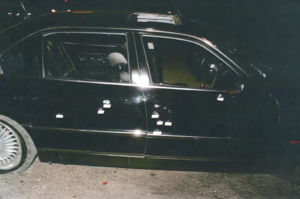
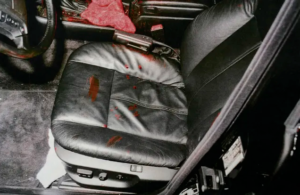
Tupac was 25 years old as at that very night. He was riding in a BMW driven by Death Row Records founder – Marion “Suge” Knight, after attending a boxing match that featured Mike Tyson, at the MGM Grand on September 7, 1996. Somewhere near the Las Vegas Strip, a white Cadillac suddenly pulled out, side-by-side the BMW car, and your guess is as good as mine…here went gunfire erupting; and whaaaat!!! Tupac Amaru Shakur was struck multiple times. Six days later, he died.
This assassination initially appeared as something destined to stay unresolved. The first set of investigators on this case, faced a familiar social obstacle such as the following street verbal-reactions: “Snitches get stitches”; “Stop Snitchin”; “Keep it solid” or “Stay solid“; “Mind your business“; or “Zobac/See Nothing, Say Nothing“; “Cat/Mouse; Stool pigeon/Stoolie; Cheese-eater; Dry snitch”; “No Snitching”; “I Am Not A Snitch”, etc. These are some of the verbal-reactions you get from violent street-crime cases, mostly in the Western States. People who might know what had happened, would be reluctant to speak. Then the passage of time into the situation, will now feature weakened memories and reduced the prospect of obtaining direct testimonies. So, the investigators saw silence that became one of the defining features of the case.
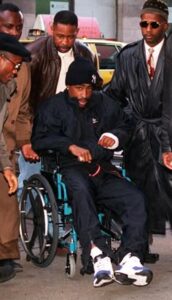
The investigation on Tupac’s was revived years later, after one Mr. Davis began to speak publicly about the shooting. His statements in various interviews alongside his released memoir in 2019 titled – Compton Street Legend, became central to the prosecution’s case. Some prosecutors also started debating the matter in relation to Davis’s implicating statements, which helped in the case-process to establish his role in organising the attack. His defence team disputes the legal-interpretation over his statements; sought to challenge the reliability and admissibility of materials from these implicating statements, dished out during his diverse interviews.
Besides, a Nevada court judge has already ruled that Davis’s 2008 police interview and his book, can be presented to jurors. So question! Can a case partly built on statements made decades after the assassination of Tupac, provide certainties as against the original investigation carried out? Well, this is where the trial might be faced with difficult investigative questions. And the answers will depend heavily on how prosecutors connect Davis’s public accounts, with other evidences and testimonies.
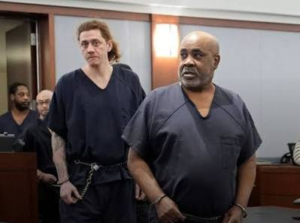
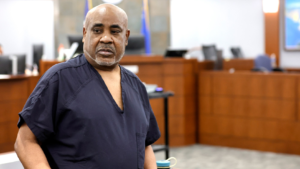
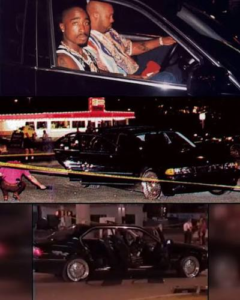
Now, who are the witnesses who could reopen this story? The potential witness pool illustrates how wide the case has become. Court filings have identified members of Shakur’s family, including his sister Sekyiwa Shakur, stepbrother Maurice “Mopreme” Shakur and his cousin Katari Cox, alongside people connected to the music industry, the original investigation and documentaries about the killing. Previous Las Vegas law-enforcement officials, have also appeared on the potential witness list. Knight, who was sitting beside Shakur when the shooting occurred, is also identified among those whose testimony could be relevant. Although, being listed as a potential witness, does not guarantee that a person will ultimately testify.
The significance of witnesses as these, is not necessary because they can identify a gunman. Their testimonies could help reconstruct the atmosphere surrounding the shooting, earlier confrontations involving Shakur and Orlando “Baby Lane” Anderson that night; and what people knew, or believed they knew afterward.
Anderson, a nephew of Davis, who was a long-standing person-of-interest in this case, was never charged, but died in 1998. His death and more, highlights one of the trial’s central complications. Already, several people associated with the original chain of events, are now dead. The prosecutors and defence lawyers are now left to work with testimonies, recordings, documents and recollections, accumulated over decades.

Tupac Shakur’s family/relatives are carrying a burden of public fascination at the moment. His death became a subject of books, documentaries, conspiracy theories and competing narratives; sometimes turning private grief into a continuing public spectacle. These outline, makes the family’s potential involvement particularly important. Their presence can bring the case back from the mythology surrounding Tupac, to the human consequences of losing a son, brother and relative at 25. So, you should be expecting a narration of a trial that is about more than one murder.
Shakur’s death also stands as a case study, in the social consequences of gun violence. His murder occurred during a period when the rivalry between parts of the West Coast and East Coast hip-hop scenes, had become seriously entangled with real-world disputes and street affiliations. His death, followed by the 1997 slaughtering of a fellow rapper Christopher Wallace, known as The Notorious B.I.G., expanded a sense that the music industry could not easily separate artistic competition from the violence surrounding it.
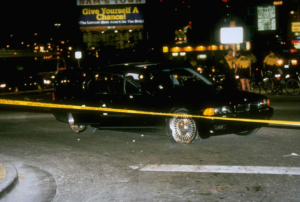
Approximately 30 years later, Tupac Amaru Shakur’s influence is still massive. His music insistently campaigned althrough now about social-poverty, extrajudicial police brutality, racism, family struggles, ambition and life on the margins. Nevertheless, the circumstances that surrounded his death, have also become part of his sociocultural legacy through now. Hey, what a creation of painful contradiction. That a young artistic creative-mind, who repeatedly addressed violence, became one of the most famous victims of violence, himself.
Spectrally from a grassroots perspective, the case also raises a bothering query about communities where witnesses may fear retaliation, distrust authorities or simply choose silence. Cold cases like this one, are not always failures of forensic science; sometimes they are reflections of fractured relationships between communities and law enforcement. As a result, the passage of time can change the equation. Considering people have aged. Loyalties would have shifted or bagged more crisscrossed relativities. Old stories have become public. Most statements and interactions that were casually made, can become evidence years later. But guess what, the passage of time can also make justice harder to get.
The prosecution will now have to persuade jurors further than a reasonable doubt, way pass just merely explaining why Davis’s accounts are significant. Whereas, the defence seat is expected to challenge if Davis’ statements were truthful, exaggerated for commercial or personal reasons/gains; and if the evidence will prove criminal responsibility for Shakur’s murder. The distinctions of the prosecution/defence, will matter a lot in the proceedings.
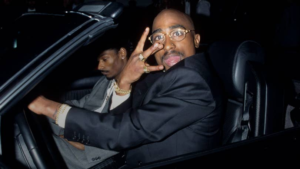
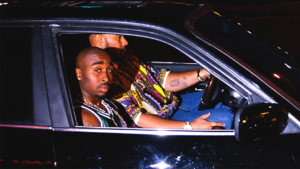
Note that this trial is not a plebiscite on Tupac’s fame, nor on the many theories that have circulated around his murder. But from our view point in EANDEL, the trial is a judicial-vehicle of Verification of Facts. We also believe that the Shakur’s family would be looking at the hearing as a Verification of Facts too, seeking to see if the justice system can finally provide an answer to the murder of Tupac – their son, brother, uncle, cousin, etc., call it what you may, after decades of uncertainty and unclear findings.
As jury selection embraces the bench, Las Vegas will begin to reminiscence a revisit of the night that began with a Mike Tyson’s boxing match at the MGM Grand, which deteriorated into a street confrontation after was; and ended with gunfire eruption beside a moving car. Because the world has spent almost 30 years asking who was responsible for the murder of Tupac Amaru Shakur. And at the present, for the first time, a jury will be asked to decide what the evidences can actually prove.
Picture Credit: People.com | 8 News Now | KSAT